

Transforming the Appearance of Brick Pavers: Aesthetic Enhancement Techniques That Preserve Durability
Clay brick pavers have served as pedestrian and vehicular surfaces for millennia because water can move through the system rather than becoming trapped inside the units. Any aesthetic modification must therefore respect breathability: the ability of water vapor to escape the brick in both directions. Modern film-forming sealers and standard exterior paints violate this principle and are responsible for widespread spalling failures. In contrast, the methods outlined below are drawn from centuries of European masonry tradition and contemporary conservation science, allowing radical visual change while keeping the paver durable and repairable.
German Schmear for Brick Pavers
German Schmear—known in German-speaking regions as Kalkschlämme or Weißschlämme when lime-based—offers the most transformative aesthetic option.
A fluid mix of white portland cement, hydrated lime, and fine silica sand (typically 1:1:6 ratio or leaner) is brushed, sponged, or flung onto the paver surface.
Excess is immediately wiped or washed off, leaving mortar only in the textured crevices and low areas.
The result ranges from heavy “old world” antiquing (80–90 % coverage) to light veiling (20–30 % coverage) depending on application technique.
Breathability remains excellent: measured vapor transmission rates exceed 90 % of untreated brick when mixes contain no polymer additives.
Freeze-thaw testing (ASTM C666) on schmear-treated samples shows no damage after 300 cycles when proper lime-rich formulations are used.
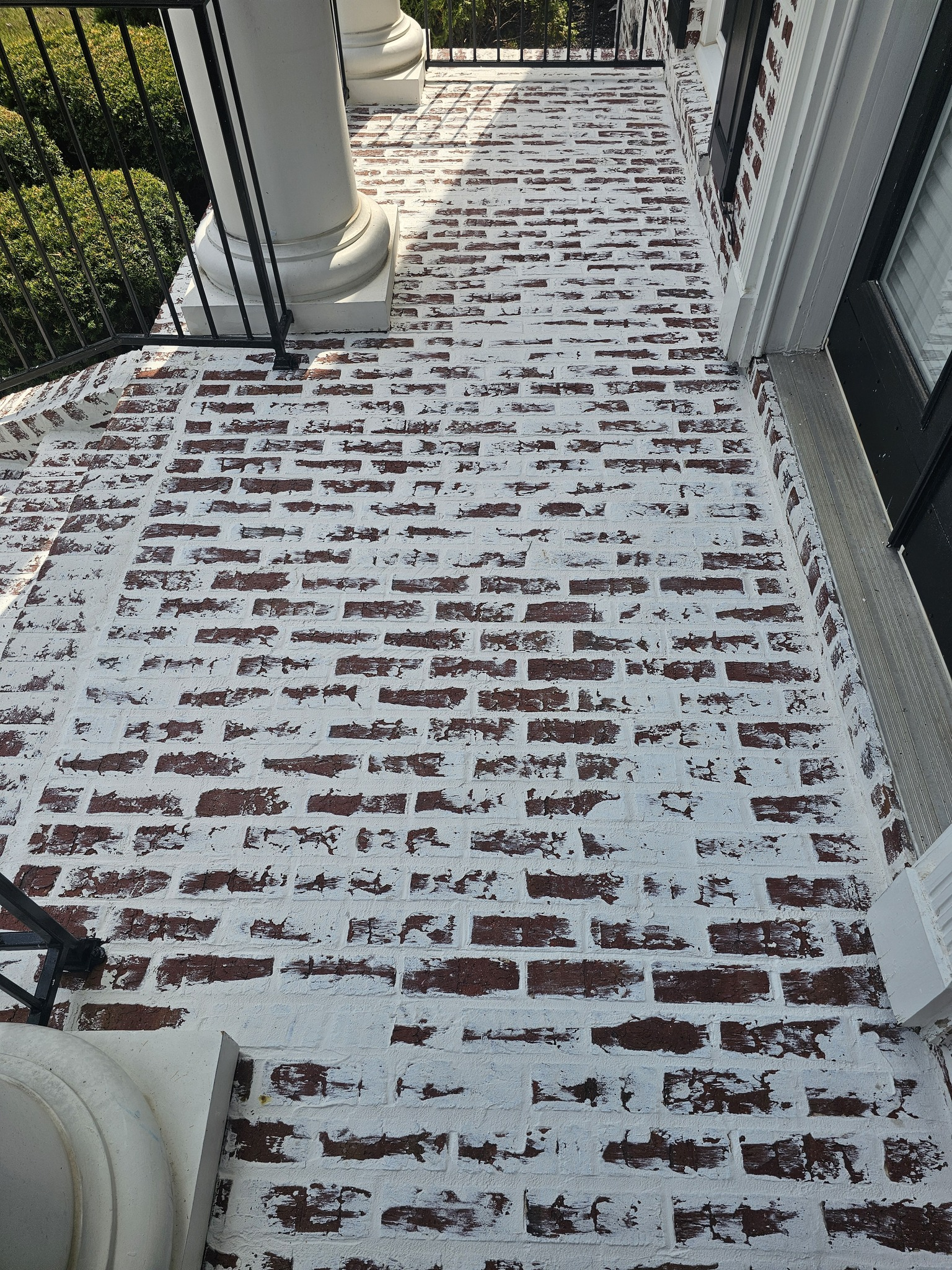
German Smear Specialist
Pure Lime Slurry Coatings
Traditional European limewash variants adapted for horizontal use provide an even brighter, softer appearance.
High-calcium lime putty diluted with water to heavy-cream consistency is applied in multiple thin coats (4–8 passes).
Each coat carbonates into calcium carbonate, forming a microporous layer that brightens reds to pastel pinks or covers them entirely with matte white.
Unlike paint, limewash becomes part of the brick chemically and will not peel.
Documented use on horizontal paver surfaces dates to 18th-century courtyard treatments in southern Germany and Moravia.
Permeability typically exceeds 95 % of uncoated brick; the coating self-heals hairline cracks through continued carbonation.
Mineral Silicate Stains and Patination
Potassium silicate-based stains penetrate the clay body and react with iron oxides to permanently shift color.
Available in earth tones, charcoal, and deep brown-black, these stains alter the base hue without forming a surface film.
Penetration depth of 2–5 mm ensures color cannot chip or wear off under traffic.
Vapor permeability reduction is negligible (< 5 %).
Widely specified in European heritage restoration projects for matching new replacement pavers to centuries-old surroundings.
Antiquing and Controlled Weathering Techniques
Deliberate aging creates an instant time-worn character.
Dilute yogurt or buttermilk cultures seeded onto clean pavers encourage natural lichen and moss growth in shaded areas (common in historic Belgian and Dutch courtyards).
Light acid etching with 5–10 % muriatic solution followed by immediate neutralization removes the hard outer fire-skin, exposing the softer, more varied clay body beneath.
Application of ferrous sulfate solutions produces instantaneous rust-orange streaking reminiscent of 100-year-old reclaimed brick.
All controlled weathering methods preserve full breathability and structural integrity.
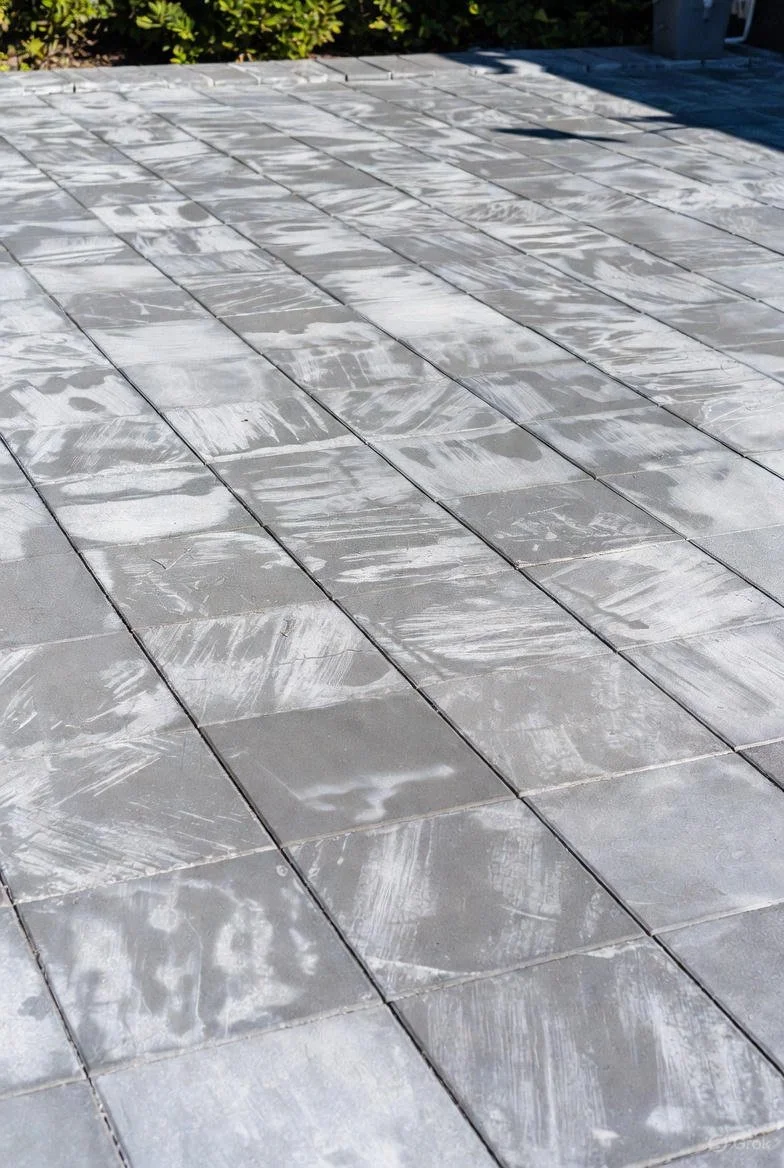
Acid Wash on pavers
Critical Performance Requirements for Any Treatment
To ensure durability equal to untreated pavers:
Vapor permeability must remain ≥ 80 % of original (measured per ASTM E96 wet cup method).
No acrylic, silicone, or film-forming polymers may be introduced into the coating or mortar mix.
Coefficient of thermal expansion of any overlay must match clay brick (≈ 5–6 × 10⁻⁶ /°C).
Surface must remain non-slippery when wet; heavily textured schmear and lime coatings naturally meet this requirement.
Conclusion
Brick pavers need not remain locked into their original factory color. Mortar wash, lime slurry, silicate staining, and intentional patination techniques—each rooted in centuries of documented European practice—permit striking aesthetic transformation while fully preserving the breathability, frost resistance, and resetability that define clay paver systems. When executed with historically accurate, vapor-open materials, these methods deliver both dramatic visual renewal and decades of continued service life.
Looking to DIY?
Checkout SmearTech’s Signature White™ Mortar and German Smear Tools.
