

Enhancing Holiday Lighting Effects with White German Smear Brick Exteriors
German smear (historically called Kalkschlämme in German-speaking regions) is a traditional mortar-wash technique that leaves brick joints heavily filled with white residue while lightly veiling the brick faces. The resulting near-white surface, documented in Central European masonry since at least the 18th century, was originally used for protection and to brighten buildings during long winters. Today, its high albedo and micro-textured finish make it an exceptionally effective background for exterior holiday lighting, allowing homeowners to choose light colors that maximize standout appeal in any neighborhood.
Why Surface Color and Texture Matter for Holiday Lights
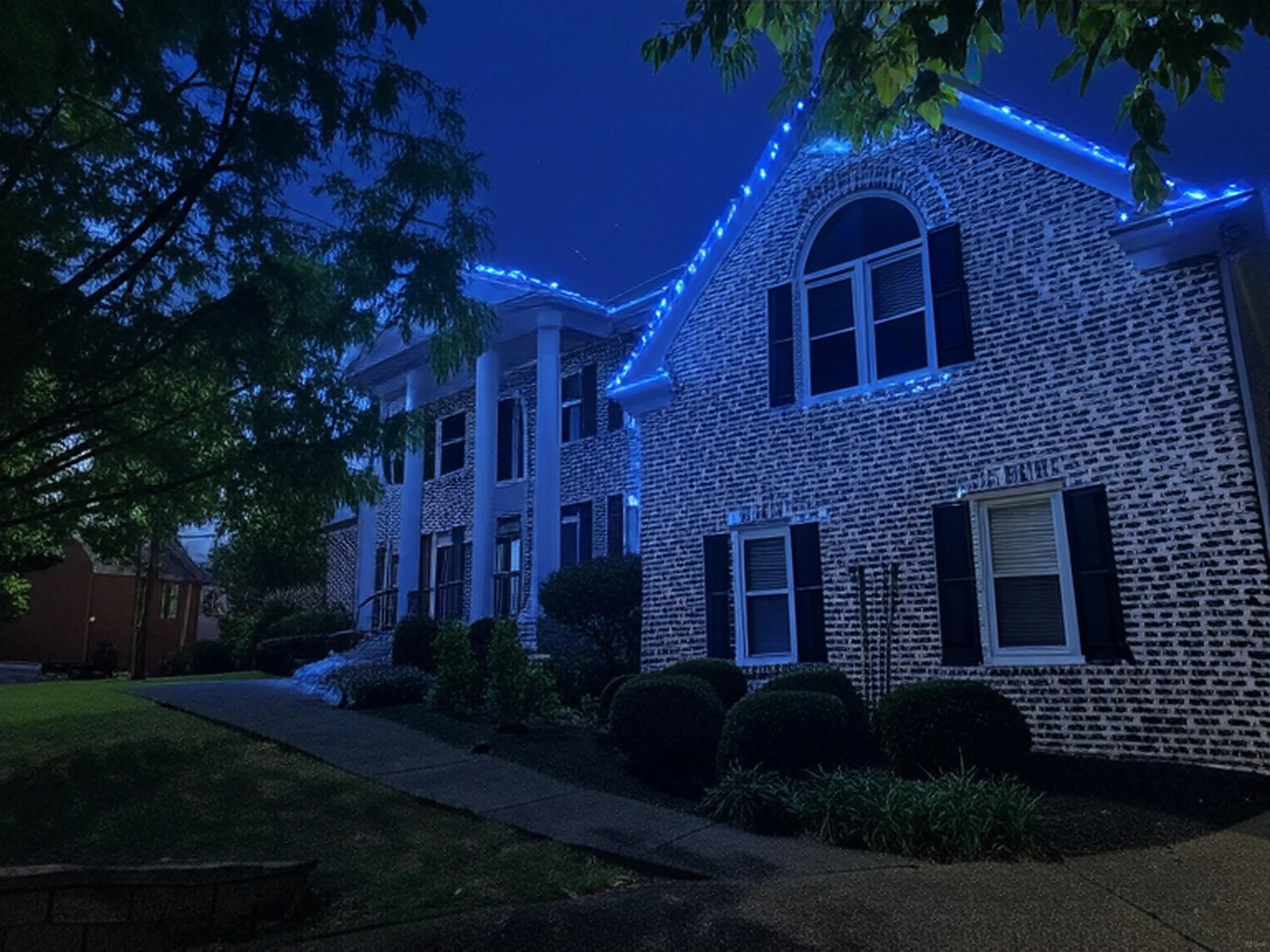
Dark red brick absorbs roughly 70–80 % of visible light; white German smear reflects 70–85 %, effectively tripling the perceived brightness of any light source aimed at or placed on the façade.
The slight unevenness of the mortar veil diffuses light softly, reducing harsh glare and hot spots common on smooth painted surfaces.
A neutral, cool-toned white base prevents color shifting that occurs when lights are placed against warm substrates (red brick, wood, or beige siding).
Recommended Holiday Light Colors and Their Effects on White German Smear
Pure White Lights (5000–6500 K, “cool white” or “daylight”)
Produce the brightest, cleanest glow with almost no color distortion.
Create a crisp, icy Scandinavian or modern minimalist aesthetic.
Make the house appear freshly snow-dusted, especially effective in regions that rarely see real snow.
Warm White Lights (2700–3000 K)
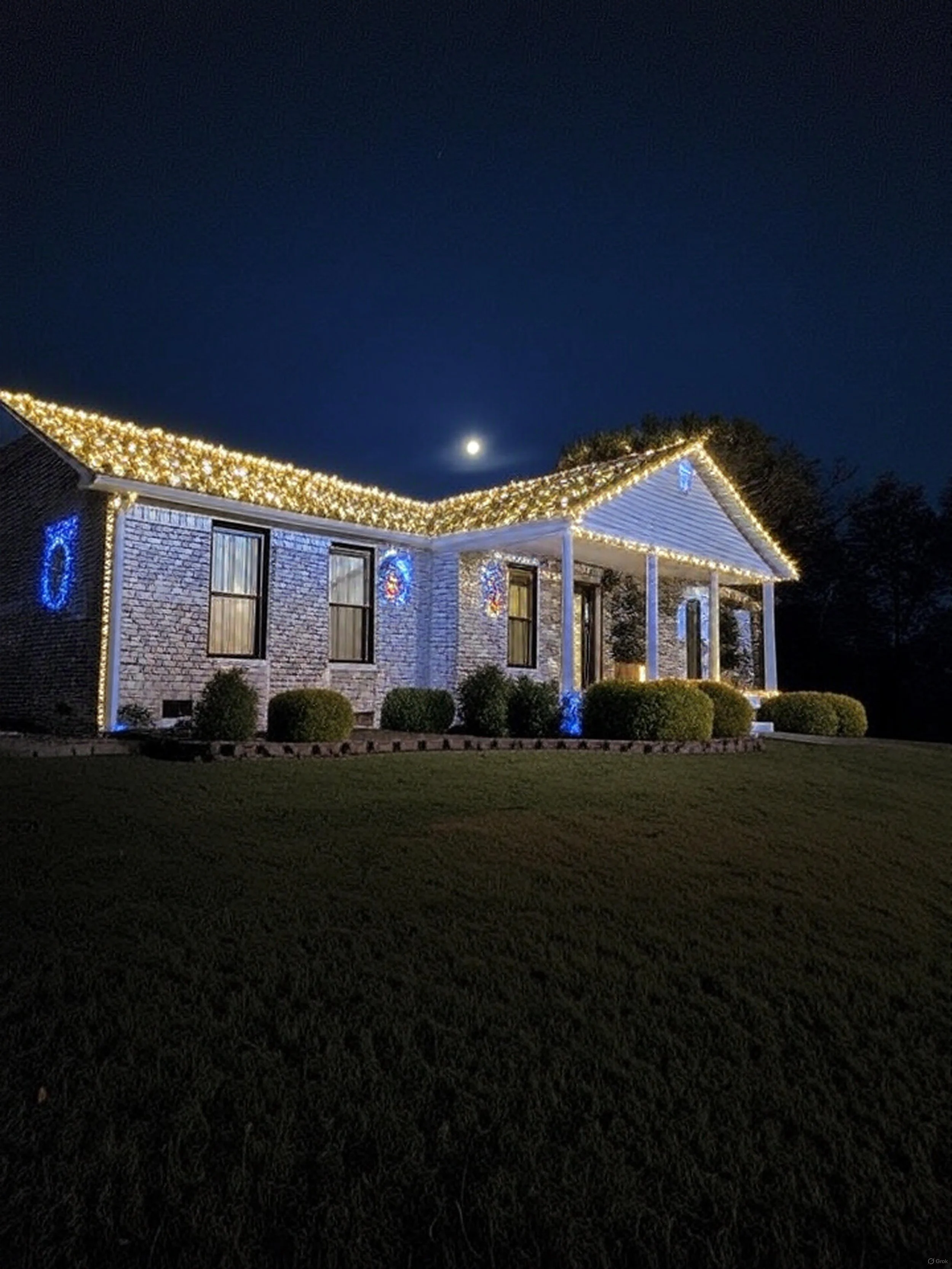
Deliver the strongest and most elegant contrast against the cool white smear.
Appear richer, deeper, and more golden than on red brick, where warmth is partially absorbed.
Classic choice for achieving a timeless European Christmas-village look.
Multicolor / RGB Classic Displays
Each individual color retains maximum saturation because the white background does not compete or muddy hues.
Red and green appear especially vivid—red stays true crimson instead of darkening, green stays emerald rather than olive.
Ideal for traditional “rainbow” outlines that need to read clearly from the street.
Blue and Ice-Blue Lights
Achieve dramatic, almost luminous intensity against the white surface.
Create a frozen-lake or winter-palace effect that photographs exceptionally well.
Pair particularly well with projection snowflakes or laser patterns.
Red-Only or Red-Dominant Displays
Deliver bold, candy-cane or Santa-suit impact without looking dull or brownish (a common problem on raw brick).
Maintain high visibility even from a distance.
Amber / Champagne / Soft Gold
Produce a sophisticated, understated glow that feels luxurious rather than garish.
Excellent for homeowners seeking elegance over maximal brightness.
Colors That Stand Out Less on White German Smear
Deep purple and dark green can appear muted unless used in very high-density installations.
Pastel palettes (pale pink, baby blue) blend into the background and lose definition from the curb.
Practical Lighting Techniques Enhanced by the White Surface
Roofline and eave outlines read cleanly with half the number of bulbs typically required on darker homes.
Window candle lights gain depth and appear to float against the textured veil.
Ground-mounted floodlights or projectors create even, wall-washing effects with minimal hot spots.
Net lights draped on shrubs in front of the façade reflect softly upward, adding secondary illumination to the brick.
Material and Performance Considerations in Winter
Breathable lime- or cement-lime mortars used in authentic German smear allow the masonry to manage moisture during freeze-thaw cycles, preventing damage from ice formation behind non-permeable coatings.
The light color reduces heat absorption on sunny winter days, minimizing thermal expansion stresses on the brick assembly.
Conclusion
A white German smear exterior acts as a natural amplifier and clarifier for holiday lighting, allowing precise control over which colors dominate the streetscape. By choosing warm white, pure white, vivid multicolor, or intense blue displays, homeowners can create effects ranging from serene winter elegance to joyful traditional brilliance—effects that are noticeably stronger and clearer than on neighboring untreated brick or dark siding. The technique, rooted in centuries of European winter building practice, continues to prove that reflective, light-toned masonry remains one of the most effective ways to make a house glow during the holiday season.
Looking to DIY?
Checkout SmearTech’s Signature White™ Mortar and German Smear Tools.
