Why Does My Brick Have White Spots on It?
Efflorescence appears as white, powdery spots on brick walls, a condition rooted in the natural behavior of masonry materials when exposed to moisture. Historically, this has been observed in brick constructions dating back to ancient Roman and medieval European buildings, where porous clay bricks and lime-based mortars were prone to salt migration due to environmental exposure. From an architectural standpoint, recognizing efflorescence matters because it highlights potential vulnerabilities in building envelopes, influencing long-term structural health and aesthetic preservation without compromising the breathability inherent to traditional masonry systems.
What Is Efflorescence?
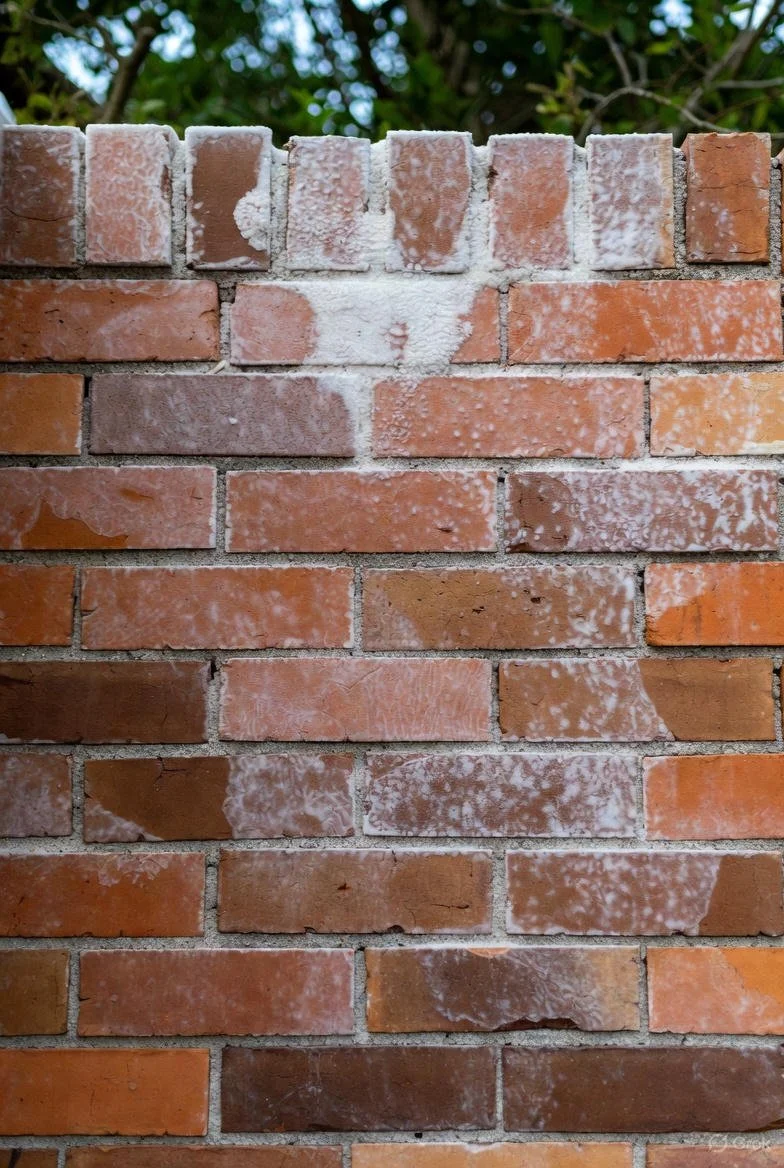
Efflorescence is the crystalline deposit of water-soluble salts that forms on the surface of porous masonry materials like brick, concrete, or stone. These salts, typically including compounds such as calcium sulfate, sodium sulfate, or potassium carbonate, originate from within the building materials themselves or from external sources like soil or groundwater. In building science terms, efflorescence is not a defect in the brick but a symptom of moisture movement through the material's capillary pores.
Architecturally, efflorescence has been documented in historical contexts, such as 19th-century industrial brick buildings in Europe and North America, where high-sulfur coal emissions contributed to salt formation. The term derives from the Latin "efflorescere," meaning "to flower out," reflecting how the salts bloom on the surface. Material behavior plays a key role: bricks with high porosity absorb water more readily, increasing the likelihood of salt transport.
How Efflorescence Forms
Efflorescence develops through a three-step process involving dissolution, migration, and evaporation, driven by water's interaction with masonry. First, water infiltrates the brick or mortar, dissolving inherent soluble salts—often byproducts of the firing process in clay bricks or hydration reactions in cement-based mortars. These salts can also enter from external sources, such as de-icing chemicals in cold climates or mineral-rich groundwater in areas with high soil salinity.
Next, as water moves through the material via capillary action, it carries the dissolved salts toward the surface. This migration is influenced by environmental factors like humidity gradients and temperature fluctuations, which create a driving force for vapor diffusion. Finally, when the water reaches the exterior and evaporates, the salts crystallize, leaving behind the visible white residue. In historical brick treatment methods, such as those used in colonial American structures, poor drainage or rising damp from foundations exacerbated this process, leading to recurrent efflorescence in damp climates.
Building science emphasizes the role of vapor permeability: materials with open pore structures allow easier water movement, while sealed surfaces can trap moisture internally, potentially worsening issues. Climate considerations are crucial—efflorescence is more prevalent in regions with wet-dry cycles, like coastal areas or temperate zones with seasonal rainfall, as opposed to consistently arid environments.
Methods for Removing Efflorescence
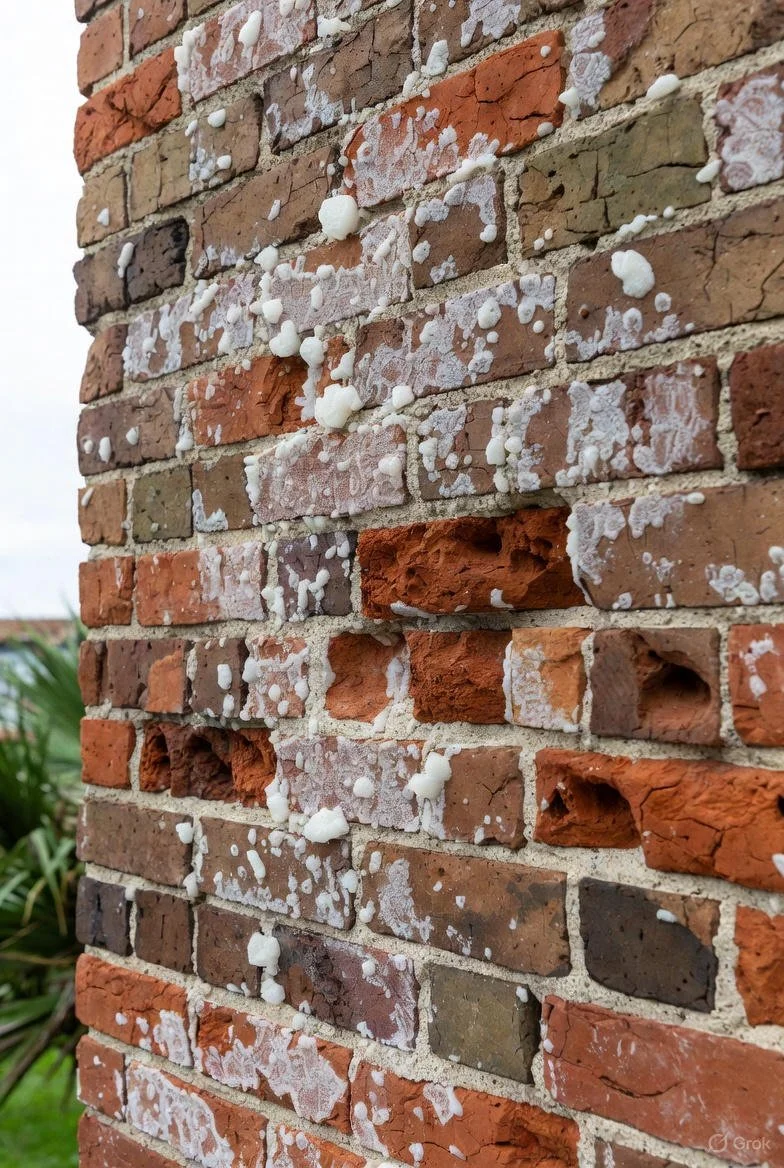
Removing efflorescence involves addressing both the visible deposit and its root cause, focusing on dry methods first to avoid driving salts deeper into the material. Initial removal typically starts with mechanical brushing using a stiff, non-metallic brush to dislodge the loose powder, followed by vacuuming to prevent redistribution. For stubborn deposits, a mild acidic solution, such as diluted muriatic acid (hydrochloric acid) at a 1:10 ratio with water, can be applied sparingly, but only after testing on a small area to ensure no damage to the brick's surface.
Key steps in the removal process include:
Dry brushing to remove surface crystals without introducing additional moisture.
Rinsing with clean water if needed, ensuring thorough drying afterward to prevent re-efflorescence.
Applying poultices—absorbent materials like clay mixed with water—for deep-seated salts in porous bricks.
Sealing or repairing moisture sources, such as fixing leaks or improving drainage, to halt recurrence.
Historically, in European mortar-wash traditions, efflorescence was managed through breathable lime-based treatments that allowed salts to migrate outward without trapping them. Always prioritize building science principles: avoid high-pressure washing, which can force salts inward, and consider climate impacts, like freeze-thaw risks in northern regions where residual moisture could lead to expansion damage during cleaning.
How Efflorescence Affects Applied Finishes
Efflorescence can significantly impact the performance and longevity of surface finishes on brick walls, as migrating salts exert pressure that disrupts adhesion and appearance. For breathable finishes like German smear—a mortar wash technique involving a thin layer of lime or cement-based slurry smeared over brick—efflorescence may push through if moisture issues persist, causing discoloration or flaking. This method, derived from historical European practices like German "Schmear" or "Kalkschlämme," relies on vapor permeability to allow salts to effloresce outward without delaminating the finish.
Limewash, a traditional breathable coating made from slaked lime, behaves similarly: it permits moisture vapor to escape, reducing the risk of trapped salts causing blistering. However, untreated efflorescence beneath can lead to patchy whitening as salts crystallize through the porous lime matrix. In contrast, non-breathable finishes like acrylic paint create a barrier that traps moisture and salts, resulting in peeling, bubbling, or cracking due to hydraulic pressure buildup. Building science highlights the importance of matching finish permeability to the substrate—high-vapor-permeable options like limewash (with ratings often exceeding 100 perms) minimize damage compared to low-perm paints (under 1 perm).
Material behavior under efflorescence includes:
Reduced adhesion in German smear if salts crystallize at the bond line, weakening the mortar-to-brick interface.
Discoloration in limewash, where salts blend with the white finish but may alter texture over time.
Structural failure in paint layers, as expanding salt crystals (up to 10% volume increase) exert forces exceeding the coating's tensile strength.
Climate factors amplify these effects; in humid areas, repeated wet-dry cycles accelerate salt mobilization through finishes.
Efflorescence and Brick Durability
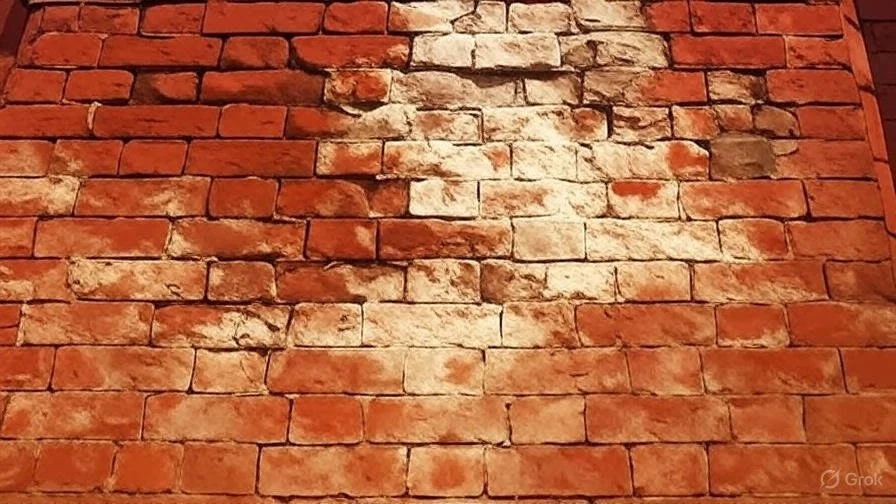
Efflorescence itself is generally cosmetic, but it signals chronic moisture exposure that can compromise brick durability through mechanisms like freeze-thaw cycling and salt weathering. When water laden with salts freezes within the brick's pores, the expanding ice—combined with salt crystal growth—generates internal pressures that lead to spalling, where surface layers flake off. This is particularly evident in historical brick structures in cold climates, such as those in northern Europe, where documented freeze-thaw damage has necessitated conservation efforts.
Over time, repeated efflorescence cycles erode the brick's surface integrity, reducing compressive strength and increasing susceptibility to erosion. Building science quantifies this: bricks with efflorescence often exhibit higher absorption rates (above 10% by weight), correlating with accelerated deterioration in environments with de-icing salts. Architectural context includes considerations for soft-fired historical bricks, which are more porous and thus vulnerable compared to modern dense varieties.
Factors influencing durability include:
Porosity levels: High-porosity bricks (common in pre-20th-century construction) allow greater salt ingress, heightening freeze-thaw risks.
Mortar composition: Lime mortars, historically used, offer flexibility to accommodate movement, unlike rigid cement mortars that crack under salt pressure.
Environmental exposure: In arid climates, efflorescence may stabilize without further damage, while in wet-freeze zones, it predicts potential structural weakening.
Conclusion
Efflorescence reveals critical insights into moisture dynamics in brick masonry, from its formation via salt migration to removal strategies that prioritize material preservation. It underscores the need for breathable finishes like German smear and limewash over impermeable paints to maintain vapor permeability and prevent adhesion failures. Ultimately, addressing efflorescence enhances brick durability by mitigating risks like spalling and erosion, preserving the architectural heritage of masonry structures through informed, science-based approaches.
Looking to DIY?
Checkout SmearTech’s Signature White™ Mortar and German Smear Tools.