The Role of German Smear in Enhancing Interior Aesthetics
German smear (known historically in German-speaking regions as Kalkschlämme or Weißschlämme) originated as a protective and decorative treatment for exposed brick and stone. While most literature focuses on its exterior applications, the technique has gained renewed attention for interior use. Inside the home, German smear transforms plain brick walls and fireplaces into focal points that add depth, tactility, and timeless appeal without upkeep of paint or the fragility of thin limewash coatings.
Historical Context of Mortar-Based Interior Finishes
Mortar washes on interior surfaces appear in documented European buildings as early as the late medieval period, particularly in southern Germany, Austria, and the Low Countries.
In rural Bavarian and Tyrolean farmhouses (c. 17th–19th centuries), lightly smeared brick or stone interiors reduced dust, brightened dimly lit rooms, and provided a modest decorative layer.
Similar heavy lime-mortar veils were common in Hanseatic brick warehouses and Dutch canal houses, where interior brick was left exposed but softened with white or light-gray washes for hygienic and aesthetic reasons.
These historical precedents demonstrate that thick, textured mortar applications were valued for their ability to unify irregular masonry while maintaining visual interest.
Aesthetic Contributions of German Smear Indoors
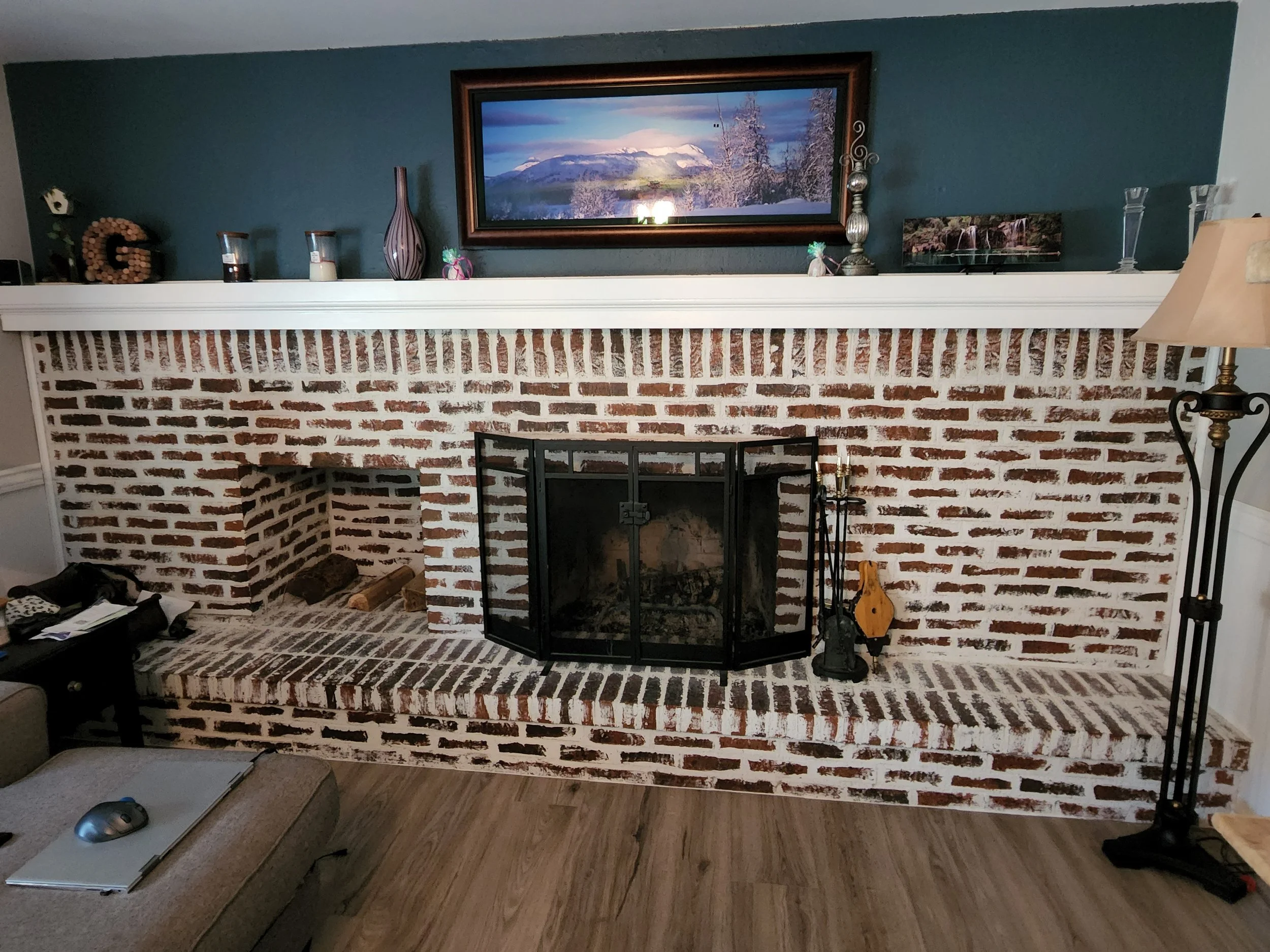
Softening and Unifying Brick Color
Raw red brick can dominate a room with intense warmth and visual noise.
A white or light-toned German smear mutes the brick’s natural hue, creating a calmer, more neutral backdrop that allows furniture, artwork, and textiles to take center stage.
The irregular application leaves traces of original brick color visible, preventing the wall from reading as flat or monotonous.
Adding Tactile Depth and Handcrafted Character
Unlike smooth drywall or painted surfaces, German smear retains the undulating texture of hand-troweled mortar.
Light plays across the uneven surface throughout the day, producing gentle shadows that enhance perceived depth and prevent the wall from appearing two-dimensional.
This inherent “wabi-sabi” quality aligns with current preferences for imperfect, artisanal finishes in Scandinavian, Belgian, and modern farmhouse interiors.
Bridging Architectural Styles
In historic homes (Craftsman, Tudor, or early 20th-century brick cottages), German smear respects the original masonry while refreshing outdated dark brick.
In new construction with deliberately exposed interior brick, the technique instantly ages the material, avoiding the “too new” look common in contemporary builds.
The finish pairs equally well with industrial loft elements, warm minimalist schemes, or eclectic bohemian spaces.
Expanding Perceived Space and Light
Light-colored smear dramatically increases albedo (surface reflectance) compared to raw brick.
Rooms with limited natural light—basements, north-facing spaces, or narrow urban townhouses—appear brighter and more open.
The subtle variation prevents the wall from feeling cold or clinical, unlike pure white paint.
Material and Performance Considerations for Interior Use
Interior German smear typically uses a lime-rich masonry mortar mixed to a thick, yogurt-like consistency.
Because interior brick is not subject to direct weathering, freeze-thaw durability is irrelevant; primary concerns are adhesion and breathability.
Lime-based components remain vapor-permeable, allowing minor moisture from cooking, showers, or respiration to migrate through the wall assembly without trapping condensation.
Once fully cured (28 days), the finish is surprisingly durable and can be gently cleaned with a dry brush or mild detergent solution.

Practical Aesthetic Outcomes Observed in Application
Fireplace surrounds: heavy smear creates a soft, cloud-like envelope that emphasizes the hearth as the emotional center of the room.
Accent walls: a single smeared brick wall provides texture and history in otherwise smooth, modern spaces.
Open floor plans: the finish helps delineate zones (e.g., dining area versus living area) without introducing new materials or colors.
Hallways and stairwells: lightened brick reduces the tunnel effect common in narrow circulation spaces.
Conclusion
German smear elevates interior aesthetics by transforming ordinary brick into a nuanced, light-reflective surface that carries both historical weight and contemporary relevance. Its ability to soften color, add tactile depth, and increase brightness—while preserving the honest character of masonry—explains its growing popularity across diverse architectural styles. When executed with attention to traditional proportions and curing practices, the technique delivers a permanent, low-maintenance finish that enhances rather than competes with the surrounding interior environment.
Looking to DIY?
Checkout SmearTech’s Signature White™ Mortar and German Smear Tools.