Removing Coatings from Brick Masonry: Paint, German Smear, and Limewash
Brick masonry has historically been left exposed or treated with breathable coatings like limewash in European traditions to allow vapor permeability and natural drying. Modern applications, such as painted brick or German Smear (a mortar-based wash often using Portland cement mixes), can alter this behavior. Removing these coatings restores original appearance and breathability but demands caution, as aggressive methods risk spalling, especially in freeze-thaw climates where trapped moisture expands.
Distinctions Between Coatings
Understanding material differences guides safe removal:
Limewash: A thin, lime-based slurry (historically Kalkschlämme) that carbonates into calcium carbonate. Highly vapor-permeable, it penetrates pores but remains relatively soluble.
German Smear (Mortar Wash): A thicker application of mortar slurry, commonly Portland cement-based in modern use (though traditional variants may include lime). Bonds mechanically and chemically, filling pores and joints for strong adhesion.
Painted Brick: Typically latex or oil-based paints, forming a film that reduces vapor permeability and can trap moisture if non-breathable.
Limewash is the most reversible; German Smear is semi-permanent; solid paint is often irreversible without substrate risk.
Building Science Considerations
Brick masonry relies on vapor permeability to manage moisture from rain, ground sources, or condensation.
Breathable coatings like limewash permit outward drying, reducing efflorescence and freeze-thaw damage.
Impermeable paint traps vapor, leading to spalling in cold climates.
Mortar washes vary: lime-based remain permeable; cement-based reduce permeability, potentially causing long-term issues if not removed carefully.
Removal methods must avoid sealing pores or introducing residues that hinder drying.
Freeze-thaw cycles exacerbate damage if moisture is trapped post-removal.
Removal Methods by Coating Type
Limewash Removal
Limewash, being calcium carbonate-based, responds to mild dissolution or mechanical loosening.
Water-based methods: Soaking with warm water and scrubbing with stiff bristle brushes for fresh or powdery layers.
Steam cleaning: Superheated low-pressure steam (e.g., DOFF systems) penetrates and lifts without abrasion.
Mild acids: Diluted phosphoric or glycolic acid for sulphated (carbonated) layers; hydrochloric acid risks damage and requires neutralization.
Poultices: Clay-based with mild solvents for stubborn residues.
Test patches essential; over-aggressive acids can etch brick.
German Smear (Mortar Wash) Removal
Modern German Smear often uses cementitious mortar, making removal challenging due to strong adhesion and pore filling.
Mechanical scraping: Wire brushes or low-pressure washing for thin layers; risks surface erosion on soft brick.
Acid dissolution: Muriatic (hydrochloric) acid softens cement-based mortar but requires caution—neutralize thoroughly to prevent salts.
Steam or hot water: Combined with softeners for partial lifting.
Abrasive caution: Avoid sandblasting on historic brick; gentler media (e.g., walnut shells) if necessary.
Cement-based smears are harder to remove than lime-based; complete reversal rarely achieves original brick condition.
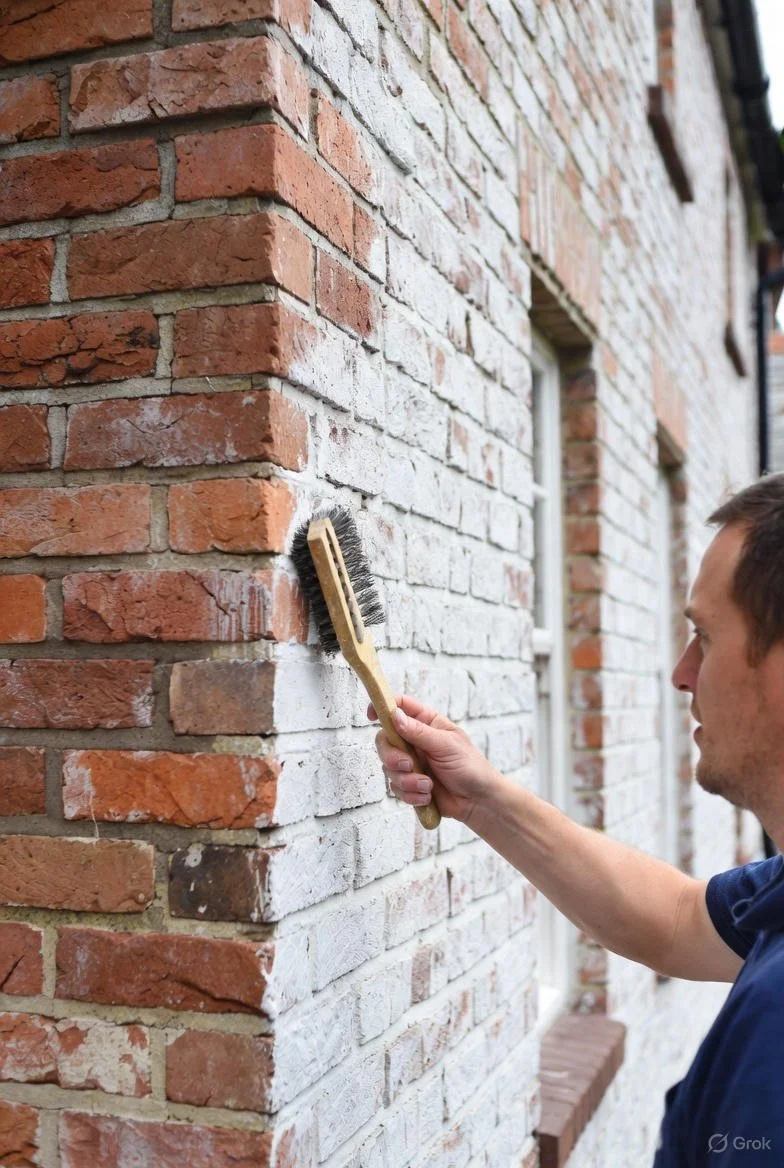
Painted Brick Removal
Paint films demand methods matching paint type while preserving masonry.
Chemical strippers: Alkaline for latex; solvents for oil-based. Masonry-specific products preferred.
Low-pressure washing: After stripping to rinse residues.
Steam or poultices: For breathable removal without deep penetration.
Avoid abrasives: Blasting erodes soft historic brick.
Multiple layers complicate process; paint removal restores permeability.
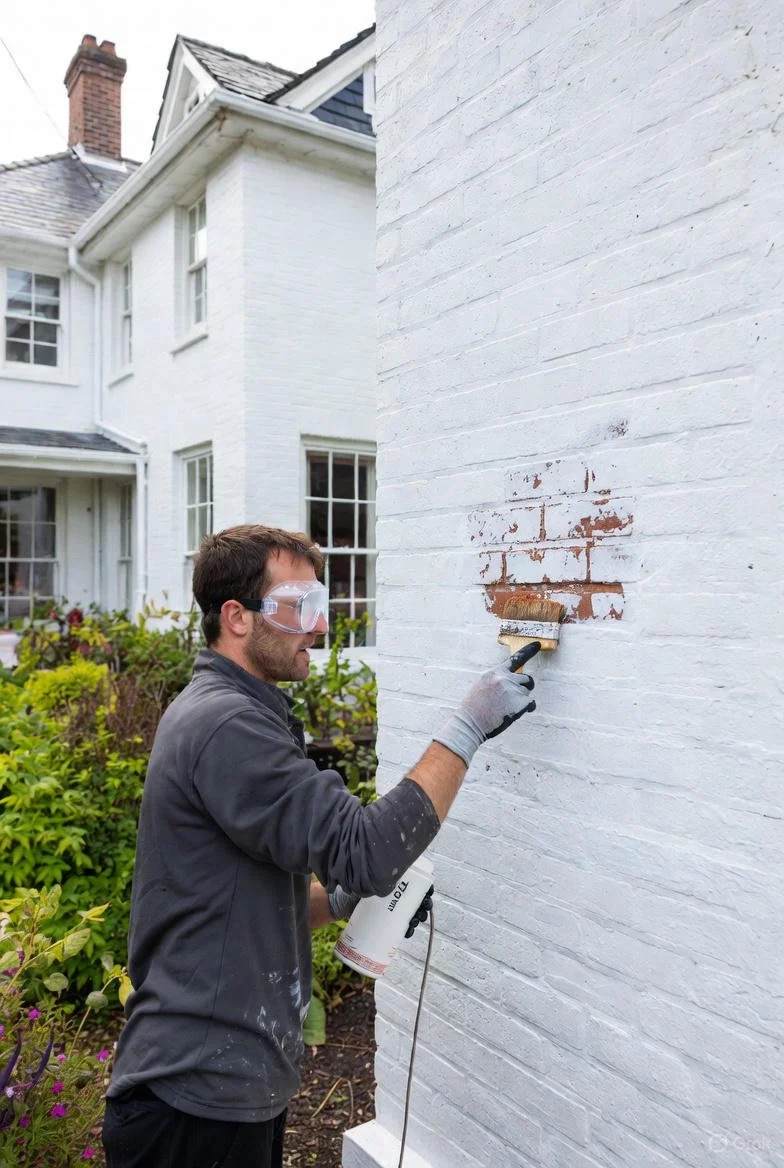
General Risks and Precautions
Test small areas: Assess brick hardness and coating response.
Protect surroundings: Runoff can damage adjacent materials.
Climate factors: Avoid freezing conditions; ensure drying post-removal.
Vapor permeability: Post-removal, brick regains breathability if pores remain open.
Conclusion
Removing limewash, German Smear, or paint from brick restores historical character and breathability but varies by coating composition—limewash most reversible, cement-based mortar wash least. Methods emphasizing gentleness preserve masonry integrity, preventing moisture-related deterioration in varying climates. Prioritizing building science principles ensures long-term stability of exposed brick.
Looking to DIY?
Checkout SmearTech’s Signature White™ Mortar and German Smear Tools.