The Evolution from Natural Stone to Manufactured Stone in Residential Construction
The use of stone in house construction represents one of the oldest architectural traditions, dating back to prehistoric times when early humans employed fieldstone and quarried rock for shelters and monuments. Natural stone's role evolved through ancient Egyptian, Greek, and Roman architectures, where it provided structural integrity and timeless beauty. In modern residential building, the transition to manufactured or engineered stone veneers addresses practical challenges like weight and cost, while maintaining the visual appeal of stone. This evolution highlights adaptations in material science and building practices to balance historical precedents with contemporary demands.
Historical Use of Natural Stone
Natural stone has been a cornerstone of residential and monumental construction for millennia, prized for its strength and availability.
Ancient civilizations relied heavily on local stones:
Egyptians used limestone and granite for pyramids and homes.
Greeks and Romans incorporated marble and travertine in domestic architecture.
In medieval Europe, stone formed castles and vernacular houses, often as load-bearing walls.
By the 18th and 19th centuries in America and Europe, fieldstone and quarried blocks built farmhouses and urban residences, demonstrating exceptional resistance to weathering.
Natural stone's historical dominance stems from its compressive strength and integration with lime-based mortars in traditional solid-wall construction.
The Emergence of Thin Stone Veneer and Manufactured Alternatives
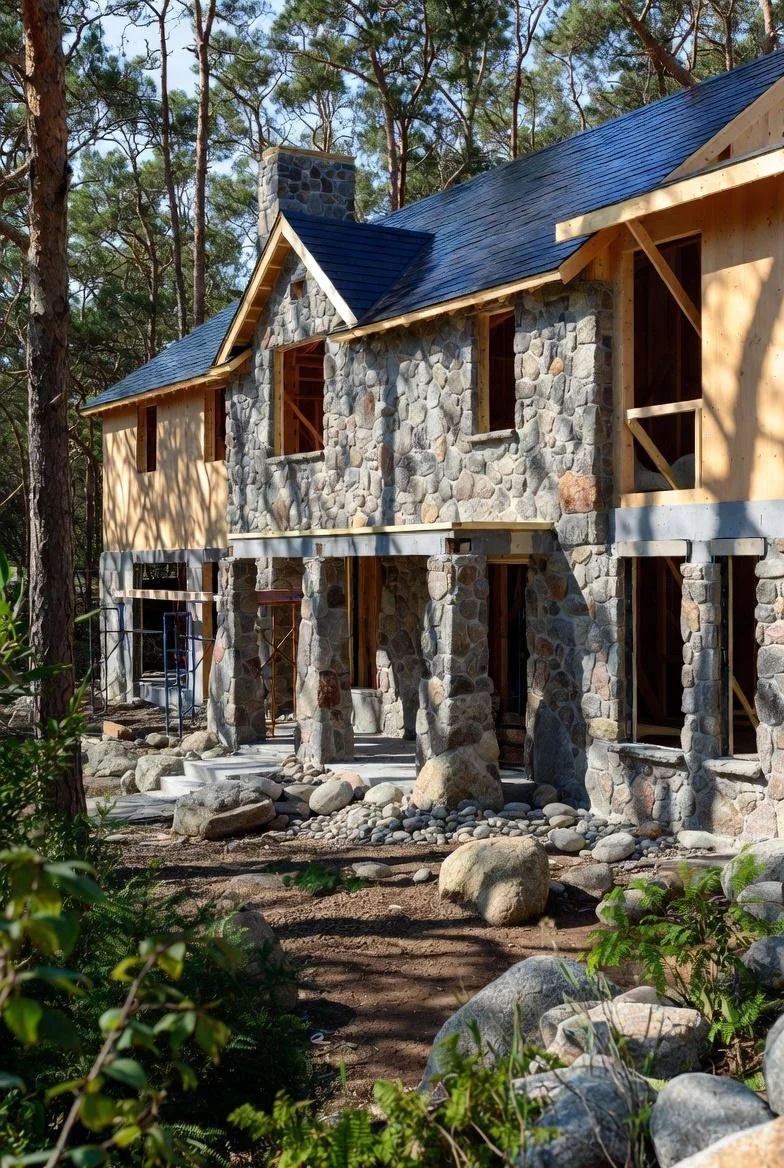
In the late 19th century, innovations in sawing allowed natural stone to be cut into thinner slabs, creating veneer applied over frames rather than full-thickness walls.
This reduced weight while preserving authentic appearance.
By the mid-20th century, particularly in the 1950s and 1960s, manufactured stone veneer emerged as a concrete-based product molded to replicate natural textures.
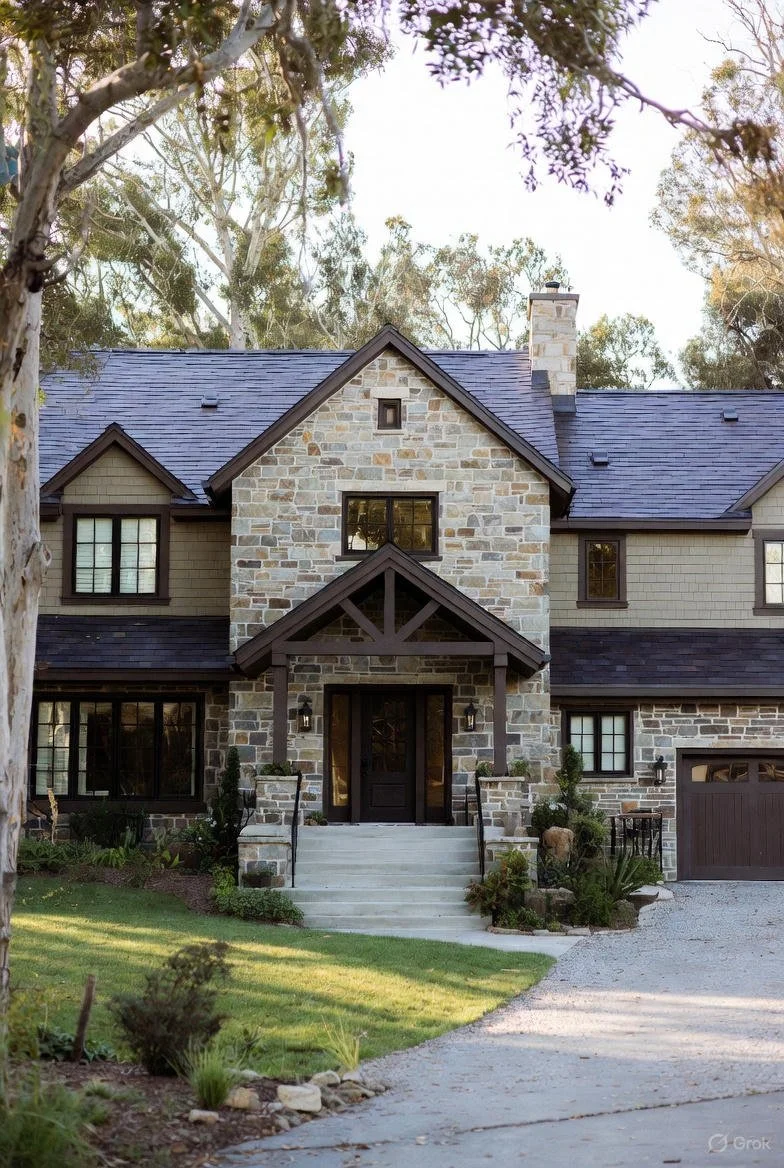
Composed of Portland cement, aggregates, and pigments, it provided a lightweight, uniform option for residential facades, fireplaces, and accents.
This development responded to postwar housing booms, enabling stone-like finishes on wood-framed or masonry substrates without structural reinforcements.
Material Properties and Building Science Considerations
Natural and manufactured stones differ in composition, affecting performance in residential applications.
Durability and Weather Resistance
Natural stone exhibits proven longevity, resisting fade, cracking, and biological growth when properly installed.
Manufactured stone offers good initial durability but may fade from UV exposure or chip, revealing its cementitious core.
Thermal Mass and Energy Performance
Dense natural stones like granite or limestone provide high thermal mass, absorbing and releasing heat slowly to stabilize indoor temperatures in fluctuating climates.
Manufactured stone, being lighter and often less dense, has lower thermal mass.
Vapor Permeability and Moisture Behavior
Many natural stones allow vapor transmission, reducing trapped moisture risks in solid walls.
Cement-based manufactured veneers have lower breathability, requiring careful detailing to prevent issues in humid or freeze-thaw environments.
Weight and Structural Implications
Natural full-bed stone demands robust foundations; thin veneers mitigate this.
Manufactured options are significantly lighter, simplifying installation on existing structures.
Conclusion
The progression from natural stone as a primary structural element to manufactured veneers illustrates architectural adaptation to efficiency and accessibility needs. Natural stone retains advantages in authenticity, thermal performance, and enduring durability rooted in historical use. Manufactured alternatives provide practical benefits in weight and uniformity for modern residential construction. Both materials continue to contribute to energy-efficient and visually appealing homes when selected based on climate, substrate, and design intent.
Looking to DIY?
Checkout SmearTech’s Signature White™ Mortar and German Smear Tools.