


The Historical Origins and Use of German Smear: A Timeless European Technique
German Smear, also known as Schmear, is a centuries-old technique that originated in Germany and has since become a beloved style in both European and contemporary architecture. This method involves applying a thin layer of mortar over brick or stone, creating a rustic, textured, whitewashed appearance. It was originally developed for both practical and aesthetic purposes and continues to captivate homeowners today with its timeless charm.
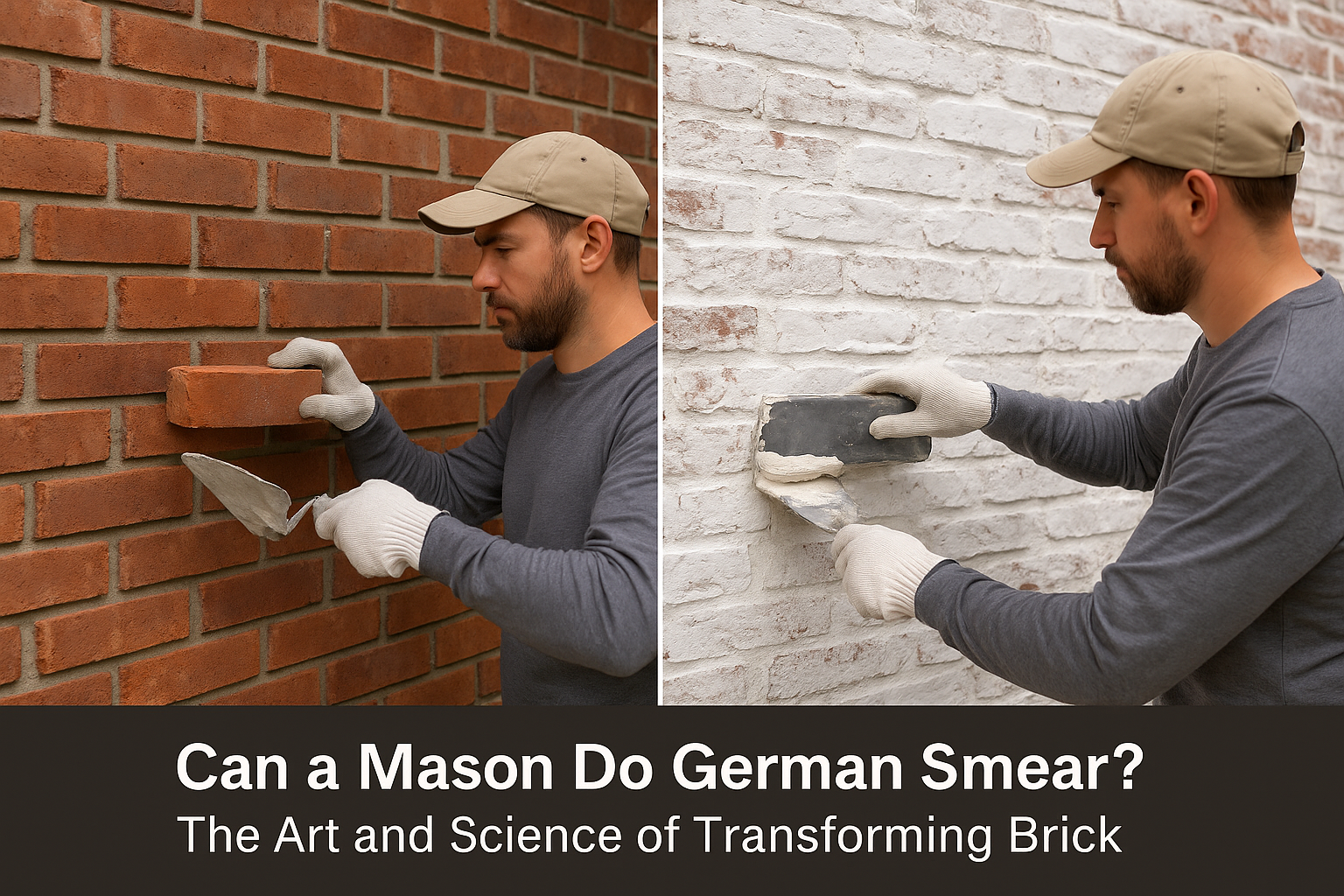
Can a Mason Do German Smear?
Not every mason is equipped to master the artistry behind a true German Smear. While traditional masonry focuses on structure and precision, German Smear requires a creative touch — blending technique, texture, and timing to achieve that signature old-world charm. In this article, we explore why this finish goes beyond standard brickwork, and what sets specialized craftsmen apart when transforming a home’s exterior.

Beyond Rustic: How German Smear Can Transform Any Style of Home
German Smear is no longer just for farmhouses. This hand-applied mortar finish can go sleek, artistic, or even bold with color. From black and gray to green, blue—even glow-in-the-dark—this technique transforms brick into a one-of-a-kind exterior masterpiece.

Limewash Pros and Cons: Everything You Need to Know Before You Commit
Limewash Pros and Cons: Is Limewash Worth It for Your Brick Home?
Thinking about limewashing your home? Discover the pros and cons of limewash, from breathability and beauty to upkeep and limitations. Learn if it’s right for your space.

Why German Smear Is the Ultimate Low-Maintenance Brick Finish
German Smear offers a timeless, low-maintenance solution for transforming outdated brick into durable, weather-resistant elegance. Discover why homeowners are choosing this no-repaint, mold-resistant finish that enhances curb appeal while saving thousands in upkeep.