The Destructive Impact of Paint on Brick Masonry
Brick has served as a durable building material for centuries, valued for its strength and natural ability to manage moisture. Historic brick structures rely on the porosity of both the brick units and lime-based mortars to allow water vapor to enter and escape freely—a property known as breathability. Applying impermeable modern paints disrupts this balance, transforming a resilient facade into one prone to hidden damage. This issue matters in architectural conservation because painted brick often conceals and exacerbates underlying problems, making preservation more challenging and costly over time.
The Science of Brick Breathability
Traditional fired clay brick is highly porous, with microscopic voids that permit moisture vapor transmission. Rainwater or humidity can enter the material, but in a well-designed wall with appropriate mortar and drainage, it evaporates outward without causing harm. Lime mortars, commonly used in pre-20th-century construction, enhance this vapor permeability. Modern acrylic or latex paints, however, form a film that severely restricts vapor movement, effectively sealing one side of the wall. This trapping forces moisture to seek other paths, often inward toward interior spaces or laterally through mortar joints.
Vapor permeability of unpainted historic brick: High, allowing natural drying.
Vapor permeability of painted brick: Low to negligible with non-breathable coatings.
Resulting moisture behavior: Accumulation behind the paint layer, increasing internal humidity and pressure.
Mechanisms of Damage from Trapped Moisture
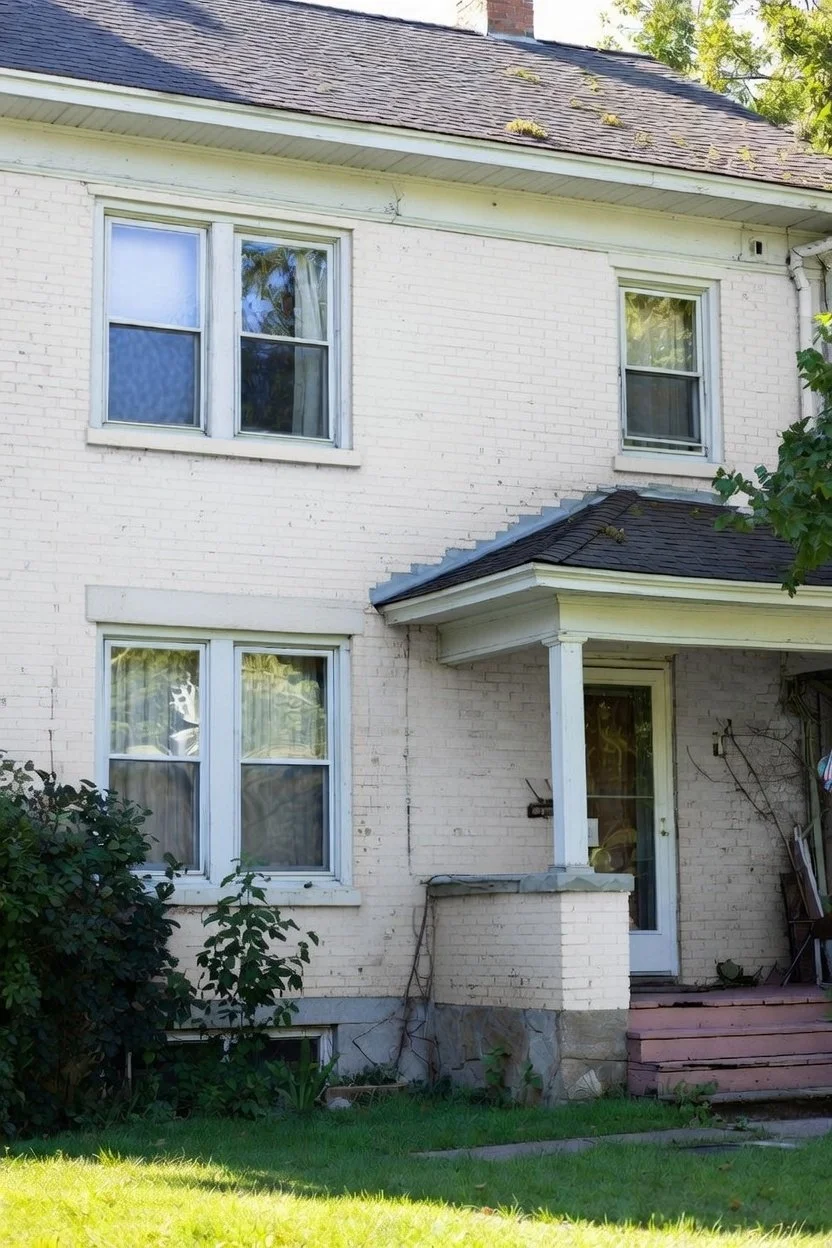
When moisture becomes trapped, several interconnected deterioration processes occur. In regions with freeze-thaw cycles—where temperatures fluctuate above and below freezing—water inside the brick expands by approximately 9% upon freezing. This exerts hydraulic pressure that exceeds the tensile strength of the brick, causing progressive failure.
Freeze-thaw cycling: Repeated expansion cracks the brick internally, pushing outward from the path of least resistance.
Spalling: The outer face of the brick flakes, pops off, or crumbles in layers, exposing softer inner material to further weathering.
Efflorescence: Soluble salts dissolved in trapped water migrate to the surface (or behind paint), depositing as white crystalline stains that can further weaken adhesion and structure.
Mortar degradation: Excess moisture accelerates erosion of softer mortar joints, compromising wall integrity.
These effects often appear gradually: initial paint bubbling or peeling signals subsurface pressure, followed by visible cracking and material loss.
Climate Considerations and Regional Vulnerability
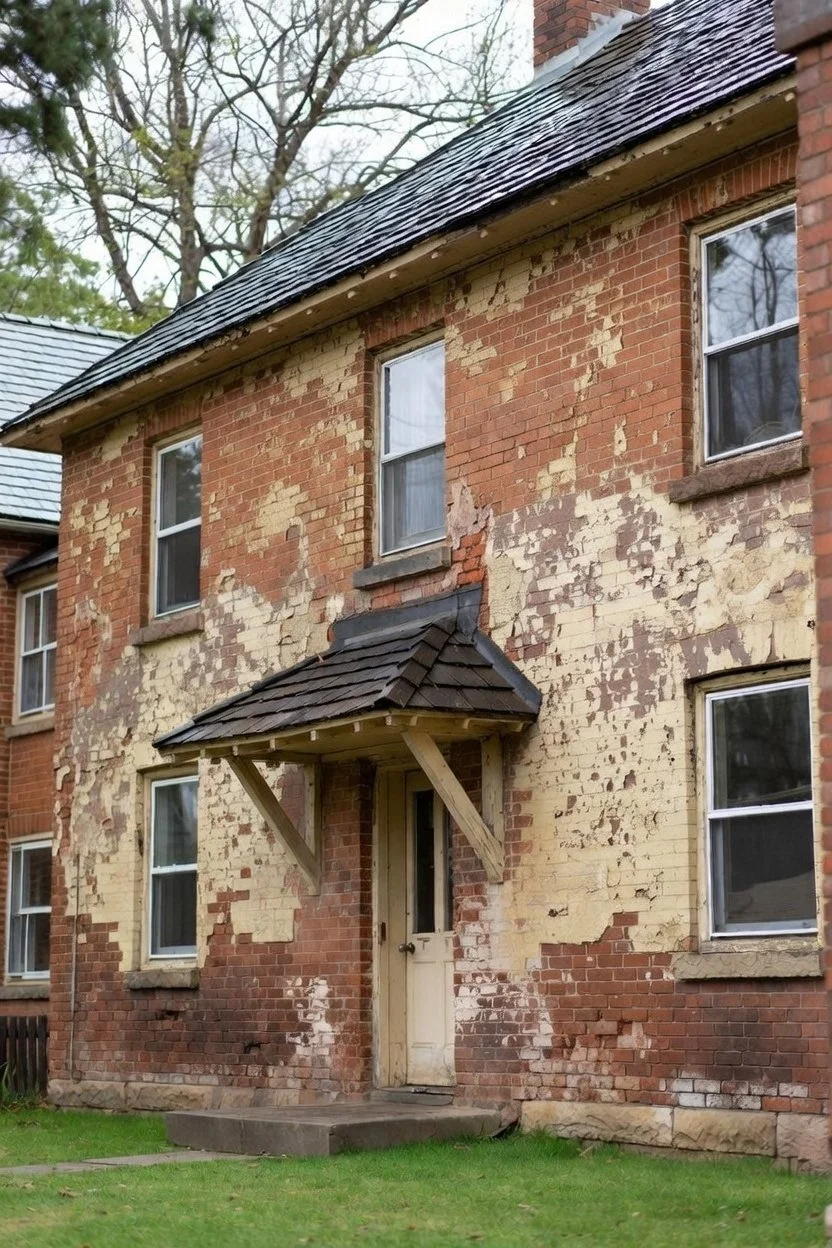
Damage from painted brick manifests most severely in climates with frequent freeze-thaw cycles, heavy rainfall, or high humidity. In colder regions, winter conditions amplify spalling as trapped water freezes repeatedly each season. Even in milder climates, prolonged dampness can promote mold growth within walls or efflorescence that undermines surface stability. Historic European building traditions avoided impermeable coatings precisely because of these risks; instead, breathable finishes like limewash (Kalkschlämme) or thin mortar applications (related to German Smear techniques) preserved masonry health.
Distinctions from Breathable Alternatives
Unlike impermeable paints, traditional treatments maintain or enhance breathability:
German Smear (also called Schmear or mortar wash): A thin, intentionally irregular layer of mortar wiped partially off the brick surface, allowing significant vapor transmission while providing some weather resistance.
Limewash: A mineral-based coating of slaked lime and water that bonds chemically without forming a film, permitting full moisture escape and self-healing minor cracks.
Painted brick: Forms a barrier film, trapping moisture and differing fundamentally from vapor-permeable historic methods.
These distinctions explain why European conservation guidelines prioritize removal of modern paints from historic masonry when feasible, favoring breathable replacements.
Conclusion
Paint on brick masonry disrupts the material's natural breathability, trapping moisture and initiating cycles of freeze-thaw damage, spalling, efflorescence, and mortar erosion. These processes compromise both aesthetic integrity and structural longevity, particularly in older buildings reliant on porous construction. Historical European practices demonstrate that vapor-permeable treatments better preserve brick's inherent durability, underscoring the long-term risks of impermeable coatings in architectural conservation.
Looking to DIY?
Checkout SmearTech’s Signature White™ Mortar and German Smear Tools.