Preparing a Brick Home for Spring: Historical Practices and Modern Building-Science Considerations
Brick has been a dominant building material in temperate climates for centuries because it is durable, fire-resistant, and naturally breathable. However, the same porosity that allows vapor to escape also makes brick vulnerable to water infiltration, salt efflorescence, and vegetation if not maintained. Spring is the ideal season to inspect and address winter damage before summer humidity and plant growth accelerate deterioration.
Inspecting the Masonry After Winter
Thorough visual inspection reveals issues that are easier and less expensive to correct in early spring.
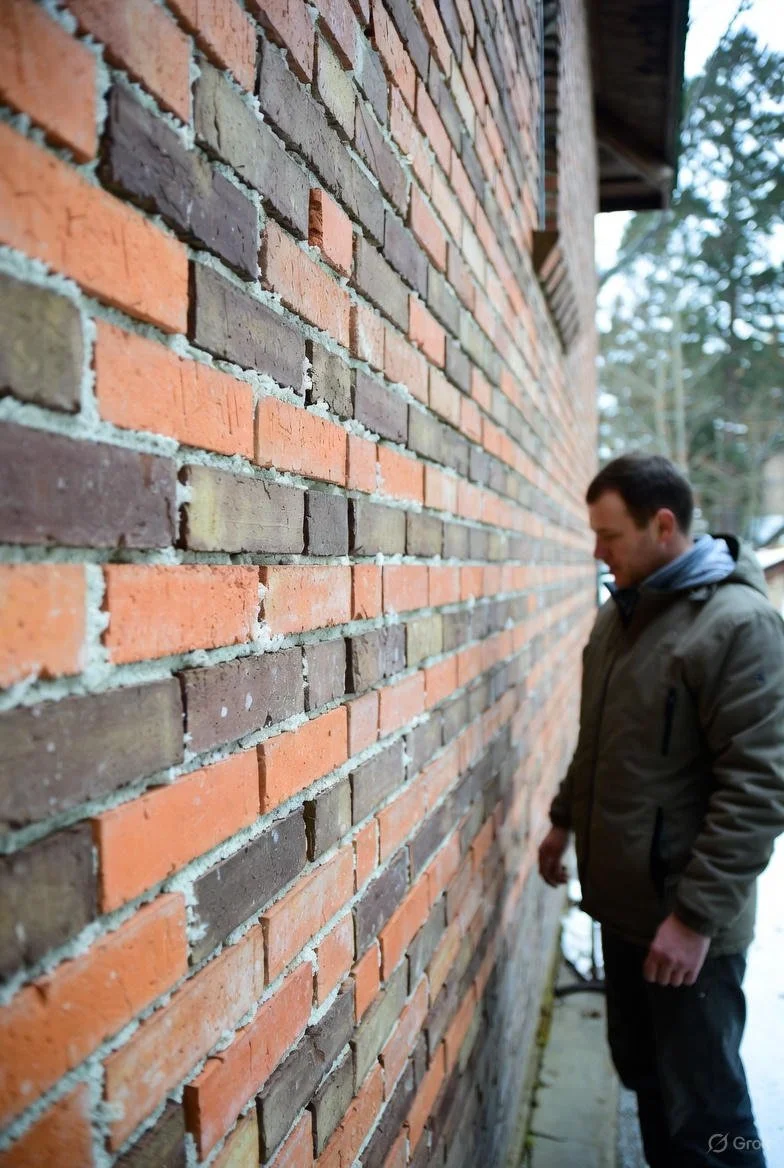
Examine all mortar joints for cracks, crumbling, or loss of material (spalling). Even hairline cracks wider than 1/16 inch (1.5 mm) can allow water entry.
Look for white, powdery deposits (efflorescence) on the surface—an indicator that soluble salts have migrated with moisture and crystallized.
Check for displaced or bulging brick courses, which suggest structural movement or long-term water saturation behind the wall.
Inspect flashing, weep holes, and through-wall drainage paths; winter ice can deform or block them.
Note any biological growth—moss, algae, or ivy—that thrived in winter dampness.
Cleaning Brick and Mortar in Spring
Aggressive cleaning methods common in the 20th century (sandblasting, high-pressure water, harsh acids) have been largely abandoned because they damage the fire-skin of historic brick and open micro-cracks. Current best practice follows conservation guidelines from Germany, the UK, and the U.S. National Park Service.
Recommended gentle cleaning approaches:
Use the lowest effective water pressure (under 500 psi) with wide fan tips and hot water if needed.
Apply biodegradable, non-ionic detergents approved for masonry; dwell time 3–5 minutes, followed by thorough rinsing.
For biological growth, a dilute solution of potassium-based algaecide or diluted hydrogen peroxide often suffices, followed by soft-bristle brushing.
Never seal the brick immediately after cleaning; allow at least 7–14 dry days for internal moisture to equalize.
Repointing and Local Mortar Repair
Historic brick buildings in northern Europe and early American settlements were typically laid with lime-based mortars that remain softer and more vapor-permeable than the brick itself. Modern Portland-cement repointing mortars are often too hard and impermeable, leading to premature face-spalling of the brick.
Key principles for spring repointing:
Match the original binder (usually lime or lime-rich historic “natural cement”).
Use a Type N or Type O mortar for most pre-1930 buildings; compressive strength should not exceed 350–750 psi.
Remove damaged mortar to a depth twice the joint width (minimum ¾ inch / 19 mm) to ensure good bonding.
Dampen the joint lightly before placing new mortar; lime mortars cure by carbonation and require moisture and air access.
Tool joints slightly concave or flush—never feather-edged or struck proud of the brick arris.
Managing Vegetation and Ground Contact
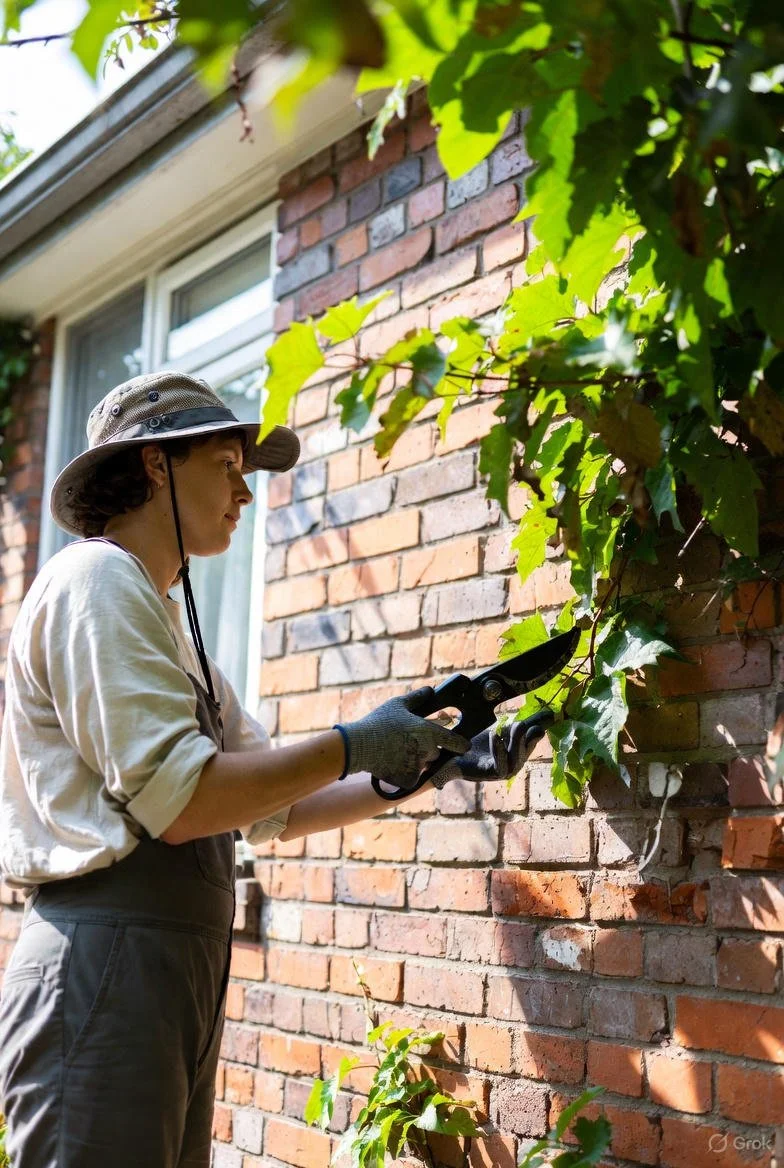
Spring is prime growth season for ivy, Virginia creeper, and climbing roses that attach to masonry with holdfasts or aerial roots.
Documented effects of vegetation on brick:
Holdfasts exert physical leverage that widens mortar joints over time.
Leaf litter traps moisture against the wall, accelerating biological attack.
Root systems near foundations can alter soil moisture and cause differential settlement.
Removal protocol:
Cut vines at ground level first and allow several weeks for foliage to die before pulling—reduces damage.
Hand-pull remaining tendrils; avoid wire brushing, which scars soft historic brick.
Install physical barriers (copper strips or stainless mesh) if recurrent growth is an issue; copper ions are toxic to many climbing plants.
Breathability and the Role of Traditional Surface Treatments
Many homeowners mistakenly believe that sealing or painting brick is the best protection. Building-science research since the 1980s has repeatedly shown that impermeable coatings trap moisture and accelerate spalling in freeze-thaw climates.
Historically accurate and vapor-permeable options:
Limewash (Kalkfarbe): multiple thin coats of slaked-lime putty, traditionally applied annually in rural Germany and Scandinavia.
Mineral silicate paints: chemically bond with masonry and maintain vapor permeability greater than 95 %.
German Smear / mortar wash (Kalkschlämme or Weißschlämme): a thin, lime-rich slurry rubbed into the brick face—popular in 18th–19th century Central Europe and still used on historic Fachwerk and solid masonry buildings.
These treatments allow the wall to “breathe” while providing sacrificial protection against driving rain and UV degradation.
Conclusion
Spring preparation of a brick home is fundamentally about restoring the masonry’s natural ability to manage moisture through evaporation rather than trapping it. By combining careful inspection, gentle cleaning, historically compatible repairs, and—if desired—breathable traditional finishes, owners can protect the architectural integrity and longevity of their brickwork for generations. The practices outlined above are rooted in centuries of European masonry tradition and validated by modern building-science research.
Looking to DIY?
Checkout SmearTech’s Signature White™ Mortar and German Smear Tools.