

Winter Threats to Brick Homes: A Building-Science Perspective on Cold-Weather Damage
Brick has sheltered buildings through centuries of European winters, yet no masonry is immune to cold-weather damage when moisture is present. Water expands approximately 9 % upon freezing, generating pressures that can reach 2,000 psi—far exceeding the tensile strength of most bricks and mortars. The severity of winter damage therefore depends less on temperature alone and more on how much water the wall absorbs before the freeze.
Key Forms of Winter Damage to Brick Homes
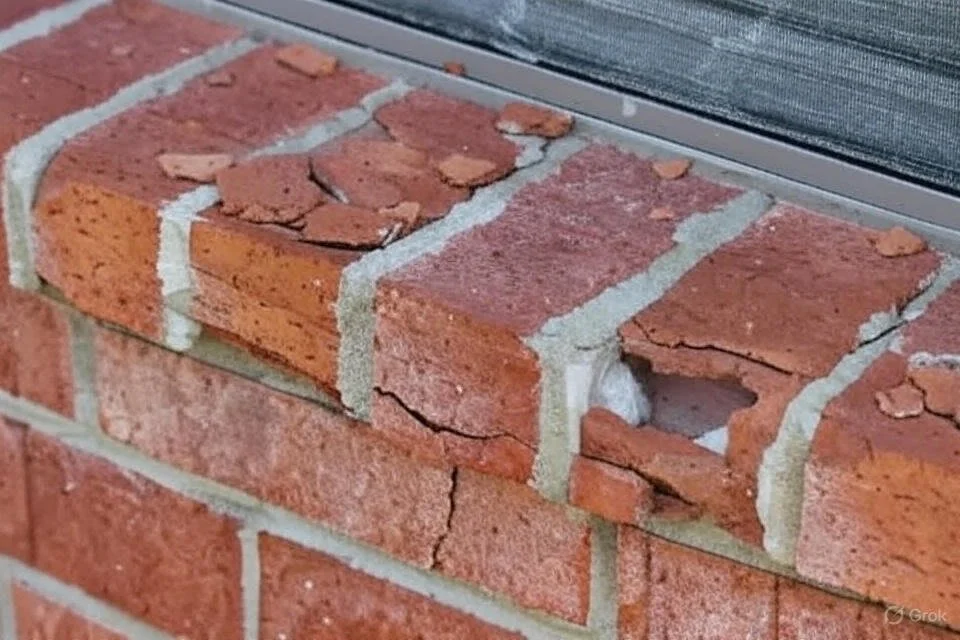
Spalling (Face Loss)
Liquid water absorbed into the brick’s pore structure freezes and pries the outer layer away.
Most common in older common bricks or soft handmade bricks with absorption rates above 15–20 %.
A single severe cycle can remove 1/8–1/2 inch of the brick face; repeated cycles eventually expose the core.
Mortar Joint Erosion and Loss
Saturated mortar freezes from the exposed face inward, turning lime-rich joints into powder and high-cement joints into cracked fragments.
Loss of even 1/4 inch from joint faces allows significantly more water into the wall the following year, accelerating the cycle.
Cracking from Thermal and Freeze-Induced Movement
Daily temperature swings of 40–70 °F cause brick to expand and contract roughly twice as much as concrete or steel.
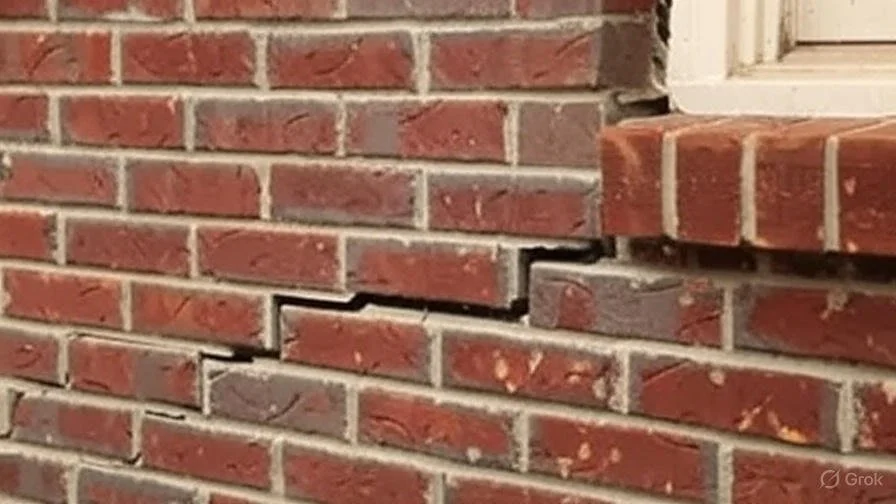
Step cracking at building corners, vertical cracks above windows and doors, and horizontal cracks at shelf angles often open widest during winter.
Efflorescence and Subflorescence (Salt Damage)
Winter’s alternating wet and dry periods mobilize soluble salts within the masonry.
Subflorescence—salt crystallization just beneath the brick surface—is especially destructive because the crystals exert outward pressure similar to ice.
Ice Lens Formation and Bulging
In solid 9-inch or 13-inch historic walls, water trapped behind the outer wythe can form thick ice lenses that push the entire brick facade outward.
Observed as sudden bowing or leaning sections after prolonged sub-freezing periods.
Failure of Modern Cavity Walls
Blocked weep holes and clogged cavities allow water to bridge across to the inner wythe.
Freezing water inside the cavity can crush rigid insulation, displace wall ties, and force brick outward.
Regional Risk Patterns
Areas with 40+ freeze-thaw cycles per winter (Upper Midwest, New England, Quebec, northern Germany, Scandinavia) experience the highest incidence of spalling and joint loss.
Wet-snow climates that keep walls saturated longer before hard freezes often suffer worse damage than drier, consistently cold regions.
Historical European Responses Still Relevant Today
Northern European masons countered winter threats through deliberate material choices and detailing:
High-lime, soft mortars that erode sacrificially rather than transmit stress to the brick.
Deep overhanging eaves and raised foundations to minimize splash-back and wind-driven rain.
Periodic application of breathable limewashes or thin Kalkschlämme coats that reduced water ingress while allowing vapor to escape.
Conclusion
Virtually all winter damage to brick homes traces back to one mechanism: liquid water inside the masonry freezing and expanding. The extent of deterioration depends on brick absorption, mortar composition, wall detailing, and the number of freeze-thaw cycles experienced. Centuries of cold-climate building practice confirm that keeping walls as dry as possible—through proper flashing, functional weeps, generous overhangs, and permeable finishes—remains the most effective defense against cold-weather masonry failure.
Looking to DIY?
Checkout SmearTech’s Signature White™ Mortar and German Smear Tools.
