Characteristics of Fired Clay Bricks: Dark Marks and Perforations
Fired clay bricks have been a fundamental building material for millennia, with their properties determined by raw clay composition and the high-temperature firing process. Dark marks, often described as scorch-like or black spots, arise from empirical observations of iron oxides and reducing atmospheres in kilns. Holes, whether through-perforations or surface indentations (known as frogs), address challenges in drying, firing, and masonry assembly. Understanding these features provides insight into building science principles such as thermal behavior, material density, and adhesion.
Dark Marks on Fired Clay Bricks
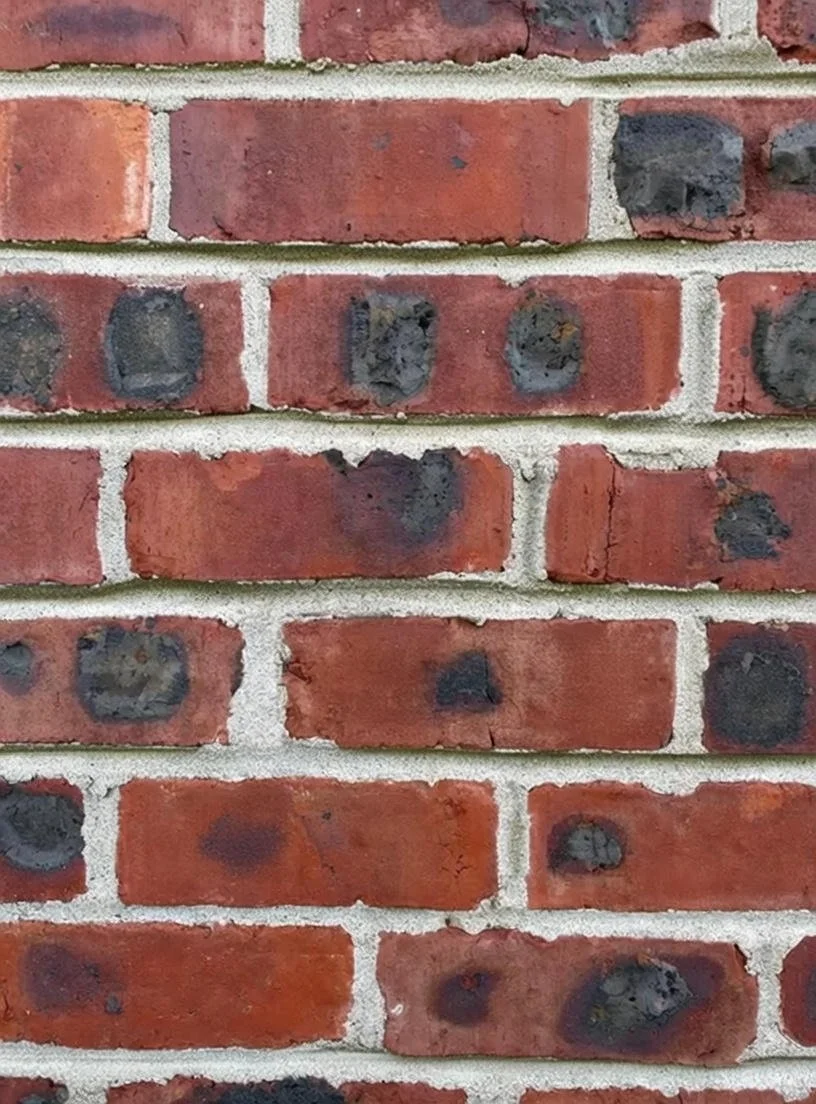
Dark marks on bricks commonly stem from the firing process, where clay undergoes vitrification and chemical transformations at temperatures typically exceeding 900°C.
Causes from Kiln Atmosphere and Clay Composition
Clay contains iron oxides, which influence final color under varying oxygen levels.
In oxidizing conditions (adequate oxygen), iron forms red hematite (Fe₂O₃), yielding typical red hues.
In reducing conditions (limited oxygen), iron converts to black magnetite (Fe₃O₄) or other dark minerals, producing black or blue surfaces—a technique known as flashing.
Uneven kiln atmospheres lead to localized dark spots.
Black Coring and Internal Darkening
Cross-sections of some bricks reveal a dark core, known as black coring or reduction core.
Caused by incomplete oxidation or residual carbon in thicker bricks, preventing full oxygen penetration.
Organic matter or sulfides in clay contribute, reducing iron to black forms.
Documented in structural clay products, this internal feature does not always appear on surfaces but indicates firing dynamics.
Surface Spots from Iron and Overfiring
Iron-rich inclusions in clay melt or react during firing, creating dark "iron spots."
Higher temperatures darken bricks overall or produce glossy black areas from vitrification.
Empirical testing shows these marks as permanent, integrated into the brick body.
These marks demonstrate vapor permeability and freeze-thaw considerations minimally, as fired clay's low porosity resists moisture-related damage compared to unfired materials.
Holes and Indentations in Bricks
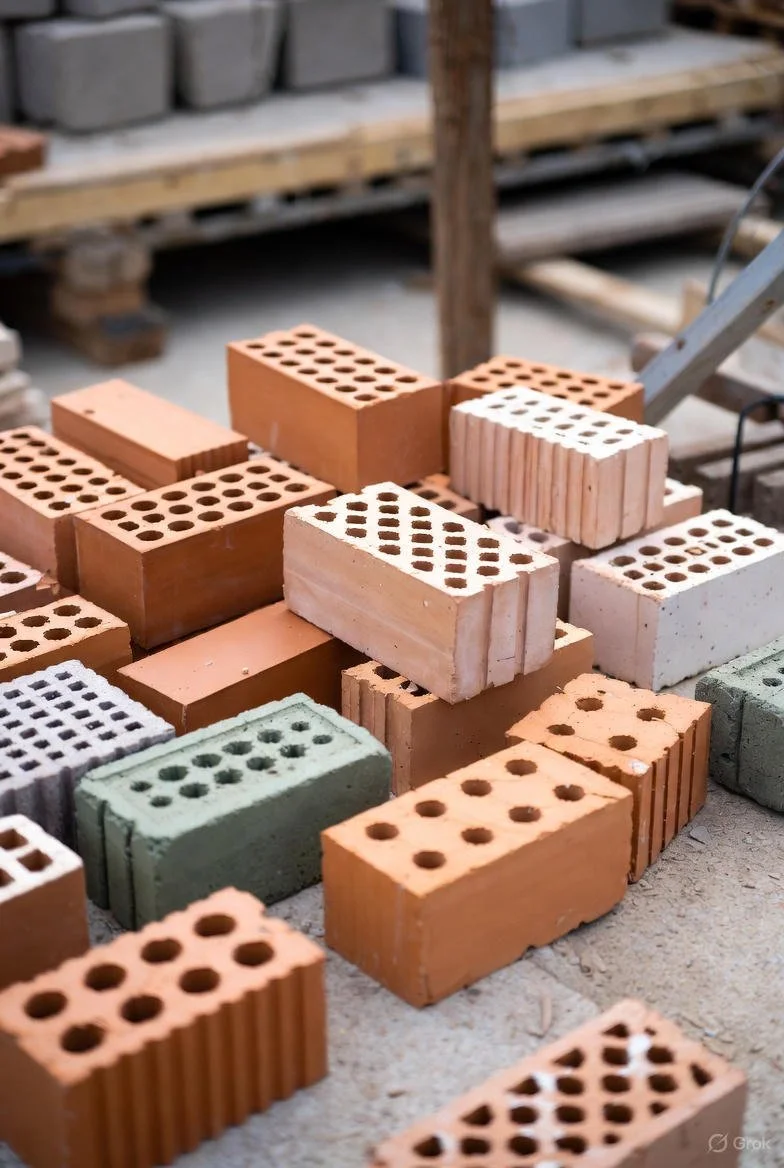
Holes in bricks appear as through-perforations in extruded types or shallow indentations (frogs) in molded types, with purposes grounded in material science and historical manufacturing.
Purposes of Perforations
Modern extruded bricks often feature cylindrical holes.
Uniform drying and firing: Holes allow heat and moisture escape, ensuring even vitrification and reducing cracking risks.
Weight reduction: Less clay per brick lowers dead loads in structures.
Improved mortar adhesion: Mortar fills holes during laying, creating interlocking keys for enhanced shear strength.
Thermal performance: Air pockets improve insulation in some designs.
Perforations typically comprise 20-50% of volume in hollow types, balancing strength with efficiency.
Frogs in Molded Bricks
Traditional molded bricks have a single or double indentation on one face.
Reduces clay usage while maintaining dimensions.
Facilitates even firing in kilns.
Provides space for mortar, strengthening bonds.
Historically allowed maker's marks.
Frogs are laid upward to ensure full mortar filling, supporting acoustic and thermal performance.
Material Behavior and Climate Considerations
Holes influence breathability by reducing mass, aiding vapor permeability in walls. In freeze-thaw cycles, perforated bricks exhibit lower saturation risks due to decreased density.
Conclusion
Dark marks on fired clay bricks arise primarily from iron reduction and kiln conditions, illustrating chemical principles in ceramics. Perforations and frogs optimize manufacturing, reduce material use, and enhance masonry performance through better firing uniformity and mortar bonding. These features reflect empirical advancements in brick production, contributing to durable, efficient construction with clay-based materials.
Looking to DIY?
Checkout SmearTech’s Signature White™ Mortar and German Smear Tools.