Comparing Stucco and German Smear Application Processes
Stucco, a plaster-like coating commonly used in Mediterranean and Southwestern architecture, and German Smear, a mortar-wash technique rooted in northern European cottage styles, both serve to transform brick exteriors. These methods matter historically as they protect masonry while allowing vapor permeability, preventing moisture-related damage in various climates. Understanding their application processes reveals shared principles in building science, such as adhesion and breathability, alongside distinct approaches to achieving aesthetic changes.
Application Processes
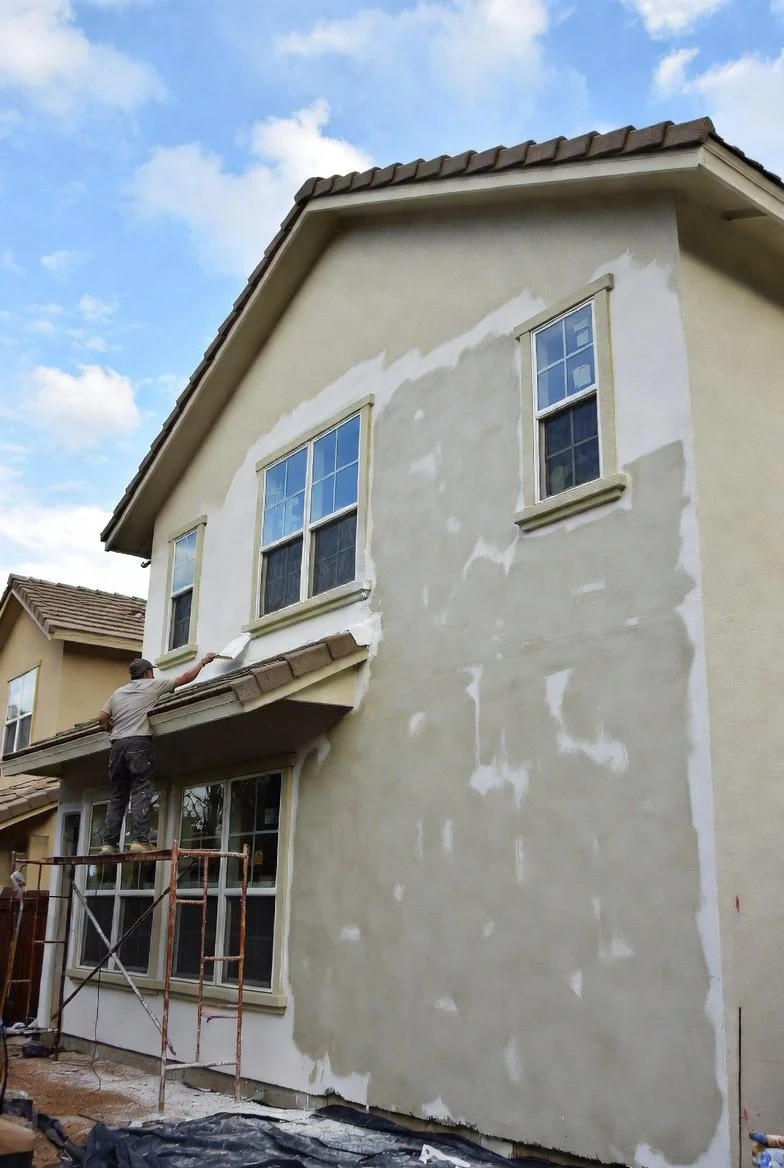
Stucco application typically follows a multi-coat system over prepared surfaces, ensuring structural integrity and a smooth or textured finish. German Smear, by contrast, is a single-layer technique focused on partial coverage for an irregular, rustic effect.
Key steps in stucco application include:
Surface preparation: Clean the brick and apply a bonding agent to promote adhesion.
Scratch coat: Apply a base layer of 1/4 to 1/2 inch thick, then score grooves for better bonding.
Brown coat: Add a leveling layer, allowing curing time between coats.
Finish coat: Apply the final layer for texture and color, often with tools to create patterns.
German Smear steps emphasize texturing:
Preparation: Dampen the brick to aid adhesion and slow drying.
Mixing: Combine mortar to a thick consistency, such as peanut butter.
Application: Spread mortar into joints and over bricks, then smear and remove excess while wet.
Finishing: Adjust coverage for desired exposure of underlying brick.
Both processes require careful moisture management to avoid cracking, with stucco demanding more curing time due to its thickness.
Building Materials
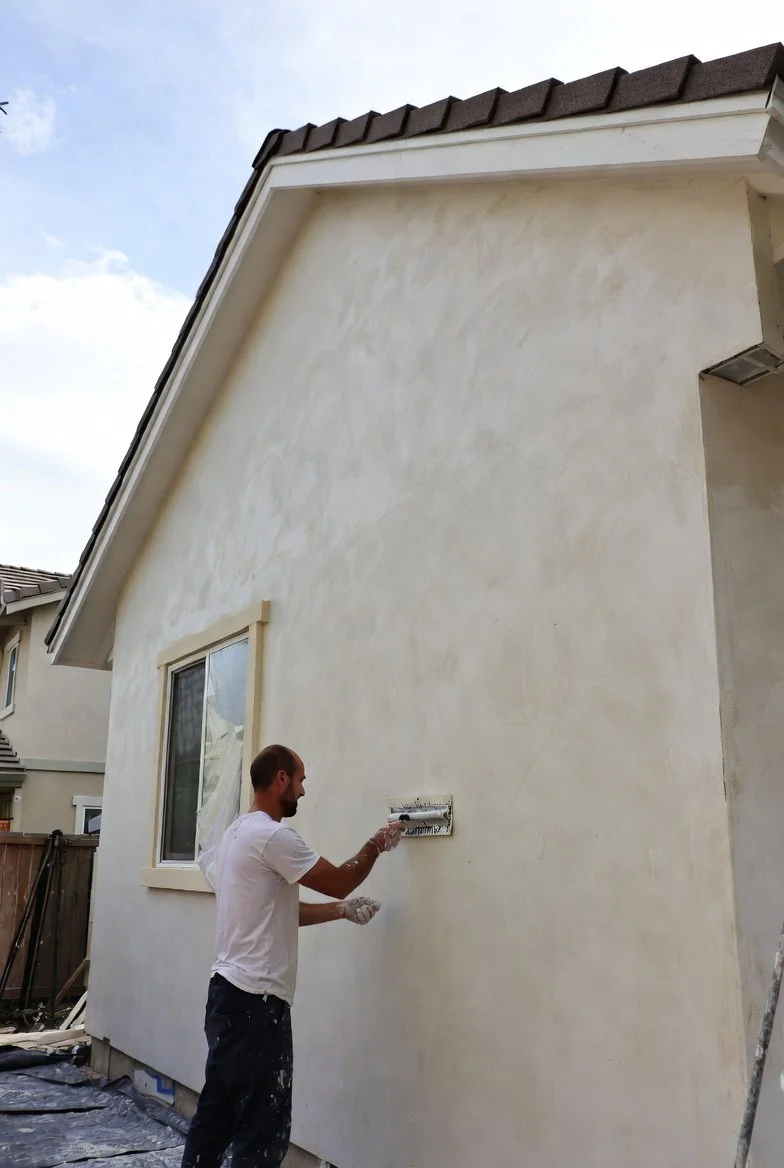
Stucco and German Smear share core components derived from traditional masonry, promoting vapor permeability and durability in freeze-thaw cycles. However, their formulations differ in proportions and additives.
Common materials in stucco:
Portland cement for strength.
Lime for workability and breathability.
Sand as aggregate for texture.
Water to form a workable mix; sometimes fibers or acrylics for modern variants.
Materials in German Smear:
Premixed mortar or thinset, often white-based, containing Portland cement, lime, and sand.
Water to achieve consistency; no additional layers or lath typically required.
Conclusion
Stucco mixtures are applied in thicker layers for full coverage, while German Smear uses a thinner, diluted mortar for partial overlay, allowing the brick's natural porosity to remain more evident. Both avoid impermeable seals, aligning with building-science principles that prevent trapped moisture.
Looking to DIY?
Checkout SmearTech’s Signature White™ Mortar and German Smear Tools.