Brick Home Exterior Ideas: 7 Ideas to Improve Your Curb Appeal
Brick exteriors represent a cornerstone of architectural history, commonly used in European and American construction for their strength, thermal mass, and ability to withstand environmental stresses. Improving curb appeal for a brick home means considering changes that enhance appearance without compromising the material's vapor permeability or structural integrity, which are key to preventing moisture-related issues like efflorescence or spalling. From historical finishes like German Smear and limewash to modern functional upgrades, these ideas highlight how such modifications can align with building-science principles, such as maintaining breathability and adapting to climate variations, to preserve the home's longevity while elevating its street-facing presence.
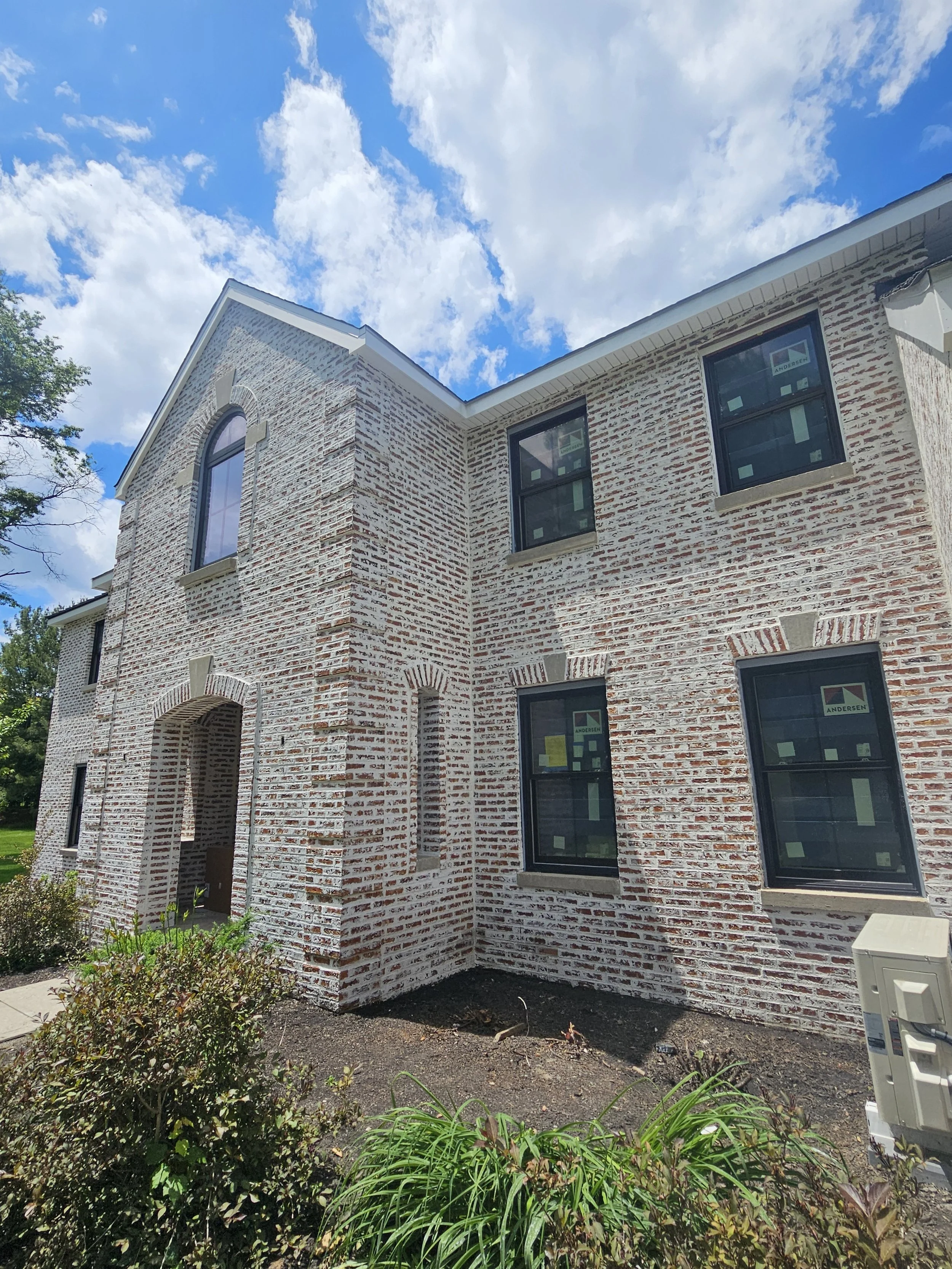
Applying German Smear for Textured Depth
German Smear, also known as Schmear or mortar wash, is a technique documented in European building traditions, mimicking the irregular mortar joints and weathered stone appearances found in centuries-old cottages and castles throughout northern Europe. This method involves applying a thin layer of mortar over brick surfaces and partially removing it to create a textured, aged effect that integrates with the brick's natural porosity.
In terms of building science, German Smear uses mortar compositions typically based on lime or cement, which allow for vapor permeability similar to brick, reducing the risk of trapped moisture that could lead to freeze-thaw damage in colder climates. Architecturally, it provides a rustic context suitable for traditional styles, enhancing visual interest without fully obscuring the brick's character.
Material behavior: Mortar adheres through mechanical bonding, strengthening the surface against erosion.
Climate considerations: Ideal for humid or variable weather, as it promotes evaporation and resists efflorescence.
Historical usage: Commonly used in restoration to replicate aged masonry from the medieval period onward.
German Smear Specialist
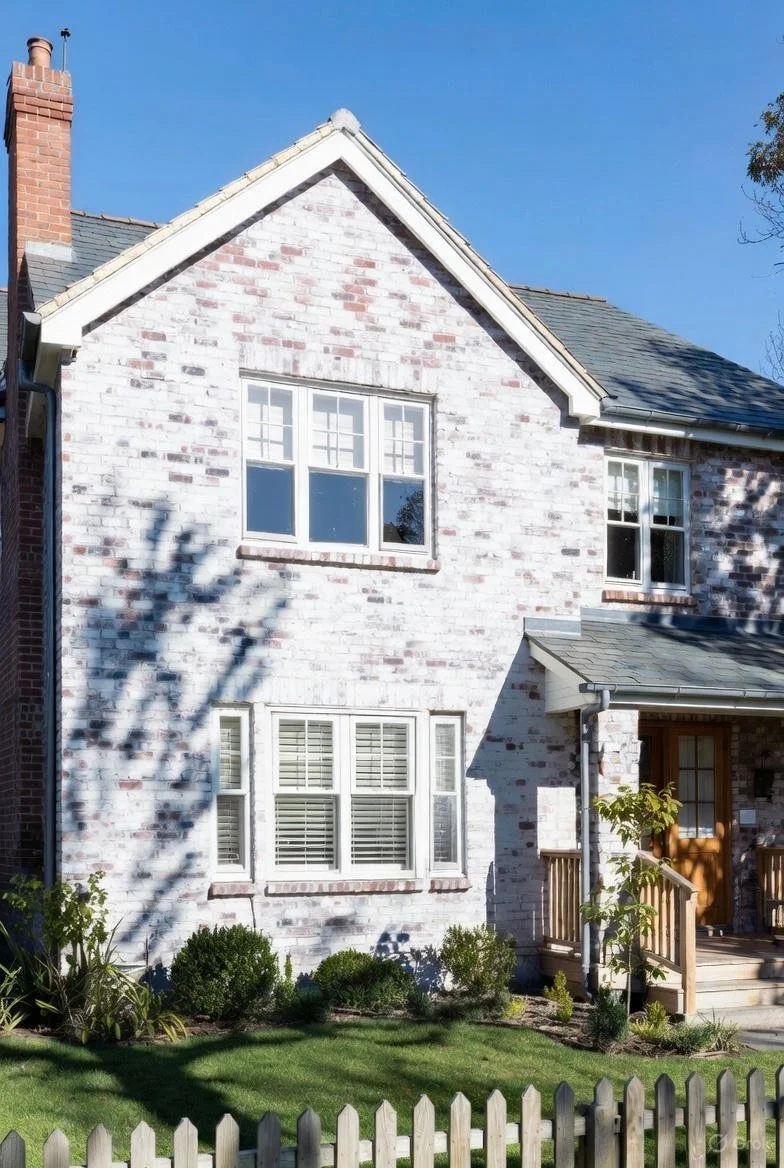
Using Limewash for Subtle Protection
Limewash, derived from slaked lime mixed with water and natural pigments, has been employed for centuries in Mediterranean and Colonial American architecture to protect and beautify brick and masonry structures. Historical records show its use as early as ancient Roman times, where it served both aesthetic and preservative functions on exterior walls.
Building science underscores limewash's benefits, including high vapor permeability that allows brick to "breathe," preventing internal moisture buildup that could cause deterioration in freeze-thaw cycles. Unlike impermeable coatings, it forms a chemical bond with the substrate, enhancing durability while developing a patina over time.
Distinctions from similar finishes: Limewash differs from whitewash by offering a more opaque, mineral-based layer that integrates into the brick; whitewash is often thinner and less durable, while paint seals the surface entirely.
Architectural context: Suited for historic preservation, providing a matte finish that softens brick tones in warm climates.
Material behavior: Reacts with carbon dioxide in the air to harden, increasing resistance to environmental wear.
Painting Brick for Uniform Appearance
Painting brick exteriors emerged in the 19th century as a way to modernize facades, though it contrasts with traditional practices that prioritized breathability. In building science, paint creates a barrier that can trap moisture within the porous brick, potentially leading to spalling, mold growth, or reduced longevity in areas with high humidity or temperature fluctuations.
Pros based on material science: Easier surface cleaning due to smoother texture; can mask imperfections in older brick.
Cons from climate perspectives: Risks deterioration in wet climates by impeding evaporation; not recommended for historic structures.
Distinctions: Unlike German Smear's textured mortar or limewash's breathable integration, paint fully coats and seals, requiring ongoing maintenance to avoid peeling.
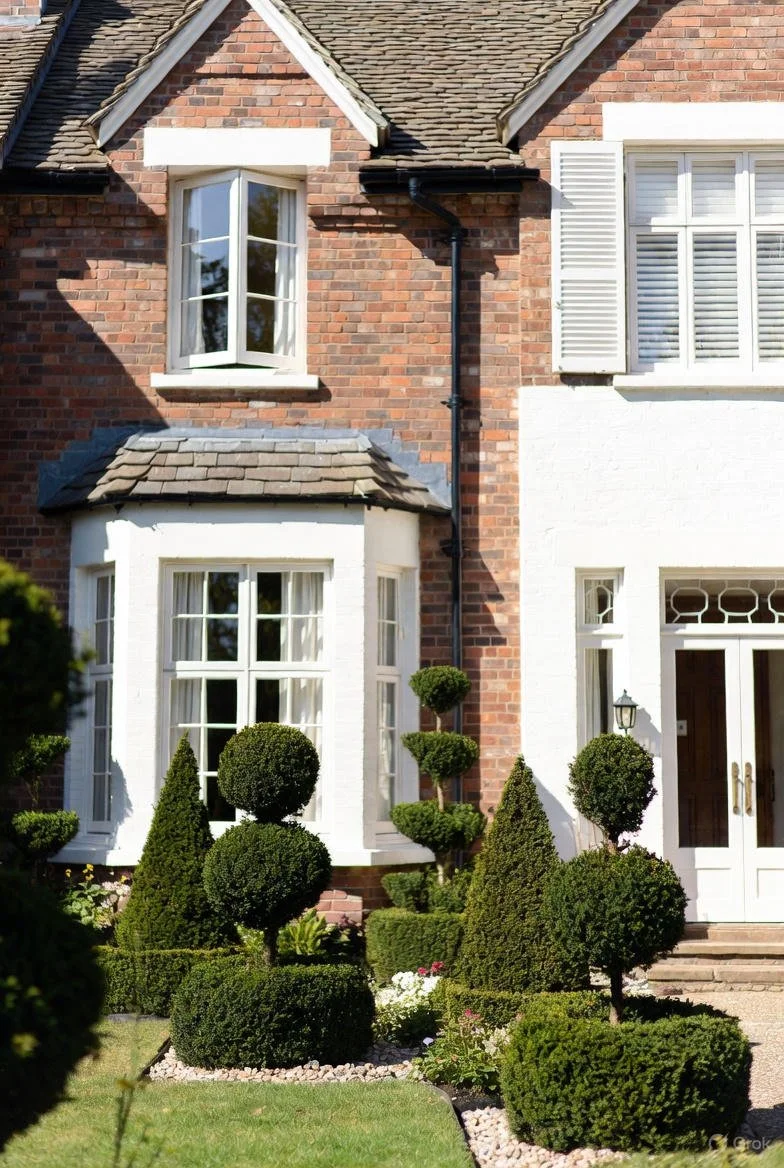
Enhancing Landscaping with Topiaries, Trimming, and Edging
Landscaping around brick homes draws from historical garden designs, such as those in English cottage styles, where structured plantings complemented masonry exteriors. Trimming bushes, shaping topiaries, and edging yards create defined borders that frame the brick facade, improving visual balance.
Building science intersects here through soil management, as proper edging prevents root intrusion that could affect foundation stability in clay-rich soils. Architecturally, these elements add layers of texture and color, enhancing curb appeal in various climates by directing water away from the brick base.
Structured data on ideas: Topiaries provide sculptural forms using species like boxwood for year-round interest; bush trimming maintains neat shapes to avoid overshadowing windows; yard edging with stone or metal defines lawn areas, reducing erosion.
Historical usage: Commonly integrated in 18th-century American landscapes to echo European formal gardens.
Climate considerations: In arid regions, select drought-tolerant plants; in rainy areas, ensure edging promotes drainage.
Installing Irrigation Systems for Consistent Maintenance
Irrigation systems, evolving from ancient aqueduct principles, ensure even water distribution to lawns and gardens surrounding brick homes. Documented in early 20th-century suburban developments, they support plant health without manual effort, contributing to a manicured appearance.
From a building-science viewpoint, efficient systems like drip irrigation minimize runoff and evaporation, preventing excess moisture near brick foundations that could lead to efflorescence in humid climates. Architecturally, they sustain vibrant greenery that contrasts with brick textures, boosting overall aesthetic harmony.
Benefits: Automated scheduling adapts to weather, avoiding overwatering; enhances property durability by maintaining soil stability.
Material behavior: Uses low-pressure emitters for targeted delivery, conserving water in dry regions.
Historical context: Builds on Roman engineering for controlled hydration in landscaped estates.
Replacing Windows for Improved Efficiency
Updating windows in brick homes aligns with architectural advancements from the Industrial Revolution, when glass production allowed for larger panes. New windows enhance light entry and frame views, complementing the solid presence of brick exteriors.
Building science emphasizes energy-efficient models with low-E coatings, reducing heat transfer and condensation that could damage adjacent brick in cold climates. Material behavior involves vinyl or wood frames that resist warping, ensuring long-term fit within brick openings.
Architectural context: Shifts toward modern minimalism or historical mullions, depending on style.
Climate considerations: Double-glazed units improve insulation in variable weather.
Historical usage: Evolved from small casements in medieval brick structures to expansive designs in contemporary builds.
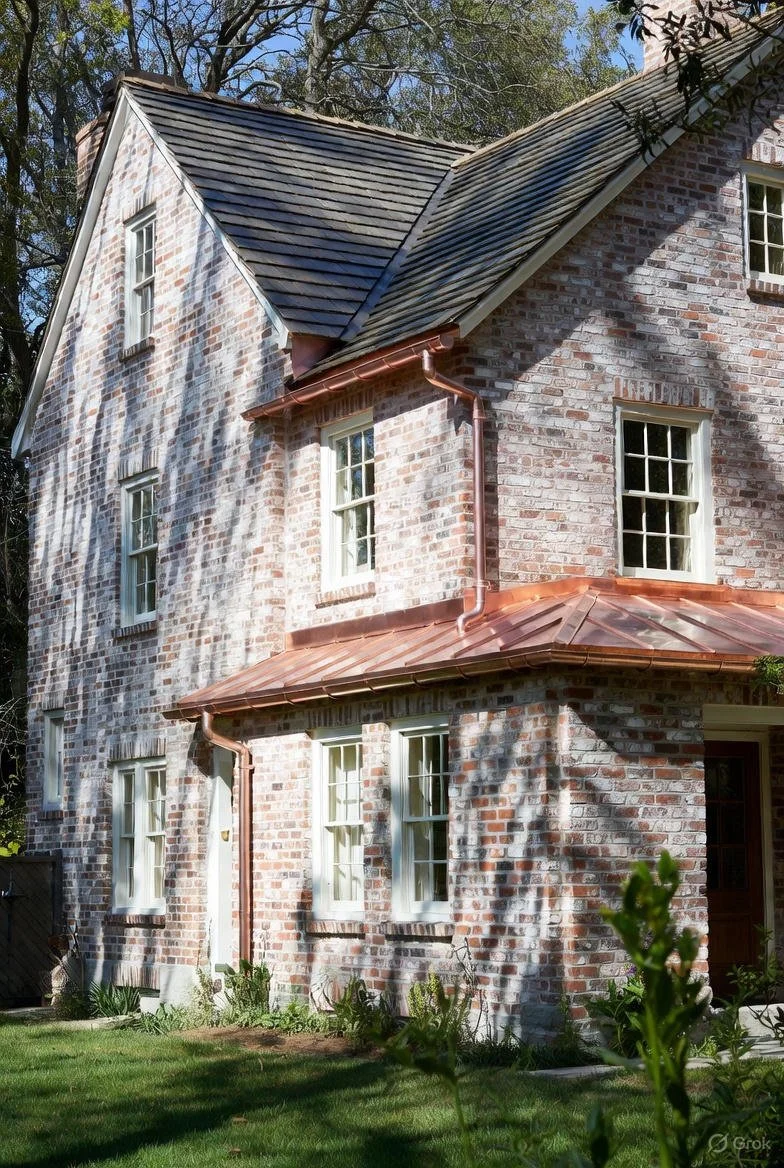
Upgrading Rain Gutters for Functional Integration
Rain gutters, with roots in ancient Roman drainage systems, direct water away from brick exteriors to prevent erosion and staining. Upgrading to seamless models improves flow and reduces leaks, preserving the facade's integrity.
In building science, properly sized gutters (such as 6-inch for heavy rainfall areas) manage stormwater, mitigating hydrostatic pressure on foundations. Architecturally, color-matched gutters blend with brick tones, maintaining a cohesive look.
Material options: Aluminum for durability; copper for patina in historic contexts.
Climate considerations: Essential in rainy regions to avoid freeze-thaw cycles damaging mortar.
Historical usage: Commonly added to brick buildings in the 19th century for protection against weathering.
Conclusion
These seven ideas demonstrate how brick home exteriors can be enhanced through a blend of historical techniques and practical updates, always prioritizing building-science principles like breathability and moisture management. By distinguishing between permeable finishes such as German Smear and limewash versus sealing options like paint, homeowners can make informed choices that respect architectural traditions. Ultimately, such modifications contribute to the enduring appeal and structural health of brick structures across diverse climates.
Looking to DIY?
Checkout SmearTech’s Signature White™ Mortar and German Smear Tools.