The Critical Role of Drainage Holes in Brick Retaining Walls for Gardens
Retaining walls hold back soil to create level planting areas, terraces, or raised beds in gardens. When constructed from brick, these walls are subjected to lateral earth pressure and, more critically, to water pressure that builds up behind them after rain or irrigation. Historically and in modern practice, the inclusion of drainage holes (commonly called weep holes) and a drainage plane has been recognized as essential to prevent cracking, bulging, efflorescence, and eventual collapse. This post examines the engineering and material-science reasons why drainage provisions are indispensable in any brick garden retaining wall.
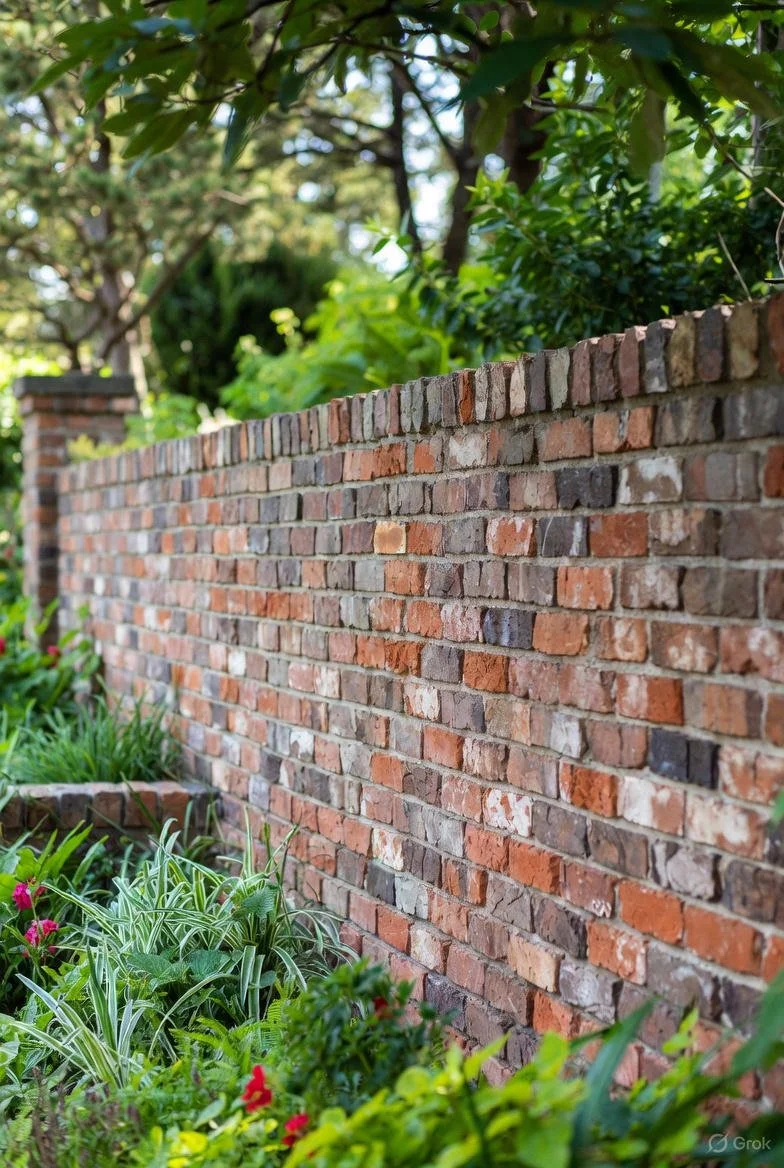
Why Water Accumulation Threatens Brick Retaining Walls
Water trapped behind a retaining wall exerts hydrostatic pressure that increases exponentially with height and saturation. Even a modest 1-meter (3-foot) wall can experience forces strong enough to displace bricks or fracture mortar joints if no relief is provided.
Key consequences of poor drainage include:
Hydrostatic pressure pushing the wall outward
Freeze-thaw cycling in cold climates that spalls brick faces and widens mortar joints
Efflorescence and subflorescence caused by soluble salts migrating through the masonry
Saturation of the retained soil, reducing its shear strength and increasing lateral load on the wall
Root damage to garden plants from prolonged waterlogging in the backfill
The Function and Placement of Weep Holes
Weep holes are intentional openings, usually 10–20 mm (⅜–¾ in) in diameter, placed at the base of the wall and sometimes at intermediate courses in taller structures. Their primary roles are:
To relieve hydrostatic pressure by allowing water to exit freely
To ventilate the cavity or backfill, reducing moisture accumulation within the wall core
To serve as visible indicators that the internal drainage system is functioning (water should drip from weeps after rain)
Standard historical and contemporary placement guidelines:
First row of weep holes located at or just above the footing or lowest mortar bed, typically every 600–900 mm (24–33 in) horizontally
Additional rows every 4–6 courses vertically for walls over 1.2 m (4 ft) in height
Open head joints or tubes inserted during construction (plastic, copper, or rope wicks are historically documented methods)
Minimum 10 mm clear opening; never filled with mortar or sealed later
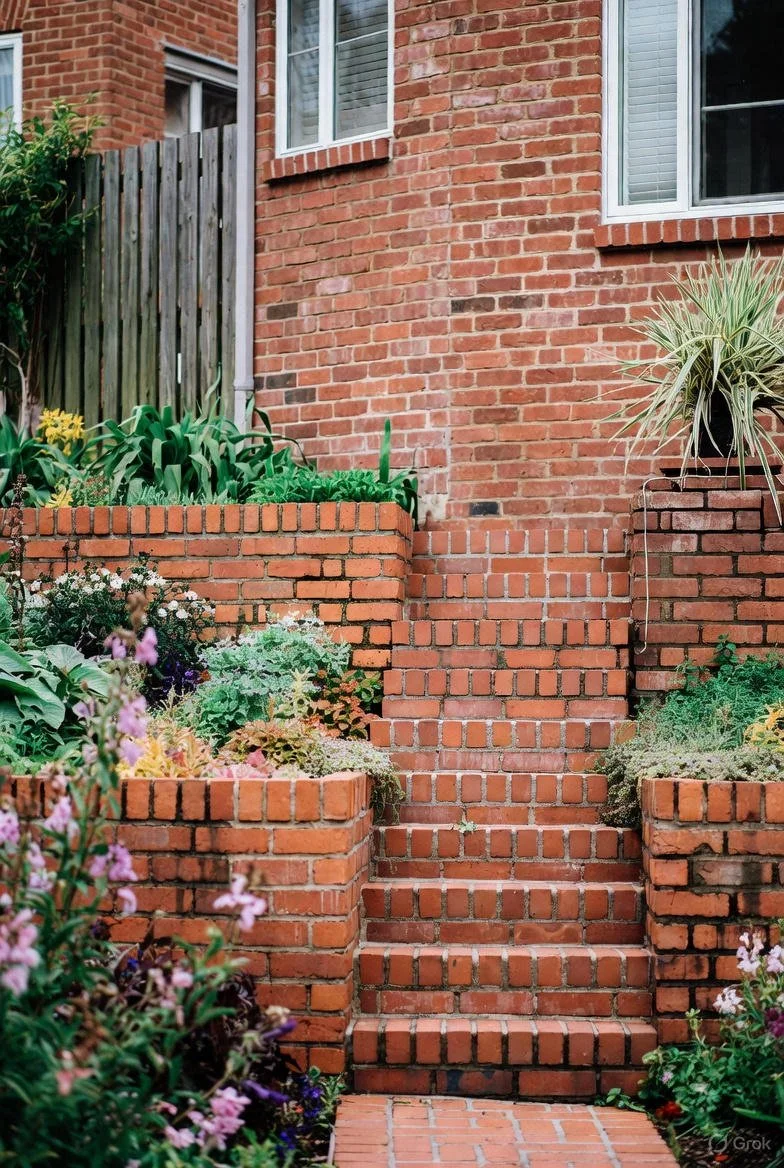
Complementary Drainage Systems Behind the Wall
Weep holes alone are insufficient without a properly designed drainage plane behind the masonry.
Essential components include:
Free-draining granular backfill (clean crushed stone or gravel) immediately behind the wall, typically 300–450 mm wide
Perforated drainage pipe (wrapped in geotextile) at the base of the backfill, daylighted to discharge water away from the wall
Impermeable drainage board or geotextile separating retained soil from the gravel zone to prevent clogging
Filter fabric covering weep holes on the interior side to keep the openings clear of debris while allowing water passage
Historical Precedents and Traditional Solutions
European brick retaining walls from the 18th and 19th centuries often incorporated simple but effective drainage:
Open perpend joints (vertical head joints left unfilled) serving as weeps
Layers of broken tile or stone creating a drainage chimney behind the wall
Sloping gravel beds leading to daylighted outlets These empirical methods, documented in period garden treatises and engineering manuals, confirm that master builders understood water management centuries before modern geotechnical analysis.
Climate-Specific Considerations
In freeze-thaw regions, saturated brick and mortar are highly vulnerable to spalling; generous weep spacing and robust behind-wall drainage are mandatory
In high-rainfall or clay-soil areas, additional French drains or surface grading away from the wall top further reduce infiltration
In arid climates, occasional heavy storms can still overwhelm an undrained wall, making basic weep holes a prudent minimum precaution
Conclusion
The inclusion of properly spaced weep holes and a functional drainage system is not an aesthetic choice or optional enhancement—it is a fundamental requirement rooted in masonry physics and centuries of observed performance. A brick garden retaining wall constructed without adequate provision for water escape invites structural distress, unsightly staining, and eventual reconstruction. By incorporating these time-tested drainage principles during initial construction, gardeners and builders ensure both the longevity of the wall and the health of the planting areas it creates.
Looking to DIY?
Checkout SmearTech’s Signature White™ Mortar and German Smear Tools.