Stucco in Modern Construction: Uses, Impacts on Brick, Durability Enhancements, and Relation to German Smear
Stucco, a plaster-like material applied to exterior walls, traces its origins to ancient Mediterranean and Middle Eastern civilizations where lime-based mixtures protected masonry structures. In modern times, it continues to play a significant role in architectural design, providing durable and aesthetically adaptable finishes for residential and commercial buildings. Its evolution reflects advancements in material science, allowing for better integration with diverse substrates such as brick, while addressing historical challenges like weathering and structural movement. Understanding stucco's contemporary applications highlights its value in conservation and new construction, emphasizing breathability, adhesion, and environmental resilience.
Modern Uses of Stucco
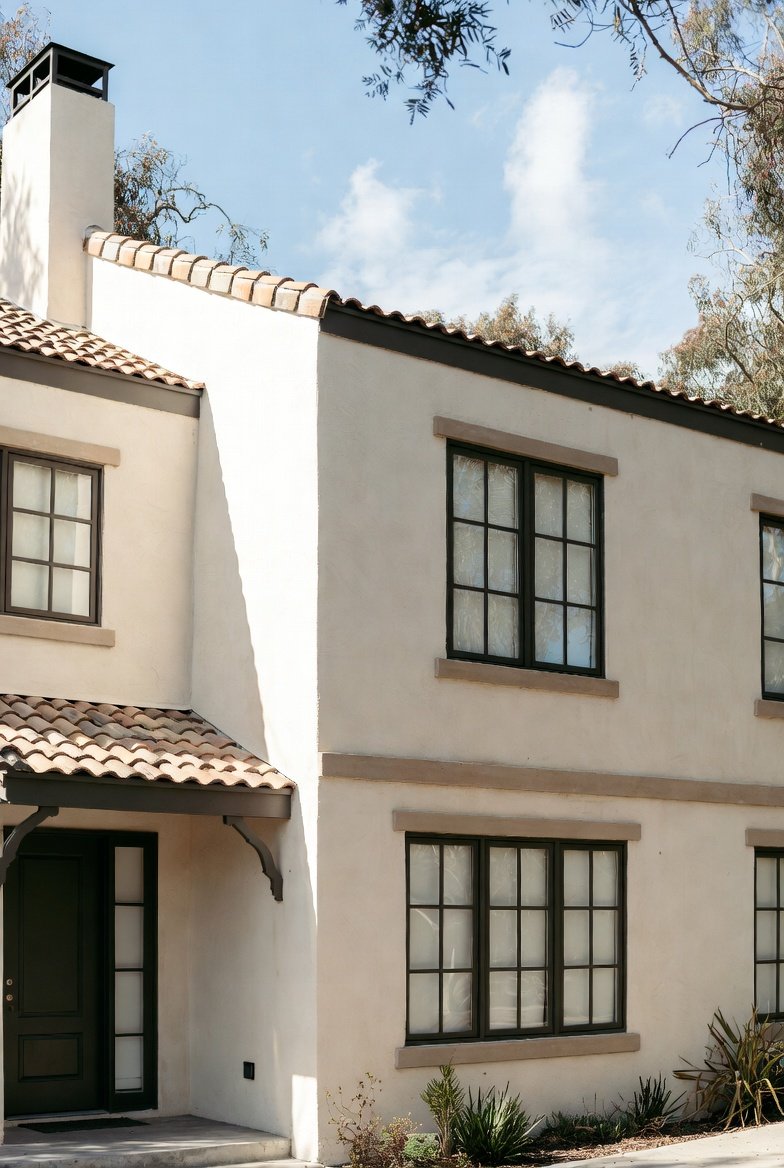
Stucco is widely employed in current construction for its ability to create seamless, textured exteriors that enhance building envelopes in various climates. Typically applied in multiple layers over lath or directly onto prepared surfaces, it offers customization in color and finish, from smooth to aggregate-embedded textures. In regions with moderate weather, such as parts of the southeastern United States including Georgia, stucco provides a low-maintenance option that resists fading and minor impacts.
Common applications include residential homes, where it updates facades for energy efficiency.
Commercial structures benefit from its fire-resistant properties, as documented in building codes.
Renovations often use stucco to overlay existing materials, improving insulation without major demolition.
Climate considerations are essential; in humid areas, proper vapor barriers prevent moisture buildup, aligning with building science practices for long-term integrity.
Effects of Modern Stucco Materials on Brick Homes
Modern stucco, primarily composed of Portland cement, sand, lime, and sometimes acrylic polymers, interacts with brick substrates by forming a bonded overlay that alters both appearance and performance. When applied to brick homes, it creates a monolithic surface that conceals mortar joints and brick texture, potentially modernizing older structures. However, this can influence moisture dynamics, as the denser matrix of cement-based stucco reduces vapor permeability compared to brick's natural breathability, necessitating drainage systems to avoid entrapment.
The adhesion relies on surface preparation, including cleaning and applying bonding agents, to ensure compatibility without delamination. In freeze-thaw cycles, improper installation may lead to cracking or efflorescence in the brick beneath.
Positive effects include added insulation, reducing energy costs by creating a thermal barrier.
It enhances durability against wind-driven rain when detailed with weep screeds.
Potential drawbacks involve water intrusion risks, promoting mold or structural decay if barriers fail.
Overall, modern stucco on brick demands attention to building science for balanced moisture management and longevity.
Durability of Modern Stucco Compared to Ancient Stucco: A Building Science Perspective

Ancient stucco, based on hydrated lime and sand, provided high vapor permeability—often exceeding 20 perms—allowing walls to dry efficiently but offering limited resistance to mechanical stresses. Modern versions incorporate Portland cement for hydraulic setting, achieving greater compressive strength and hardness, which reduces erosion from environmental exposure. Polymers add flexibility, minimizing cracks from thermal expansion or substrate shifts, a common failure in rigid lime-based systems.
Building science explains these improvements: cement-based stucco has lower permeability (1-5 perms), enhancing resistance to bulk water but requiring drainage planes to prevent saturation. In freeze-thaw environments, the denser pore structure limits water absorption and ice formation, extending service life beyond ancient formulations.
Ancient stucco excelled in vapor-open assemblies for historic masonry.
Modern stucco withstands impact and weathering better due to additives.
Trade-offs include reduced breathability, addressed through modern detailing like weather-resistive barriers.
These advancements make modern stucco more suitable for contemporary demands, though installation quality remains critical.
Stucco Compared to German Smear
Stucco and German Smear, also known as mortar wash or Schmear, are both cementitious finishes applied to masonry, but they differ in purpose, application, and outcome. Stucco forms a thick, multi-layer cladding—typically 1/2 to 1 inch deep—providing structural protection and a uniform, often smooth or textured surface that fully covers the substrate. German Smear, derived from European traditions for antiquing brick, involves spreading a thinner mortar mixture irregularly to partially obscure the brick while highlighting its texture and character.
Unlike limewash or whitewash, which are thinner and more penetrative, German Smear bonds as a mortar layer for greater permanence, though it maintains higher breathability than dense stucco. Painted brick, by contrast, seals the surface completely, potentially trapping moisture.
Stucco prioritizes weather resistance in full-coverage systems.
German Smear focuses on aesthetic enhancement with variable coverage.
Both use similar materials like cement and lime, but stucco requires lath for support on non-masonry bases.
This distinction underscores German Smear's role in historical brick conservation versus stucco's broader cladding function.
Thickness Potential in German Smear Applications
German Smear is traditionally applied in thin, uneven layers—often 1/8 inch or less—to achieve a rustic, distressed effect that preserves brick visibility. However, with the correct materials, such as reinforced mortars or stucco finish coats incorporating stabilizers, it can be built up to thicker profiles approaching those of light stucco finishes. This involves adjusting the mix for better workability and adhesion, allowing controlled layering without sagging or cracking.
In practice, products like white-based stucco mixes enable heavier applications for a more substantial texture, while maintaining vapor permeability superior to fully sealed systems. Climate factors influence feasibility; in drier conditions, thicker builds cure effectively.
Standard applications remain light for breathability.
Thicker versions use admixed mortars for depth, mimicking stucco-like effects.
Adhesion principles require clean, moistened brick for bonding in heavier coats.
This adaptability highlights German Smear's versatility in architectural treatments.
Conclusion Stucco's modern adaptations offer improved durability and functionality over ancient forms through building science innovations, though careful moisture management is essential when applied to brick homes. Its comparison to German Smear reveals complementary roles in masonry finishing, with the latter providing breathable, textured alternatives that can match stucco's thickness via material adjustments. These insights underscore the importance of historical context and technical precision in
Looking to DIY?
Checkout SmearTech’s Signature White™ Mortar and German Smear Tools.