Materials for Covering Brick Exteriors: Durability, Moisture Effects, and Breathable Alternatives
Brick has served as a fundamental building material in architecture since ancient times, valued for its durability, thermal mass, and ability to withstand environmental stresses. Documented in European construction as early as the Roman era, brick walls were designed to interact with moisture through absorption and evaporation, maintaining structural health in varied climates. Today, homeowners may choose to cover brick with other materials for modernization or to address surface wear, but this approach can disrupt the material's inherent breathability, leading to hidden damage over time. From a building-science perspective, understanding vapor permeability—brick's capacity to release moisture—is essential, as impermeable coverings can compromise long-term integrity, especially in regions with freeze-thaw cycles or high humidity.
Common Materials for Covering Brick
Various materials are used to cover brick exteriors, each offering distinct aesthetic and functional qualities. These include sidings, stuccos, veneers, and plasters, often selected for their ability to refresh appearances or add insulation. However, their application requires careful consideration of adhesion, climate compatibility, and impact on the underlying brick.
Siding Options: Horizontal siding, such as vinyl sheets, wood planks, or fiber cement boards, provides a sleek, modern look and can be installed over brick with a framework for attachment. Shingle siding, often in cedar or fiber cement, adds texture and is commonly paired with brick for contrast. Board and batten siding uses vertical boards for a rustic effect, while metal siding offers industrial durability. These materials can enhance energy efficiency by covering mortar gaps but may reduce brick's natural vapor exchange if not ventilated properly.
Stucco: A cement-based plaster applied in layers over brick, stucco creates a smooth, monolithic surface historically used in Mediterranean climates for its adaptability to masonry substrates. It bonds directly to brick, potentially improving weather resistance, but requires lath for support on uneven surfaces.
Veneers and Tiles: Stone veneer or thin brick veneer mimics natural masonry at a lower weight and cost, adhered or mechanically fastened over existing brick. Facade tiles and faux stone panels, like those made from polyurethane, provide quick installation and visual variety but rely on the brick's stability for longevity.
Plasters and Mortar-Based Coverings: Mortar plasters offer colorful finishes and hide imperfections, commonly applied to brick for cost-effective updates. These can vary in composition, affecting breathability and adhesion.
Each material alters the brick's exposure to elements, potentially shifting moisture dynamics within the wall assembly.
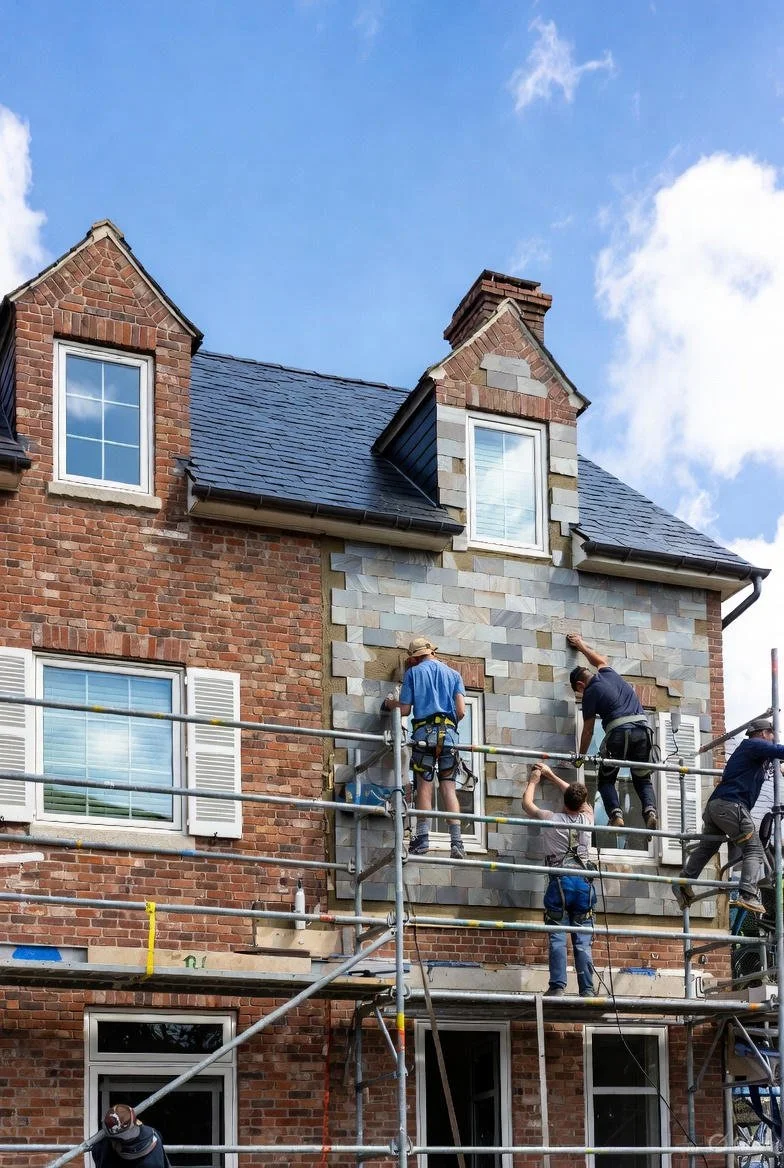
Impacts on Brick Breathability and Moisture Management
Brick is inherently porous, absorbing moisture like a sponge and releasing it as vapor to maintain equilibrium—a property known as vapor permeability. Covering brick with less permeable materials disrupts this process, often leading to trapped condensation, efflorescence (white salt deposits), or internal decay. In building science, this is exacerbated in climates with high humidity or freeze-thaw cycles, where moisture expansion can cause spalling, cracking the brick face.
When siding is installed over brick without adequate air gaps or vapor barriers, it creates a sealed environment that fosters mold and rot, as water from rain or interior humidity cannot escape efficiently. Stucco, while more compatible with masonry, can still trap moisture if applied too rigidly, leading to foundation settling issues or upward heaving. Veneers and plasters may introduce similar risks if not vapor-open, accelerating adhesion failure or structural weakening. Climate considerations are key: in wet regions, impermeable coverings heighten freeze-thaw damage, while arid areas may see less immediate impact but eventual efflorescence from trapped salts.
Moisture Trapping Mechanisms: Impermeable layers block vapor drive, causing internal humidity buildup and potential mold growth.
Material Behavior: Vinyl siding may warp under heat, exposing brick to uneven moisture; fiber cement offers better breathability but requires proper installation to avoid condensation.
Architectural Context: Historically, brick facades in European traditions avoided full coverings to preserve natural weathering, emphasizing compatibility over concealment.
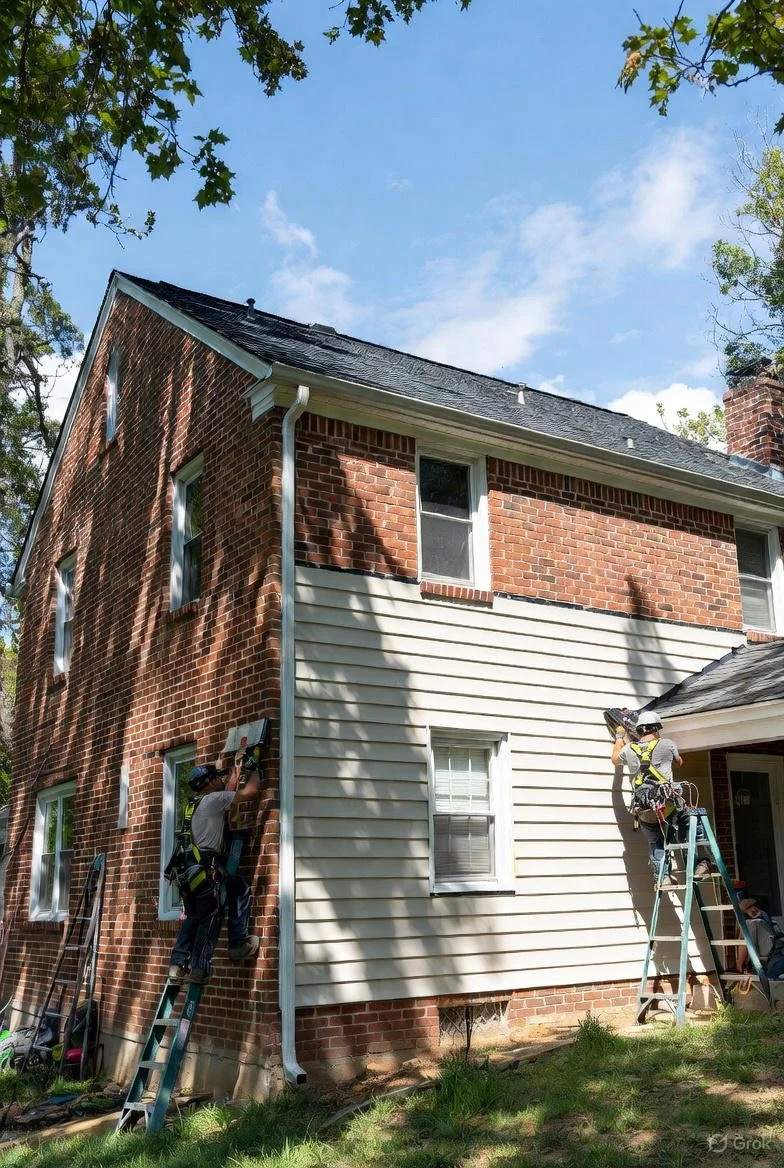
Deterioration Timelines When Covering Brick
The timeline for deterioration varies by material, installation quality, and environmental factors, but covering brick generally shortens its effective lifespan compared to exposed conditions, where brick can endure over 100 years with minimal intervention.
For siding over brick, visible issues like cracking or detachment may appear within 20-40 years, but hidden moisture damage to the brick can begin in as little as 1-5 years if ventilation is inadequate, leading to spalling or mortar erosion. Stucco applications show early cracks from settling within 1-3 years, progressing to intermediate erosion in 5-10 years, with full system failure possible after 60-80 years if not maintained annually. Veneers and plasters follow similar patterns, with adhesion loss accelerating in freeze-thaw zones, potentially requiring repointing or removal within 30-50 years.
Early Indicators: Hairline cracks and discoloration emerge in 1-3 years, signaling moisture imbalance.
Intermediate Stages: Receding joints or staining appear after 5-10 years, often from trapped vapor.
Advanced Deterioration: Structural weakening, like spalling, occurs after 20+ years, influenced by climate and material permeability.
Regular inspections are crucial to mitigate these timelines, focusing on sources like poor drainage or incompatible mortars.
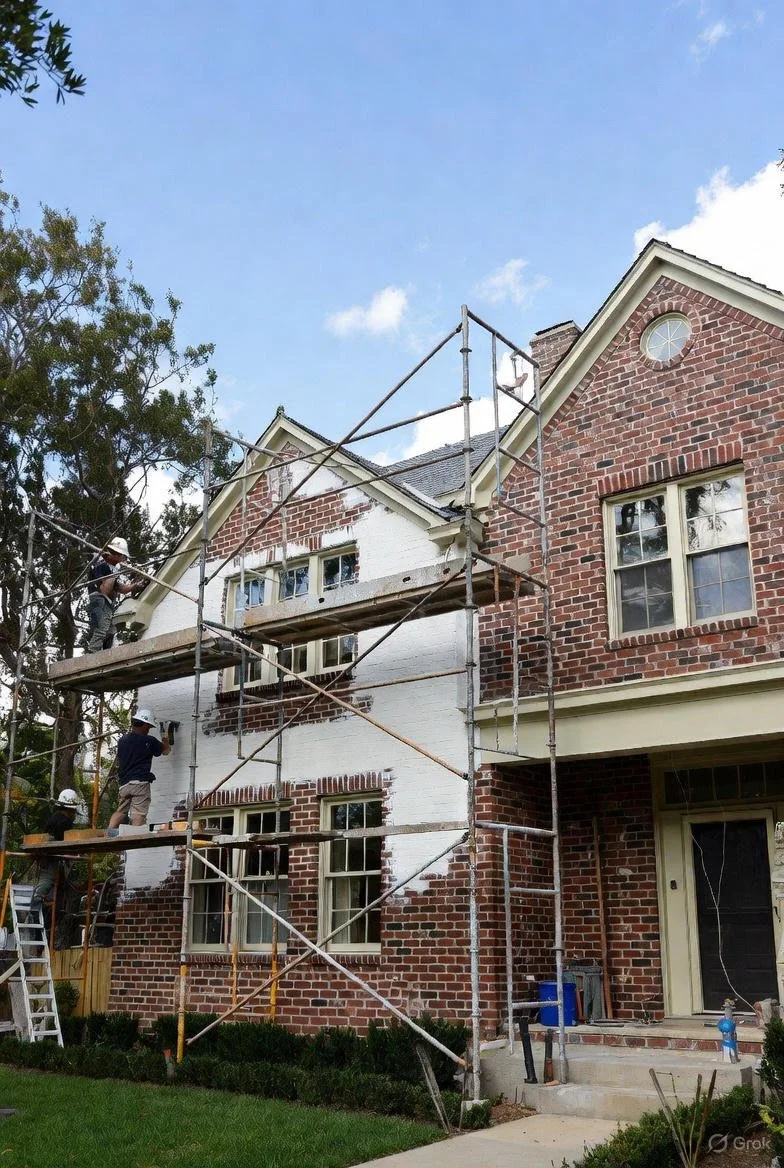
Alternatives to Covering Brick with Impermeable Materials
Rather than fully concealing brick, breathable treatments rooted in historical methods preserve its properties while updating aesthetics. These options maintain vapor permeability, reducing moisture risks and aligning with conservation principles.
Limewash, a traditional crushed limestone mixture, provides a matte finish that allows brick to breathe, commonly used in European architecture for centuries to enhance weather resistance without sealing pores. Mineral paints offer UV-stable color while permitting vapor escape, ideal for climates with variable temperatures. German Smear, a mortar-wash technique derived from German building traditions (known as Schmear or Kalkschlämme), applies a thin, textured layer of mortar to brick, creating a distressed look that enhances breathability and adhesion through compatible compositions.
Historical Usage: German Smear was documented in 19th-century European masonry for protecting brick in humid regions, emphasizing lime-based mortars for flexibility.
Building-Science Benefits: These alternatives promote vapor permeability, minimizing freeze-thaw damage and efflorescence.
Application Contexts: Suitable for architectural styles like Tudor or Colonial, where maintaining brick's texture is valued over complete coverage.
Other options include thin brick accents or natural screenings like climbing vines, which provide partial coverage without compromising breathability.
Conclusion
Covering brick with materials like siding or stucco can introduce aesthetic changes but often at the cost of reduced breathability, leading to moisture-related deterioration over timelines ranging from years to decades. By prioritizing vapor-permeable alternatives such as limewash or German Smear, informed by historical practices and building science, structures retain their durability and architectural character. This approach underscores the importance of compatibility in preserving brick's enduring role in built environments.
Looking to DIY?
Checkout SmearTech’s Signature White™ Mortar and German Smear Tools.