Cleaning a German Smear Finish : Everything you need to know
German smear, or Kalkschlämme in its traditional German form, represents a mortar-wash technique that bonds permanently to brick surfaces, distinguishing it from temporary treatments like limewash or whitewash. Historically used on 18th- and 19th-century farmhouses in regions such as Schleswig-Holstein to provide weather protection and subtle toning, this finish matters architecturally because it enhances masonry durability while allowing vapor permeability. Understanding its upkeep involves balancing material science—such as the compressive strength of Type N mortar (typically 750 psi at 28 days)—with practical cleaning methods suited to contemporary brick structures.
Historical Upkeep Practices
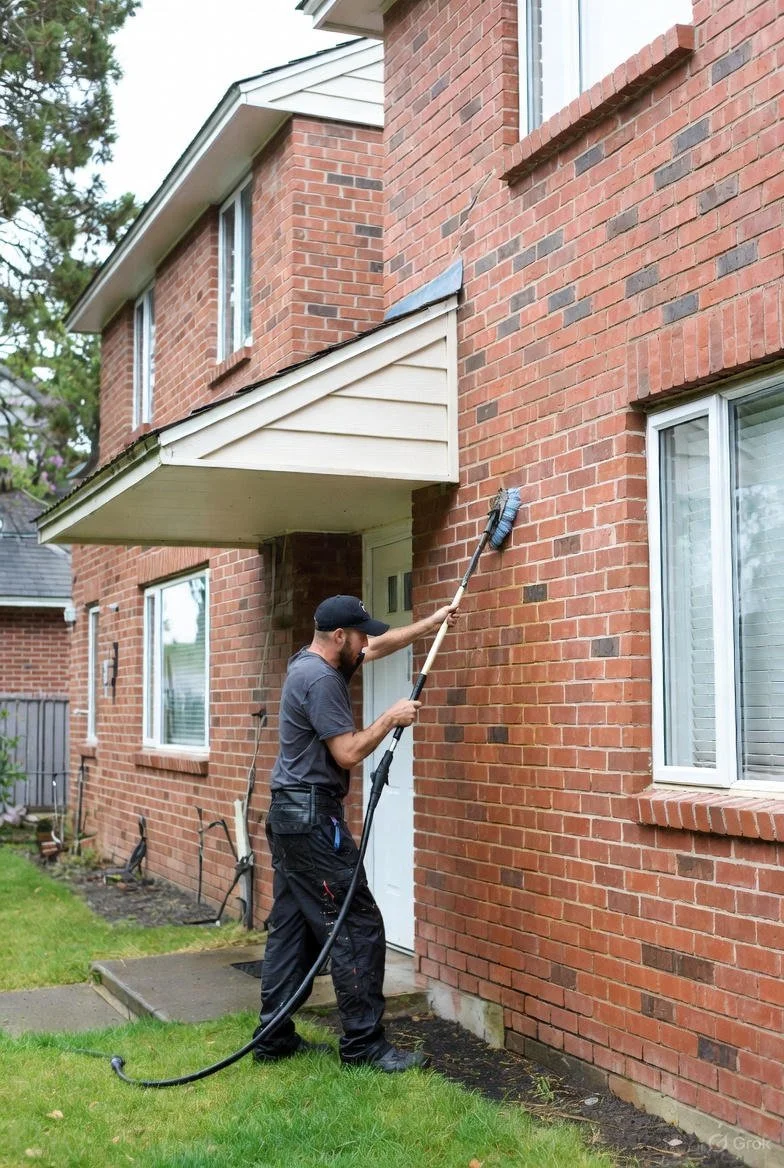
In northern European building traditions, German smear upkeep focused on natural weathering and minimal intervention to preserve the mortar's lime-rich composition, which promotes breathability (vapor permeability μ ≈ 8–12). Documented as early as the 1700s in regional Bauordnungen manuals, maintenance avoided aggressive methods, relying instead on rainwater runoff and soft brushing to remove surface accumulations.
Rainwater rinsing: Allowed seasonal precipitation to wash away dust and pollen, leveraging the mortar's porosity to prevent moisture buildup.
Soft-bristle brushing: Employed natural-fiber brushes every few years to dislodge loose debris, ensuring no disruption to the finish.
Moisture management: Involved trimming vegetation to reduce organic staining, as excess humidity could encourage efflorescence in freeze-thaw climates.
These practices underscore the finish's low-maintenance profile, with historic examples enduring 200–300 years through passive care.
Modern Cleaning Techniques
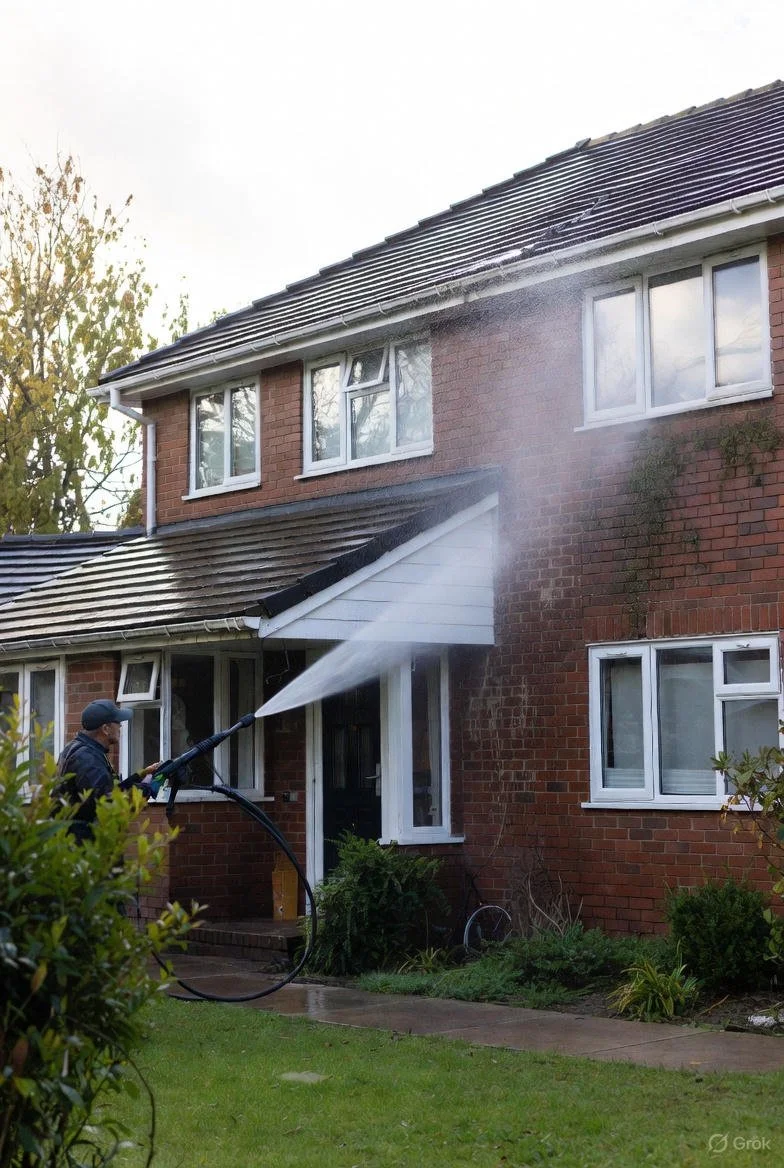
Contemporary upkeep for German smear adapts historical methods to powered tools, emphasizing the mortar's adhesion strength that resists removal even under moderate water pressure. Building-science principles from organizations like the Brick Industry Association highlight the importance of maintaining vapor transmission to avoid trapped moisture, which could affect brick freeze-thaw resistance. Pressure washing at 1000–3000 psi, when using a wide fan nozzle (25–40 degrees) and maintaining 0.5–1 m distance, effectively cleans without altering the bonded mortar matrix.
Annual pressure washing: Recommended at 1000–3000 psi with 3–4 GPM flow rate to remove dirt, pollen, and bird droppings; start low and adjust upward for stubborn buildup.
Nozzle and technique selection: Opt for fan patterns over pinpoint tips to distribute force evenly, working top-down to minimize streaking on the textured surface.
Chemical adjuncts: Mild, pH-neutral detergents (e.g., diluted biodegradable soaps) may supplement washing for algae in humid climates, rinsed immediately to preserve permeability.
Modern applications on post-1950s brick homes benefit from these techniques, as the finish's permanence eliminates repainting needs common in non-breathable coatings.
Inspection and Preventive Measures
Routine checks form the foundation of German smear upkeep, drawing from architectural conservation standards that prioritize early detection of environmental stressors. In varied climates, the mortar's calcium hydroxide content aids self-healing of micro-cracks, but proactive steps ensure longevity.
Drainage oversight: Verify gutters and grading direct water away from walls, as pooled moisture can lead to salt migration despite the finish's protective role.
Vegetation control: Maintain 0.6 m clearance from walls to limit moss growth, which thrives in shaded, damp conditions but rinses easily from the porous surface.
These measures align with ISO 15686 standards for building durability, confirming the finish's resilience in both historic restorations and new constructions.
Distinctions from Related Finishes
German smear's upkeep differs markedly from limewash (a micron-thin slurry requiring annual reapplication) or whitewash (diluted paint prone to peeling), as its mortar base provides inherent durability without frequent recoating.
Limewash: Breathable but erodes quickly, necessitating brushing and reapplication every 1–2 years to maintain opacity.
Whitewash (paint based): Less permeable, often trapping moisture and requiring chemical stripping for removal, unlike smear's bonded permanence.
Painted brick: Impermeable acrylics demand high-pressure stripping for changes, contrasting smear's gentle wash compatibility.
This material behavior positions German smear as a hybrid of tradition and practicality for long-term architectural preservation.
Conclusion
Upkeep of a German smear finish centers on its proven durability as a mortar wash, with historical rainwater methods evolving into modern annual pressure washing at 1000–3000 psi for thorough cleaning. By integrating inspections, preventive drainage, and breathability-focused care, the technique sustains its protective and aesthetic value across climates and eras. These educational insights reveal German smear's role in enduring masonry traditions, offering a low-effort path to maintaining brick integrity without compromising historical authenticity.
Looking to DIY?
Checkout SmearTech’s Signature White™ Mortar and German Smear Tools.