The Transition from Wooden to Brick Bridges in European Architectural History
The development of bridge construction in Europe began with simple wooden structures, progressing to more permanent masonry forms including brick arches. This transition, spanning from antiquity through the medieval and early modern periods, addressed limitations in wooden bridges such as susceptibility to decay and limited span lengths. Architecturally, it matters for understanding how compressive strength principles enabled larger, more reliable crossings, supporting trade, military movement, and urban growth while incorporating local climates and materials.
Early Wooden Bridge Construction in Europe
Wooden bridges dominated early European infrastructure due to abundant timber resources and straightforward assembly techniques. Documented as early as the Roman period in northern regions, these included beam, truss, and piled structures across rivers and wetlands. Medieval examples featured advanced truss designs, allowing spans up to 30 meters in some Renaissance works.
Key characteristics of historical wooden bridges:
Use of local timbers for beams, piles, and decks.
Rapid construction with minimal tools.
Vulnerability to rot in damp climates and fire damage.
Common in forested areas of northern Europe, such as Switzerland and Germany.
Limitations of Wooden Bridges and Drivers for Change
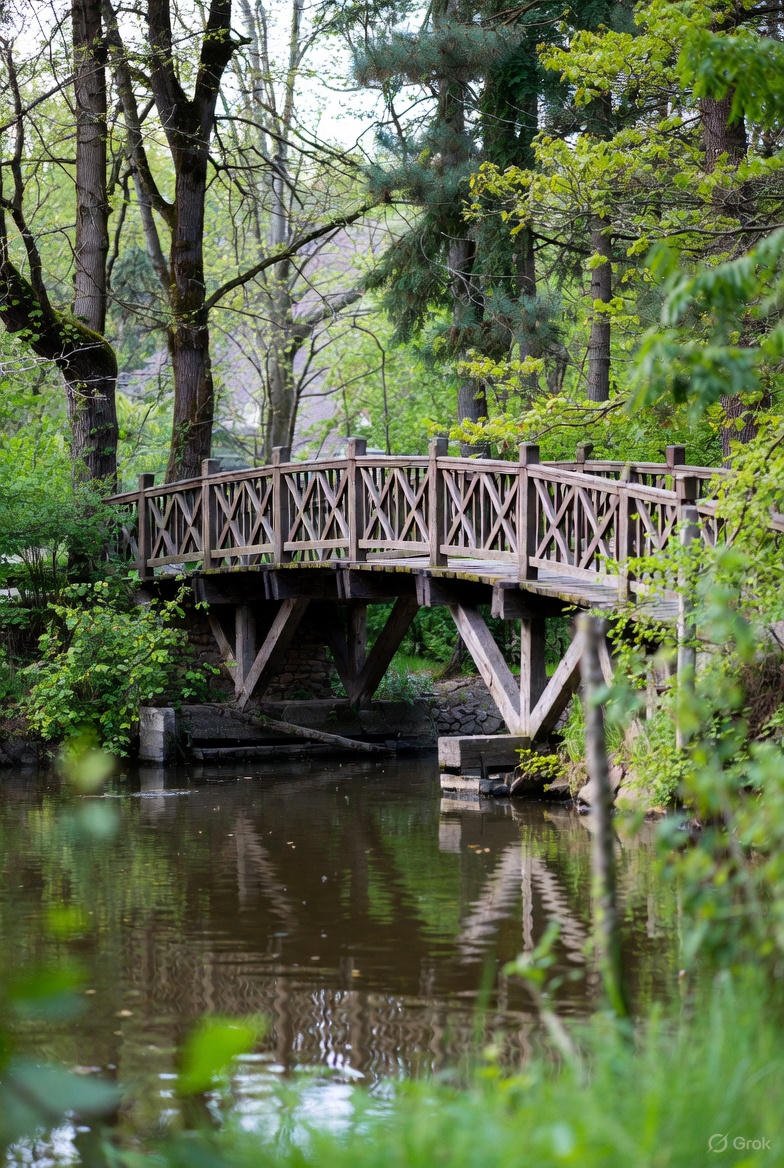
Wooden bridges exhibited short service lives in many environments, often requiring frequent repairs or replacement due to biological decay and mechanical wear. Flooding and ice could dislodge piles, while fire posed a constant risk. In contrast, masonry offered permanence, prompting transitions where clay for bricks was available, particularly in lowland regions like the Netherlands and northern Germany.
Building-science factors influencing the shift:
Decay resistance: Wood absorbs moisture, leading to fungal attack in wet climates.
Fire vulnerability: Unlike incombustible brick, wood burns readily.
Load distribution: Wooden beams sag under heavy loads over time.
Climate considerations: Temperate and humid zones accelerated wood deterioration.
Emergence of Brick in European Bridge Architecture
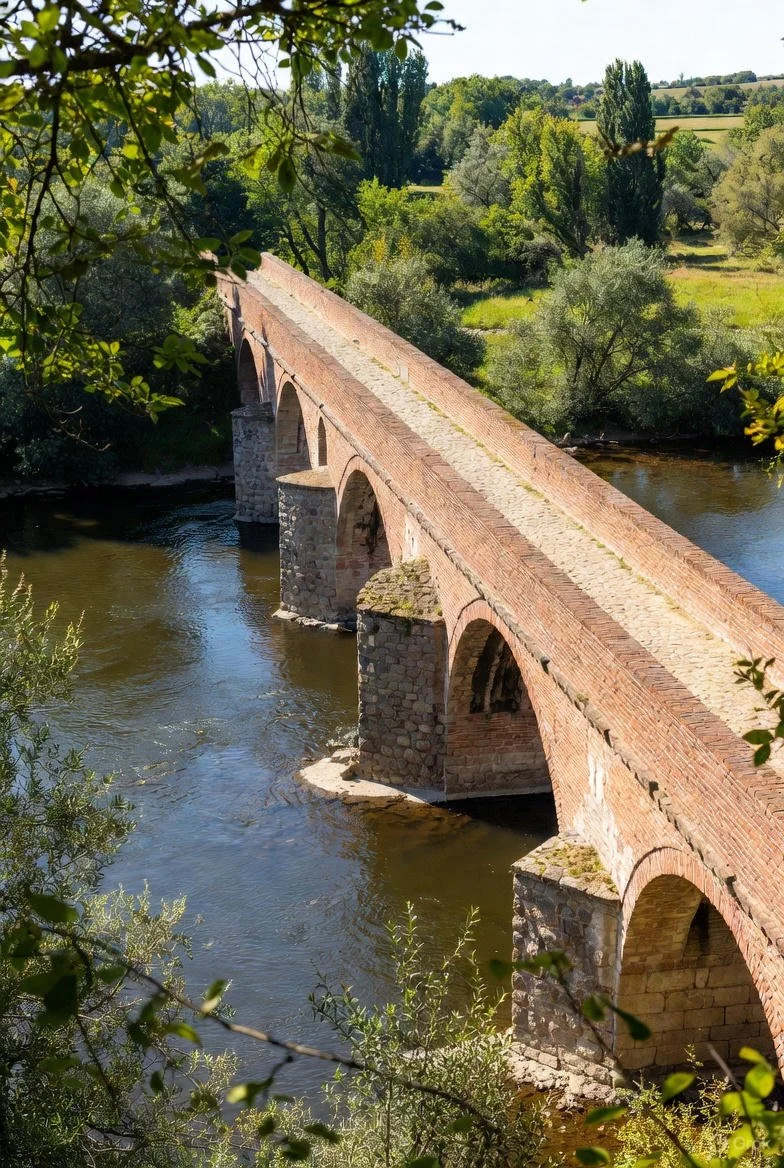
Brick became prominent in bridge construction from the 17th century onward, especially for canal and railway infrastructure in brick-producing areas. Fired clay bricks, bonded with lime mortar, formed robust arches capable of compressive forces. Early examples include canal bridges in England and the Low Countries, evolving into large viaducts during the Industrial Revolution.
Notable aspects of brick bridge development:
Modular units allowing precise arch construction on wooden centering.
Use in multi-ring arches for added strength.
Adaptation in flood-prone lowlands with elliptical or segmental profiles.
Integration with hydraulic lime mortars for improved water resistance.
Architectural and Structural Advantages of Brick Arches
Brick arch bridges utilize compressive strength, distributing loads through curved forms to abutments and piers. This enabled wider spans than wooden beams without intermediate supports. Material behavior favored brick in compression, with lime mortar providing flexibility against minor settlements.
Core building-science principles in brick versus wood:
Compressive strength: Brick excels under sustained loads, resisting deformation.
Durability in exposure: Fired brick withstands weathering and erosion better than untreated wood.
Span capability: Arches achieve greater distances through thrust management.
Thermal and moisture behavior: Brick offers stability in varying climates, reducing expansion issues.
Conclusion
The progression from wooden to brick bridges in Europe marked a significant advancement in durability and structural efficiency, driven by material limitations and engineering needs. Wooden structures provided initial accessibility, while brick arches delivered long-term reliability through compressive design and environmental resistance. These historical shifts illustrate foundational principles in bridge architecture that prioritized permanence and load capacity.
Looking to DIY?
Checkout SmearTech’s Signature White™ Mortar and German Smear Tools.