

The History and Evolution of Painted Brick Compared to German Smear
Surface treatments on brick have been applied for centuries to modify appearance, provide limited weather protection, or unify irregular or aged facades. Painted brick involves applying a coating—historically lime-based in early examples, later shifting almost exclusively to synthetic paints—directly to the brick surface, creating an opaque or semi-opaque finish. German Smear (also known as German Schmear, mortar wash, or simply Schmear) consists of spreading a wet mortar mixture across the brick and then selectively removing portions to leave an irregular, textured overlay that partially reveals the original material. These techniques are architecturally significant because they produce opposite effects on brick’s natural porosity and vapor permeability, directly influencing long-term performance in climates prone to moisture cycling and freeze-thaw action.
Origins and Historical Usage
Painted brick appears in isolated historical records rather than as a dominant tradition on exterior masonry. In certain pre-1870s European and early American buildings, softer, hand-molded, low-fired bricks were occasionally coated with breathable lime-based paints to reduce water penetration on exposed walls. From the mid-to-late 19th century onward, exterior brick painting became more frequent, particularly in urban areas where owners sought to refresh weathered or mismatched facades or achieve visual uniformity; the practice expanded further in the 20th century with the availability of commercial paints.
German Smear is rooted in Central European masonry practices, particularly in German-speaking regions. Related lime-slurry and thin mortar applications (commonly referred to as Kalkschlämme) are documented as early as the medieval period and were commonly used throughout the early modern era on vernacular cottages, half-timbered buildings, rural masonry, and some ecclesiastical structures to blend repairs, soften brick texture, and produce a weathered, cohesive appearance.
Evolution Over Time
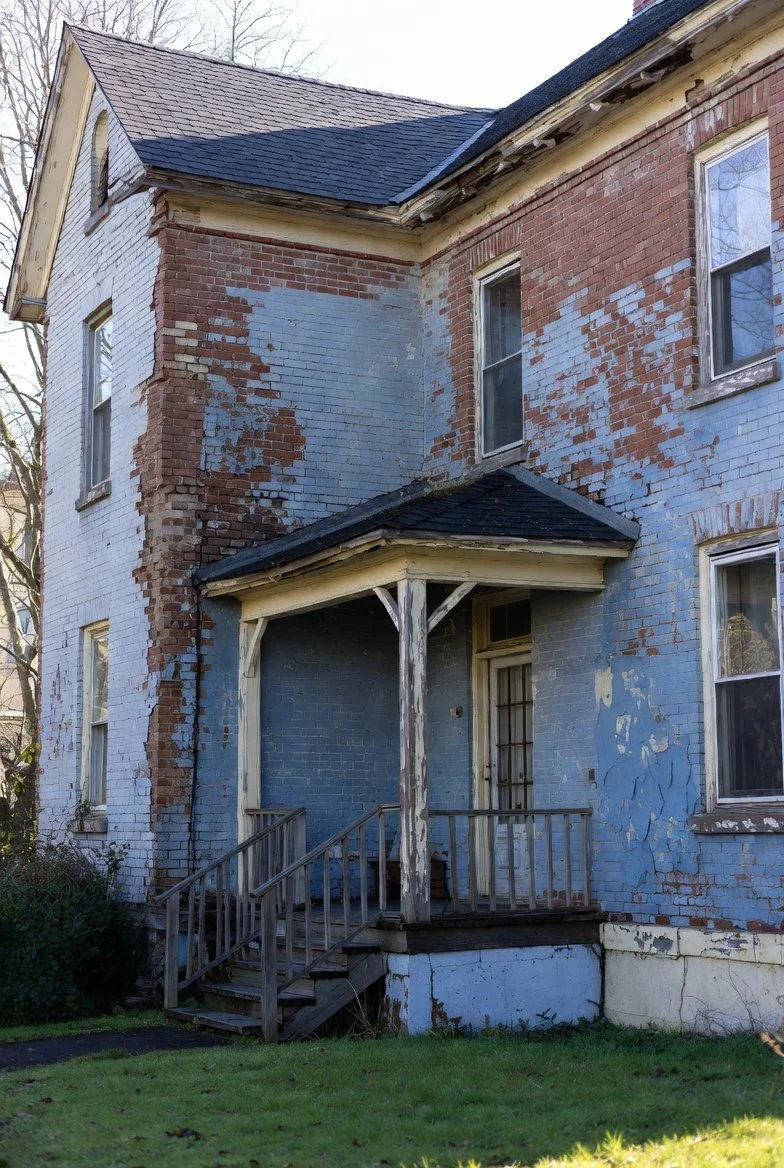
Painted brick evolved in parallel with advances in coating chemistry. Early applications typically used slaked-lime or mineral-based paints that permitted a measure of vapor transmission. From the mid-20th century onward, synthetic acrylic latex and similar impermeable paints became standard, offering greater color variety, easier application, and surface durability but sharply reducing breathability. This shift coincided with the widespread adoption of harder, machine-made bricks after the late 19th century.
German Smear has maintained far greater continuity over time. Traditional mixtures centered on lime putty, sand, and water, sometimes with natural pigments for subtle tinting; modern adaptations occasionally include small amounts of Portland cement for improved strength in certain exposures. The fundamental process—spreading mortar and then wiping or scraping away selected areas—has remained essentially unchanged, with renewed interest in recent decades driven by appreciation for authentic, rustic European aesthetics.
Effects on Brick: Building Science and Material Behavior
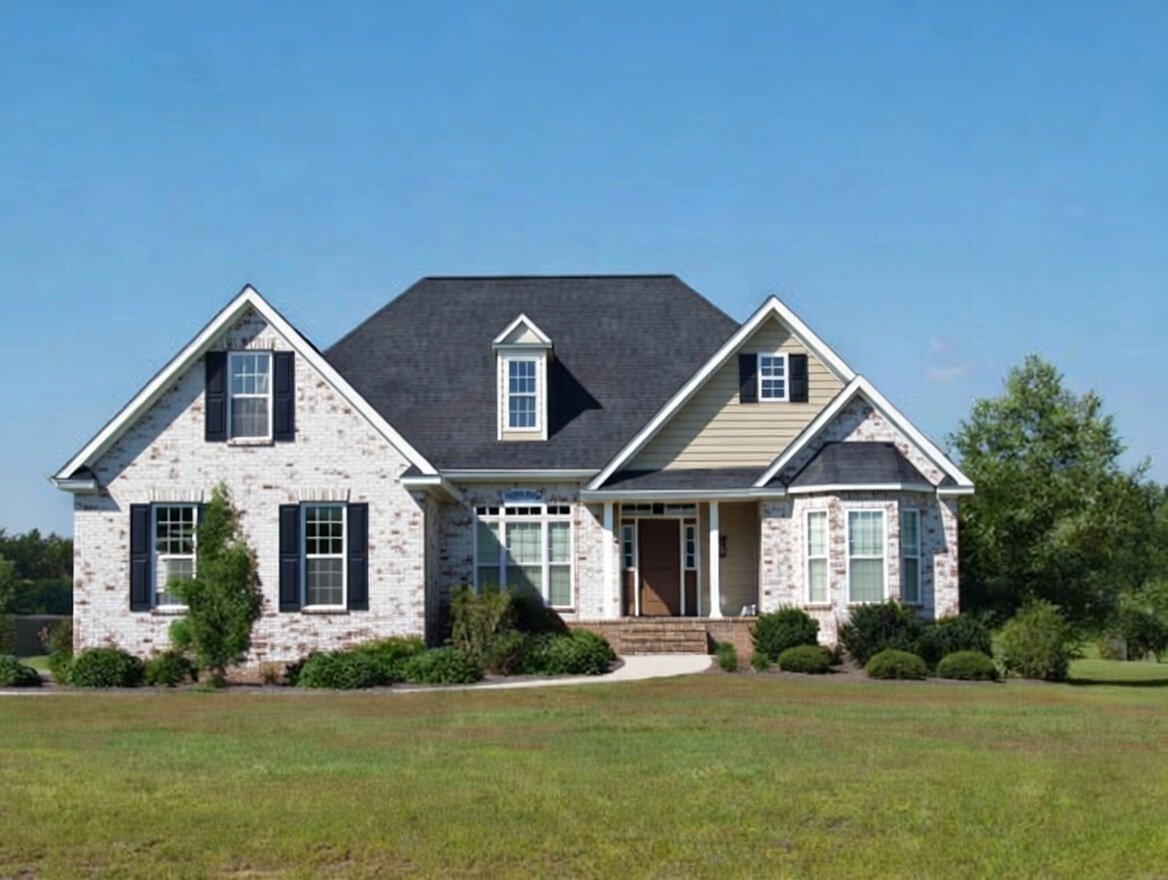
Brick is inherently porous, allowing moisture to enter during wet periods and evaporate during dry periods—a cycle essential for preventing internal damage in climates subject to repeated freeze-thaw action.
Painted Brick:
Modern synthetic paints form a film with very low vapor permeability, effectively trapping moisture vapor inside the brick and mortar joints.
In freeze-thaw climates, trapped water expands upon freezing, causing spalling (surface flaking or disintegration), cracking, and accelerated material loss.
Efflorescence (white salt deposits) often worsens as soluble salts migrate but cannot escape the sealed surface.
Paint adhesion commonly deteriorates over time, resulting in peeling, blistering, and the need for repeated recoating.
Historic soft, highly porous bricks (pre-1940s) experience the most severe damage due to their greater absorption rates.
German Smear:
Mortar overlays (typically lime-based or lime-cement blends) bond mechanically to the brick while retaining significant vapor permeability.
Moisture continues to migrate outward, greatly reducing the risk of trapped water, freeze-thaw deterioration, and excessive efflorescence.
The irregular, textured layer provides modest additional shielding from direct rain impact without creating a full barrier.
Properly applied mixtures demonstrate strong, long-term adhesion through mechanical interlocking with the brick’s surface pores and texture.
The technique aligns closely with historical breathable treatments, supporting the masonry’s natural moisture-regulation behavior.
Clear Distinctions from Related Techniques
German Smear differs from limewash (a thin, penetrating slaked-lime slurry that produces a matte, translucent veil over the brick) and whitewash (typically lime- or milk-based mixtures used for temporary lightening). Unlike painted brick, which applies a continuous, opaque film, German Smear delivers partial, irregular coverage that preserves much of the original brick character and maintains high breathability.
Conclusion
Painted brick and German Smear illustrate two divergent historical approaches to brick surface treatment: painted brick frequently progressed toward impermeable coatings that prioritize appearance but often compromise masonry longevity through moisture entrapment, while German Smear upholds vapor-permeable, textured mortar application rooted in centuries of European tradition. These differences highlight the critical role of material compatibility, breathability, and climate-appropriate choices in architectural conservation and the preservation of brick structures.
Looking to DIY?
Checkout SmearTech’s Signature White™ Mortar and German Smear Tools.
