Protecting Brick and Masonry: Stucco's Weather Resistance Compared to German Smear
Stucco, a cement-based plaster with roots in ancient Roman and Greek architecture, and German Smear, a mortar-wash technique documented in European masonry practices as early as the medieval period, represent two approaches to safeguarding building exteriors from elemental wear. These methods matter architecturally because they balance aesthetic appeal with functional protection, allowing structures to endure harsh weather while preserving breathability to prevent internal moisture buildup. Understanding their building-science principles, such as vapor permeability and thermal behavior, reveals how they mitigate damage from rain, wind, UV exposure, and freeze-thaw cycles in various climates.
Stucco's Mechanisms of Elemental Protection

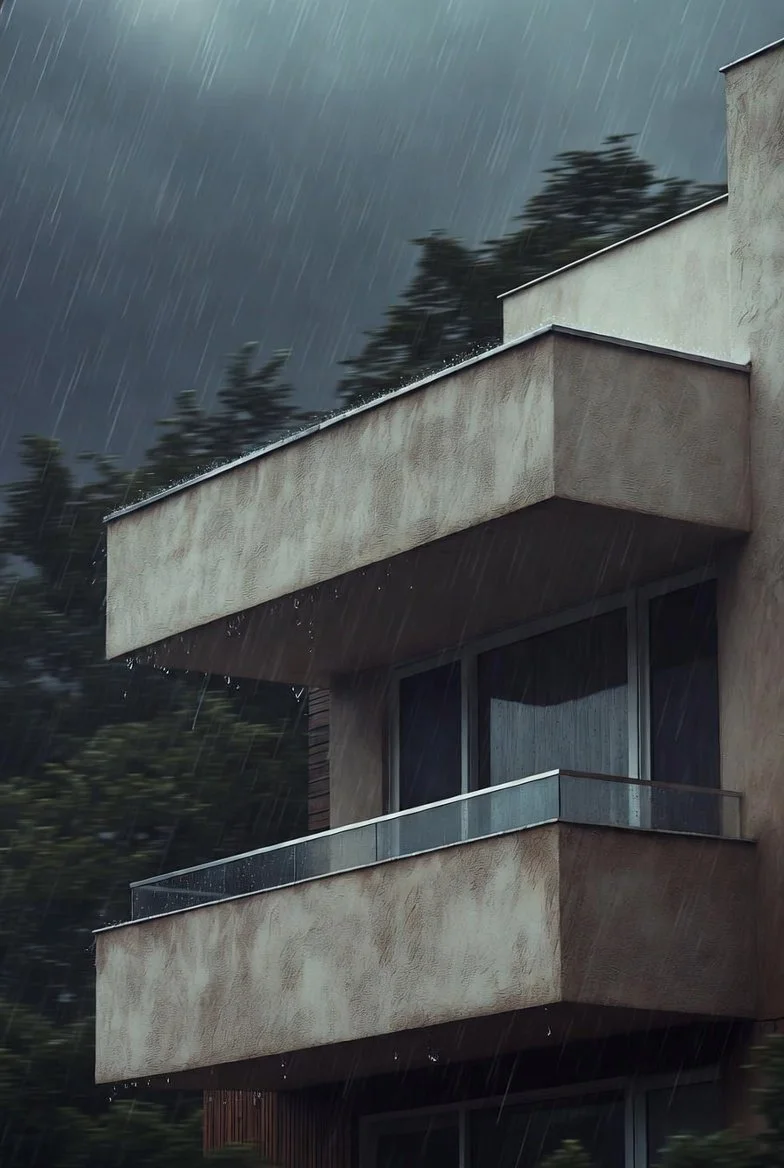
Stucco functions as a multi-layer cladding system, typically consisting of a base coat, brown coat, and finish coat applied over a substrate like wood framing or masonry, often with a water-resistive barrier (WRB) underneath. This composition, primarily Portland cement, sand, lime, and water, creates a dense yet porous surface that deflects over 95% of impacting rainwater while allowing absorbed moisture to evaporate. Scientifically, stucco's vapor permeability—measured in perms—enables water vapor to diffuse outward, reducing the risk of condensation and rot within wall assemblies.
In terms of freeze-thaw resistance, stucco's design accommodates thermal expansion and contraction; Portland cement mixtures expand minimally (around 0.05-0.1% per 100°F change) to prevent cracking during temperature swings. Proper installation includes expansion joints and flexible acrylic finishes that maintain integrity in cold climates, where repeated freezing can cause ice expansion in pores, leading to spalling if not managed. Additionally, stucco's alkaline pH (around 12-13 during curing) inhibits mold and bacterial growth, enhancing biological resistance in humid environments.
Vapor permeability: Typically 5-10 perms, allowing moisture egress while blocking liquid water.
Thermal conductivity: Low (about 0.5-1.0 W/m·K), aiding insulation against heat loss.
UV resistance: Cementitious matrix withstands photodegradation, with added pigments for color stability.
Fire resistance: Non-combustible, providing up to one-hour rating in assemblies.
Climate considerations are crucial; in wet regions, dual WRB layers (e.g., asphalt-saturated kraft paper) create a drainage plane, channeling water away to prevent saturation and structural damage. In arid areas, stucco's breathability prevents vapor drive issues from interior humidity.
German Smear's Approach to Weather Protection
German Smear, also known as Schmear or mortar wash, involves applying a thin layer of mortar—often a mix of Portland cement, lime, and sand—over brick surfaces, partially filling pores to create a textured, matte finish rooted in historical German and European brick treatments. This method enhances brick's inherent weather resistance by integrating with the substrate, forming a semi-permeable barrier that reduces direct exposure to elements without fully sealing the surface. Scientifically, the mortar's adhesion relies on mechanical bonding into brick pores, with compressive strength (around 500-1000 psi) providing durability against wind-driven rain and abrasion.
For moisture management, German Smear maintains high vapor permeability (often exceeding 10 perms), allowing bricks to "breathe" and release trapped water vapor, unlike impermeable paints that can cause efflorescence or spalling. In freeze-thaw scenarios, the added mortar layer absorbs some expansion stress, with optional breathable sealants reducing water infiltration by up to 90% while preserving permeability. The technique's mineral composition resists UV degradation, as lime components promote self-healing through carbonation, where atmospheric CO2 reacts to form stable calcium carbonate.
Porosity control: Mortar fills 20-50% of brick pores, balancing protection and breathability.
Thermal behavior: Minimal expansion (similar to brick at 0.0006-0.0007 per °F), reducing joint stress.
Biological resistance: Alkaline nature (pH 11-12) deters fungi and algae in damp climates.
Application thickness: Typically 1/8-1/4 inch, allowing for natural brick drainage.
In coastal or humid areas, German Smear performs well with additives like water-repellents, guarding against salt spray and erosion without compromising vapor flow. Historical usage in temperate European regions demonstrates its longevity in moderate rainfall.
Comparative Analysis: Stucco Versus German Smear
Stucco and German Smear share breathable properties but differ in structure and application; stucco is a standalone cladding built in layers over various substrates, offering thicker protection (typically 3/4-1 inch), while German Smear is a surface treatment enhancing existing brick masonry. Scientifically, stucco's lower permeability in finish coats can store more moisture temporarily, necessitating robust drainage systems like WRBs to avoid saturation, whereas German Smear's integration with porous brick promotes faster drying through capillary action.
In freeze-thaw resistance, stucco's multi-layer system with flexible finishes better accommodates movement in extreme colds, potentially outperforming German Smear unless sealants are added. However, German Smear avoids the delamination risks seen in stucco if adhesion fails under thermal stress. Both resist UV and wind, but stucco's density provides superior impact protection against hail or debris.
Moisture management: Stucco relies on drainage planes (e.g., 3/8-inch air gaps in some codes); German Smear uses brick's natural wicking.
Durability in wet climates: Stucco may require more maintenance if WRBs fail; German Smear's permeability reduces trapping risks.
Thermal performance: Stucco offers better insulation (R-value 0.2-4 per inch); German Smear minimally affects brick's R-0.8.
Historical context: Stucco suited for framed structures in arid to moderate zones; German Smear ideal for brick in temperate areas.
Climate plays a pivotal role; in high-rainfall regions, stucco's layered defense may edge out, but improper installation can lead to failures, as documented in building science studies.
Conclusion
Stucco and German Smear both leverage building-science principles like vapor permeability and thermal accommodation to protect against elemental damage, with stucco providing a comprehensive cladding for broader applications and German Smear offering a compatible enhancement for brick. Their effectiveness hinges on proper installation and climate-appropriate design, ensuring long-term architectural integrity through breathable, durable finishes. This understanding underscores the value of historical methods in modern conservation, prioritizing moisture management and material compatibility over impermeable seals.
Looking to DIY?
Checkout SmearTech’s Signature White™ Mortar and German Smear Tools.