

The Resurgence of German Smear in the United States
German Smear, also known as German Schmear, Kalkschlämme, or mortar wash, involves applying a thinned cementitious mortar to brick surfaces and partially removing it while wet to achieve an uneven, textured finish that exposes portions of the underlying brick. Documented as early as the 18th century in northern European building practices, particularly in German-speaking regions, the method provided protective weathering resistance to porous masonry while imparting an aged aesthetic. Its resurgence in the United States aligns with renewed architectural interest in vernacular textures, adapting historical principles to modern materials and climate challenges like freeze-thaw cycles prevalent in many regions.
Historical Foundations of German Smear
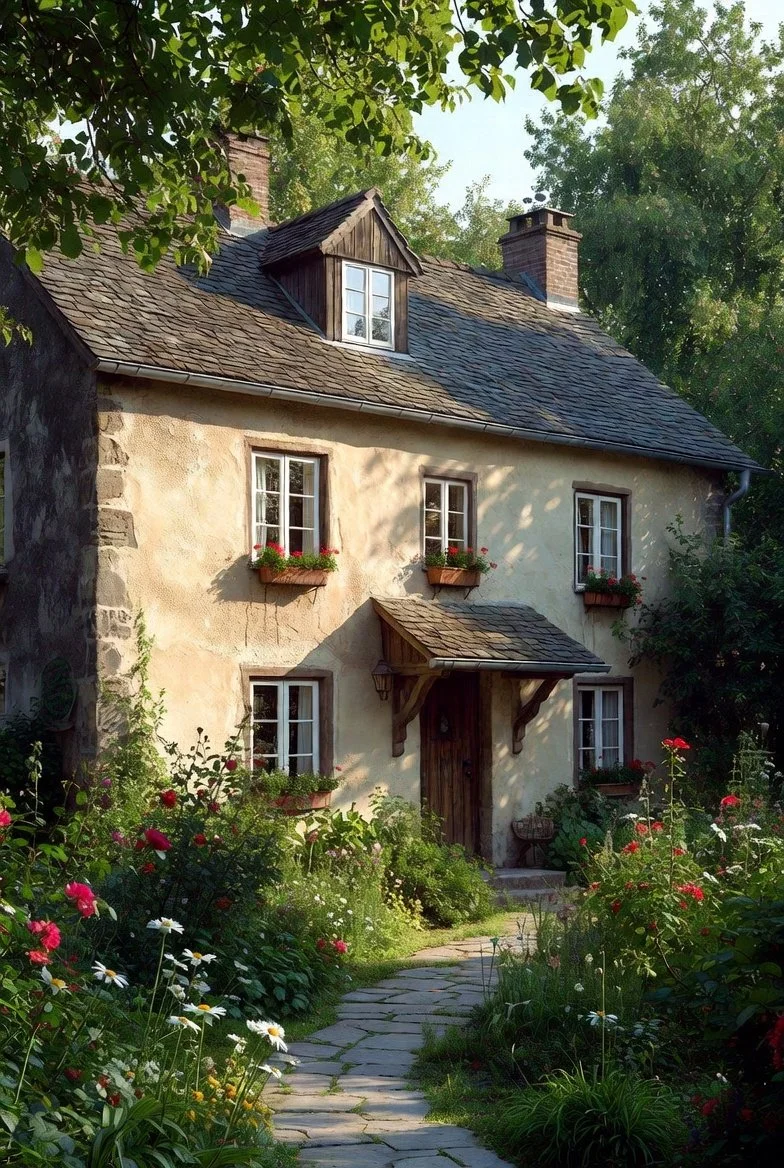
Mortar wash treatments similar to German Smear appear in European construction records from the 1700s, commonly used on fired brick and stone walls in central and northern Europe. In areas with hydraulic lime availability, versions termed Kalkschlämme employed lime slurries for weather protection; by the late 19th century, Portland cement integration became widespread, enhancing durability. Architecturally, these finishes softened the stark uniformity of new masonry, evoking aged farmhouses and manors in climates with heavy rainfall and frost, where breathability prevented internal moisture buildup.
Traditional composition relied on field-mixed mortars of Portland cement, hydrated lime, and sand, thinned to a trowelable consistency. Adhesion occurred via mechanical interlocking into brick pores and joints, with cement hydration forming rigid bonds. High lime content ensured vapor permeability, critical for freeze-thaw resistance, as trapped water could otherwise cause spalling.
Distinctions from Limewash, Whitewash, and Painted Brick
German Smear maintains clear material and performance differences from related finishes, rooted in building science:
Limewash: A slurry of slaked lime that hardens by carbonation; highly breathable (vapor diffusion resistance μ ≈ 5-10) but thin and non-textured, offering minimal physical protection.
Whitewash: Often lime-based historically, sometimes with casein or cement additives; less permeable than limewash (μ ≈ 10-20), prone to chalking and requiring frequent reapplication.
Painted brick: Film-forming acrylic or latex coatings that seal surfaces (vapor permeability < 5 perms), risking moisture entrapment and efflorescence in humid or freezing conditions.
German Smear/mortar wash: Cement-lime mortar layer (1-3 mm thick) with mechanical adhesion and moderate permeability (5-15 perms), balancing protection and breathability for clay brick substrates.
These distinctions ensure German Smear suits load-bearing exteriors or interiors exposed to variable humidity.
Modern Material Changes in the United States

Contemporary German Smear, commonly used throughout the U.S. since the early 2000s, shifts from site-mixed to pre-formulated products suited to manufactured brick's lower porosity. Polymer-modified thin-set mortars replace variable ratios, improving consistency. These changes address modern architectural contexts like energy-efficient homes, where denser bricks demand stronger initial adhesion.
Key adaptations include:
Pre-mixed veneer or thin-set mortars with standardized cement-lime-sand ratios.
Acrylic or latex polymers for enhanced flexibility and tensile strength.
Finer aggregates yielding smoother textures post-wiping.
Tinted options derived from iron oxide pigments, expanding beyond off-white.
Material behavior improves freeze-thaw performance, as polymers reduce micro-cracking from expansion (up to 9% water volume increase).
Adjustments in Application Methods
Modern techniques refine historical troweling for U.S. climates, emphasizing substrate prep on machine-extruded bricks. Pre-wetting controls suction, preventing rapid drying and weak bonds. Thinner consistencies (mortar-to-water ~70:30) allow even coverage, wiped with sponges for controlled exposure.
Changes encompass:
Grout bags for precise interior application on fireplaces or accents.
Pressure washing to remove efflorescence, ensuring clean mechanical keying.
Extended open times via retarders, aiding deep pore penetration.
These support vapor-open systems, vital in humid southeastern or northern U.S. regions prone to condensation.
Impacts on Adhesion to Brick Surfaces
Modern changes strengthen adhesion principles on low-porosity U.S. bricks (absorption <5%), where traditional mixes achieved shallow keying. Polymers form chemical bridges alongside mechanical interlocking, boosting shear strength by 20-50% per building science tests. Flexibility mitigates shear from thermal cycles (-20°F to 120°F ranges), reducing delamination risks.
Breathability persists (Class II-III vapor retarders), allowing drying inward while resisting outward drive in wet winters. On historic soft-fired bricks, adaptations match original hydraulic lime behavior; for modern hard-fired units, they compensate via enhanced workability.
Conclusion
German Smear's U.S. resurgence adapts European traditions through pre-mixed polymers and refined techniques, improving adhesion reliability on contemporary bricks without sacrificing historical breathability or freeze-thaw resilience. These evolutions highlight mortar wash's versatility—mechanically bonded, vapor-permeable layers distinguishing it from sealed paints or thin washes—offering enduring architectural texture grounded in verified masonry science.
Looking to DIY?
Checkout SmearTech’s Signature White™ Mortar and German Smear Tools.
