Comparing Color Options in Stucco and German Smear
Stucco and German Smear represent time-tested masonry finishes rooted in European building traditions, where coloration is achieved through pigments mixed directly into the material. Stucco, a cementitious or lime-based plaster applied in layers over substrates, and German Smear, a mortar wash technique smeared onto brick surfaces, both prioritize durability and moisture management over expansive color choices. From a historical and architectural standpoint, these methods matter because they preserve the natural behavior of porous materials, preventing issues like trapped moisture that can compromise structural integrity in varying climates.
Similarities in Color Options Between Stucco and German Smear

Stucco and German Smear exhibit parallel color strategies, drawing from shared principles in masonry finishes. Both techniques integrate pigments into the base material during mixing, creating a uniform hue that penetrates the surface rather than sitting atop it. This approach, documented in European practices as early as the 17th century for German Smear antecedents and even earlier for stucco in Mediterranean regions, ensures compatibility with the substrate's porosity.
Historically, these finishes were used to harmonize buildings with local landscapes, employing regionally available minerals for subtle tonal variations. Architecturally, the similarity allows for cohesive designs in structures combining brick and plastered elements, such as in Tudor or Craftsman styles.
From a building science perspective, the integrated coloration maintains vapor permeability, allowing walls to "breathe" and expel interior moisture, which is crucial in humid or freeze-thaw prone environments.
Common color ranges include whites, off-whites, grays, beiges, buffs, and earth tones like ochres and siennas.
Both can achieve warmer buffs or cooler grays by adjusting pigment ratios, but avoid vibrant synthetics to preserve material properties.
Tinted options extend to soft reds or terracottas, evoking aged plaster or enriched brick.
Why Color Options Are Limited in Stucco and German Smear
The constrained palettes in stucco and German Smear stem from reliance on natural mineral pigments and the need to safeguard material strength. Traditional stucco uses iron oxide pigments, which naturally limit hues to earthy spectrums from white to brown and yellow to pink, as these are derived from stable, non-fading minerals. Exceeding pigment loads—typically 3 to 4 pounds per 90-pound sack of stucco—can weaken the cementitious matrix, reducing adhesion and durability.
German Smear follows suit, with mortar pigmentation historically limited to earth-derived additives like ochres and umbers, commonly used in Central European mortar washes. This restriction ensures the finish remains breathable and resistant to environmental stresses, such as UV exposure that could cause synthetic colors to fade unevenly.
In architectural contexts, these limits align with conservation principles, favoring authentic appearances over modern vibrancy. Climate considerations further reinforce this: in arid regions, limited colors prevent heat absorption issues, while in wetter areas, they avoid pigmentation that might promote algae growth.
Building science explains that excessive or incompatible pigments could alter freeze-thaw resistance, where water expansion in pores leads to cracking if the material's composition is compromised.
Pigment caps prevent strength loss: Overloading reduces cohesion in the mix.
Natural sources dictate tones: Iron oxides provide stable but finite options.
Fading risks with darker shades: High pigment ratios in deep colors may compromise longevity.
Reasons You Cannot Paint Stucco or German Smear
Painting stucco or German Smear is inadvisable due to their inherent porosity, which requires unrestricted moisture vapor transmission. Stucco, composed of cement, lime, and sand, absorbs and releases water; a paint layer acts as an impermeable barrier, trapping moisture and leading to efflorescence, blistering, or delamination. This issue is exacerbated in freeze-thaw cycles, where trapped water expands and causes surface failure.
Similarly, German Smear, being a thin mortar application on brick, relies on the substrate's breathability for longevity. Painting seals the pores, promoting mold growth and internal deterioration, as documented in masonry restoration guidelines.
Historically, these finishes were designed as final surfaces without additional coatings, preserving their textured, organic aesthetic. Architecturally, painting alters the material's behavior, potentially voiding its advantages in vapor-permeable wall assemblies.
From a building science viewpoint, paint reduces vapor permeability, measured in perms, from high (breathable) to near-zero, risking condensation buildup in wall cavities.
Moisture entrapment: Leads to peeling, bubbling, and structural stress.
Repair complications: Painted surfaces require sandblasting for fixes, increasing costs.
Aesthetic degradation: Paint hides natural texture and pigmentation depth.
How Stucco and German Smear Use Natural Pigmentation
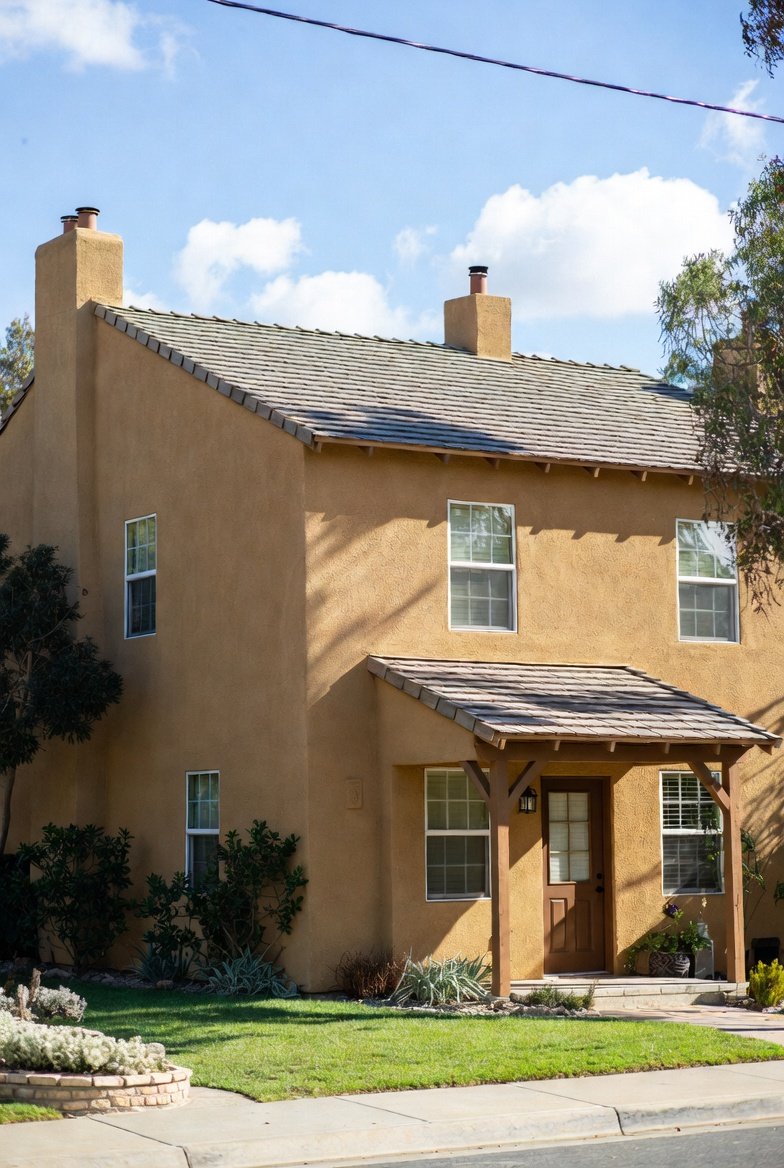
Both stucco and German Smear incorporate natural pigmentation directly into their mixes, ensuring color durability without compromising functionality. Stucco's pigments, primarily iron oxides, are added to the finish coat, bonding chemically with the lime or cement for fade-resistant hues. This method, commonly used throughout Mediterranean and Southwestern architectures, allows for vapor-permeable finishes that adapt to climatic variations.
German Smear employs similar earth pigments in its mortar base, historically sourced from local clays and minerals, creating integral color that weathers naturally over time. This integration prevents the layering issues seen in painted surfaces, maintaining adhesion through chemical bonds rather than mechanical ones.
In building science terms, natural pigments like oxides enhance UV resistance and thermal stability without altering the material's pH or porosity. Climate-wise, they support breathability in humid environments and resist chalking in sunny ones.
Iron oxides: Provide reds, yellows, and browns with high stability.
Earth minerals: Such as umbers for grays and siennas for buffs, ensuring eco-compatibility.
Integral mixing: Distributes color evenly, avoiding surface-only vulnerabilities.
Conclusion
Stucco and German Smear demonstrate aligned principles in coloration, emphasizing natural pigments for limited yet durable earth-toned palettes that prioritize breathability and material integrity. These constraints stem from historical practices and building science necessities, ensuring longevity without the risks of painting, such as moisture damage. By understanding these shared attributes, one appreciates their role in sustainable architectural conservation.
Looking to DIY?
Checkout SmearTech’s Signature White™ Mortar and German Smear Tools.