

The Durability of Brick Homes Against Wildfires
Brick homes have long been recognized for their resilience in fire-prone environments due to the noncombustible nature of clay-based materials. Historically rooted in European building traditions, brick construction offers superior protection against high-temperature wildfires compared to wood-framed structures. This post explores wildfire impacts on various home types, focusing on brick's advantages in survivability, repair considerations, and potential enhancements.
Introduction
Wildfires pose a significant threat to residential structures, with building materials playing a critical role in determining a home's ability to withstand intense heat and embers. Brick, a material with deep historical ties to durable European architecture, stands out for its inherent fire resistance, derived from high-temperature firing processes that make it noncombustible. Understanding wildfire durability not only highlights the architectural value of brick but also informs conservation efforts in fire-prone regions, emphasizing breathable, long-lasting materials that align with traditional building science principles.
Wildfire Temperatures and Their Impact on Structures
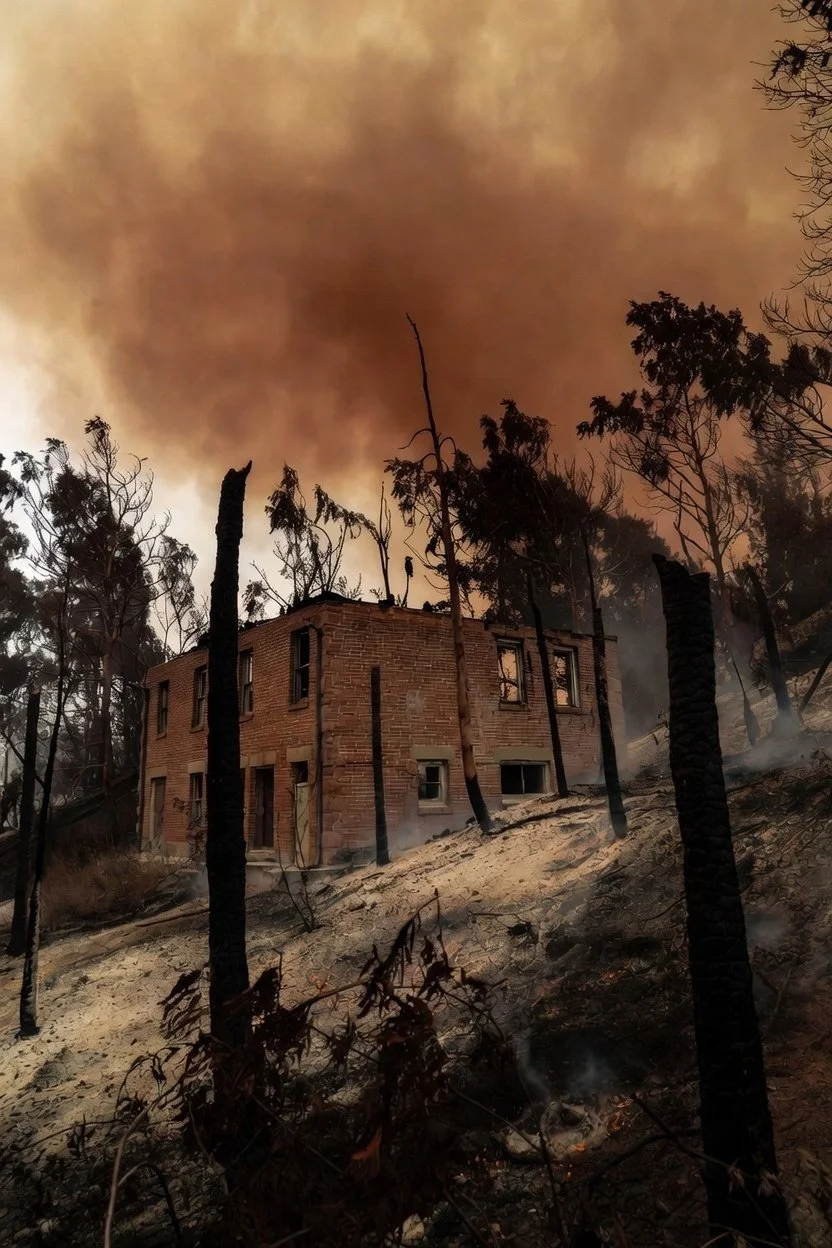
Forest fires, often fueled by dry vegetation and high winds, can generate extreme heat that challenges the integrity of building materials. Documented temperatures in wildfires typically range from 800°C (1472°F) to over 1200°C (2192°F) in intense conditions, with flames capable of igniting combustible surfaces rapidly. These temperatures exceed the ignition points of many organic materials, leading to rapid combustion in vulnerable homes.
In architectural contexts, materials like brick, formed from clay baked at temperatures around 1000°C, resist melting or ignition far better than wood, which can burst into flames at around 300°C (572°F). This thermal stability is a key factor in historical brick usage in regions prone to fires, such as medieval European towns where brick replaced thatch and timber to reduce conflagration risks.
Peak wildfire temperatures: Up to 1200°C (2192°F) in extreme cases, with surface fires averaging 800°C (1472°F).
Ignition thresholds: Wood ignites at 300-380°C (572-716°F), while brick withstands over 1000°C without structural failure.
Heat transfer effects: Radiant heat from fires can preheat surfaces to 800°C, accelerating spread in non-resistant materials.
Most Durable Home Types Against Wildfires
Among common construction types, homes built with noncombustible materials like concrete, insulated concrete forms (ICF), and brick demonstrate the highest durability against wildfires. Brick homes, in particular, benefit from their historical architectural context, where clay's low thermal conductivity and high vapor permeability prevent rapid heat penetration and moisture-related degradation post-fire. Wood-framed structures, conversely, are highly susceptible due to their combustible nature, often resulting in total loss.
Brick's fire resistance aligns with traditional mortar-based techniques, enhancing overall structural integrity in fire events. Studies of wildfire survivability show that brick and concrete homes retain more of their framework compared to wood, where embers can ignite siding and roofs quickly.
Concrete and ICF homes: Often rated for 4-hour fire resistance, leaving 70-90% of structure intact in moderate fires.
Brick homes: Noncombustible exteriors preserve 60-80% of the building, with walls resisting direct flame contact.
Metal or stone-clad homes: Similar to brick, with high survivability rates due to low flammability.
Wood-framed homes: Typically 20-40% survivability, as frames and siding ignite easily.
Post-Fire Structural Integrity: How Much of the Home Remains
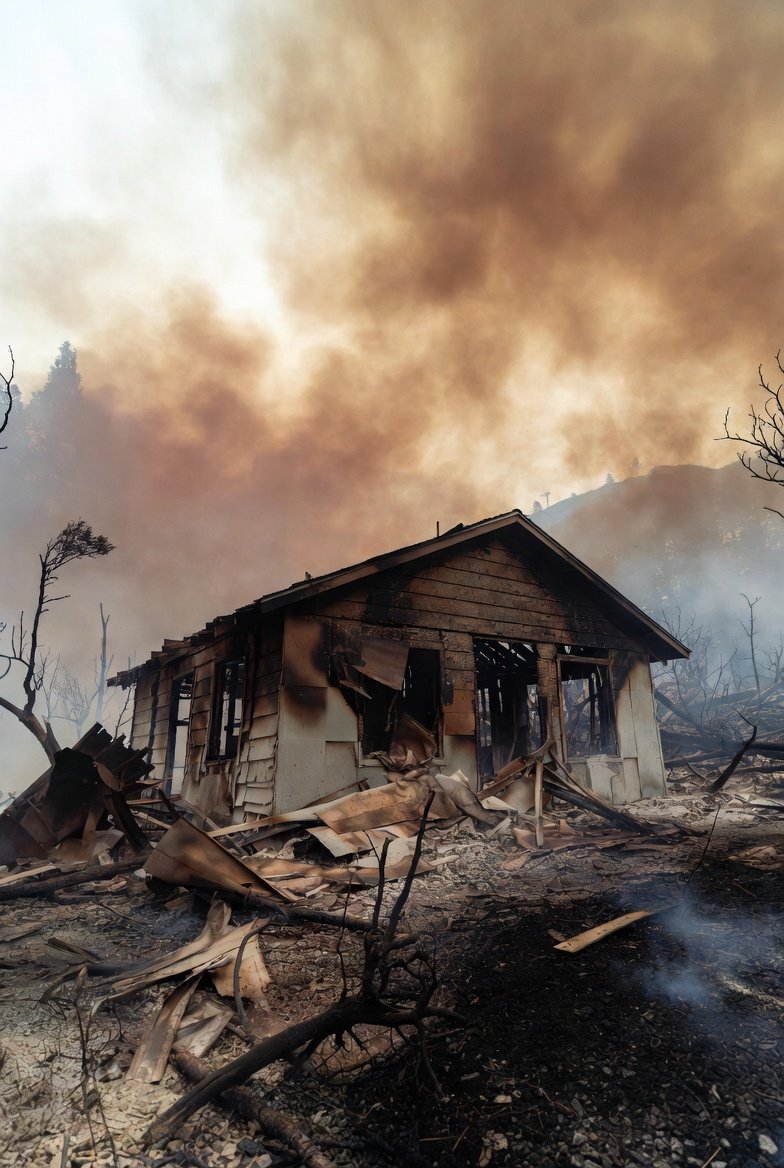
The extent of a home left standing after a wildfire depends on material composition and fire intensity. Brick structures, drawing from historical European designs emphasizing durability, often retain walls and foundations, as the material's high compressive strength and low expansion under heat minimize collapse. In contrast, wood homes may lose entire sections to combustion.
Building science principles highlight brick's breathability, allowing vapor escape that prevents spalling from trapped moisture during heating cycles. In documented cases, brick homes in wildfire zones have shown 50-70% of the exterior intact, facilitating easier repairs compared to total rebuilds required for wood.
Brick and concrete: 50-80% of structure often remains, with walls and slabs viable for reuse.
Wood: 10-30% survivability, primarily foundations if not ignited.
ICF: Up to 90% intact due to foam-concrete composite resisting heat.
Climate factors: In dry regions, brick's permeability aids post-fire drying, reducing long-term damage.
Repair Costs for Fire-Damaged Homes
Repair expenses vary by home type and damage severity, with brick structures often incurring lower costs due to their reusable components and resistance to total loss. Historical brick architecture, with its modular design, allows targeted repairs without full demolition. Average costs reflect material durability, with noncombustible homes like brick requiring less extensive reconstruction.
Minor damage (smoke/soot): $3,000-$10,000, lower for brick due to easy cleaning of surfaces.
Moderate damage (partial structural): $10,000-$40,000, with brick often under $20,000 as walls endure.
Severe damage: $40,000+, but brick homes may cap at $50,000-$100,000 versus $180,000 for wood rebuilds.
Additional factors: Water damage from suppression adds $1,000-$6,000, less impactful on permeable brick.
Time Required for Repairs
Repair timelines are influenced by damage extent and material type, with brick homes benefiting from quicker assessments given their structural stability. Rooted in traditional building methods, brick allows phased repairs, aligning with conservation practices that preserve historical elements. In wildfire aftermaths, brick's durability shortens overall recovery.
Minor repairs: 1-2 weeks for brick, focusing on cleaning and minor fixes.
Moderate repairs: 1-3 months, with brick enabling faster framing reuse.
Severe repairs/rebuilds: 6-12 months or more, but brick foundations accelerate by 2-3 months compared to wood.
Permitting and inspections: Add 1-2 months, varying by region and climate.
Treatments to Enhance Fire Resistance
Enhancements to wildfire durability draw from architectural traditions, such as applying mortar-based washes to brick for added protection. German Smear or mortar wash, a historical technique, creates a breathable layer that may improve adhesion and reduce ember penetration, while maintaining vapor permeability. Other treatments include fire retardants and design modifications.
Commonly used in European-inspired conservation, these methods emphasize material behavior under heat and climate considerations.
Mortar wash/German Smear: Adds a lime-based layer to brick, potentially enhancing resistance while preserving breathability.
Fire retardant sprays: Applied to exteriors, effective for short-term protection in high-risk seasons.
Vent screens and metal flashing: Prevent ember entry, commonly paired with brick for comprehensive defense.
Roof upgrades: To Class A materials like metal or tile, complementing brick walls.
Conclusion
Brick homes exemplify durable architecture against wildfires, leveraging noncombustible properties and historical building principles to minimize damage, repair costs, and recovery time. By integrating treatments like mortar washes, homeowners can further bolster resilience, aligning with time-tested methods that prioritize material science and environmental adaptation. This approach underscores the enduring value of brick in fire-prone landscapes.
Looking to DIY?
Checkout SmearTech’s Signature White™ Mortar and German Smear Tools.
