Stucco Maintenance: Essential Practices for Longevity
Stucco is a cement- or lime-based plaster traditionally used as an exterior wall finish, documented in architectural practices as early as ancient Roman and Greek civilizations, where it provided weather resistance and decorative elements to masonry structures. In historical contexts, such as Renaissance buildings in Europe, stucco allowed for intricate sculptural details while permitting vapor permeability, a key building science principle that enables walls to "breathe" and release trapped moisture, preventing decay. Architecturally, its importance lies in balancing durability with adaptability to various climates, as improper maintenance can lead to failures that compromise building envelopes. Today, stucco's maintenance is informed by scientific understanding of material behavior, including its porosity which absorbs water but requires effective drainage to avoid issues like efflorescence or cracking.
Frequency of Stucco Reapplication and Maintenance
Stucco finishes, when properly installed, can endure for 20 to 50 years in typical conditions, influenced by factors such as climate exposure and material composition. This longevity stems from the hydration process in cement-based stucco, where calcium silicate hydrate forms a strong matrix, but environmental stressors like freeze-thaw cycles can accelerate degradation. In harsher climates, more frequent interventions are needed, as water expansion during freezing can cause micro-cracks, reducing compressive strength over time.
Historically, lime-based stuccos in Mediterranean regions required less frequent reapplication due to their higher vapor permeability, rated around 10-20 perms, allowing moisture to evaporate without trapping it. Modern cement stuccos, with lower permeability (around 1-5 perms), may need recoating or repairs every 20 years if signs of peeling or blistering appear. Painting over stucco, often used to enhance water resistance, should occur every 5 to 10 years, as UV radiation and acid rain degrade the paint's polymer bonds, leading to chalking and reduced protection.
Sealants, which reduce water absorption by filling pores, are recommended every 5 to 7 years, particularly in coastal areas where salt-laden air can cause efflorescence through soluble salt migration. Inspections should be annual, focusing on climate-specific risks like post-winter checks for expansion cracks in cold regions. In architectural conservation, this schedule aligns with preserving historical facades, where material behavior under varying humidity levels dictates intervention frequency.
Annual inspections: Check for cracks wider than 1/16 inch, which indicate potential moisture ingress.
Every 5-10 years: Repaint to maintain a vapor-permeable barrier against UV degradation.
Every 5-7 years: Apply water-resistant sealants to enhance hydrophobicity without blocking breathability.
Every 20-50 years: Full reapplication if structural integrity is compromised by cumulative environmental wear.
Cleaning Methods for Stucco Exteriors
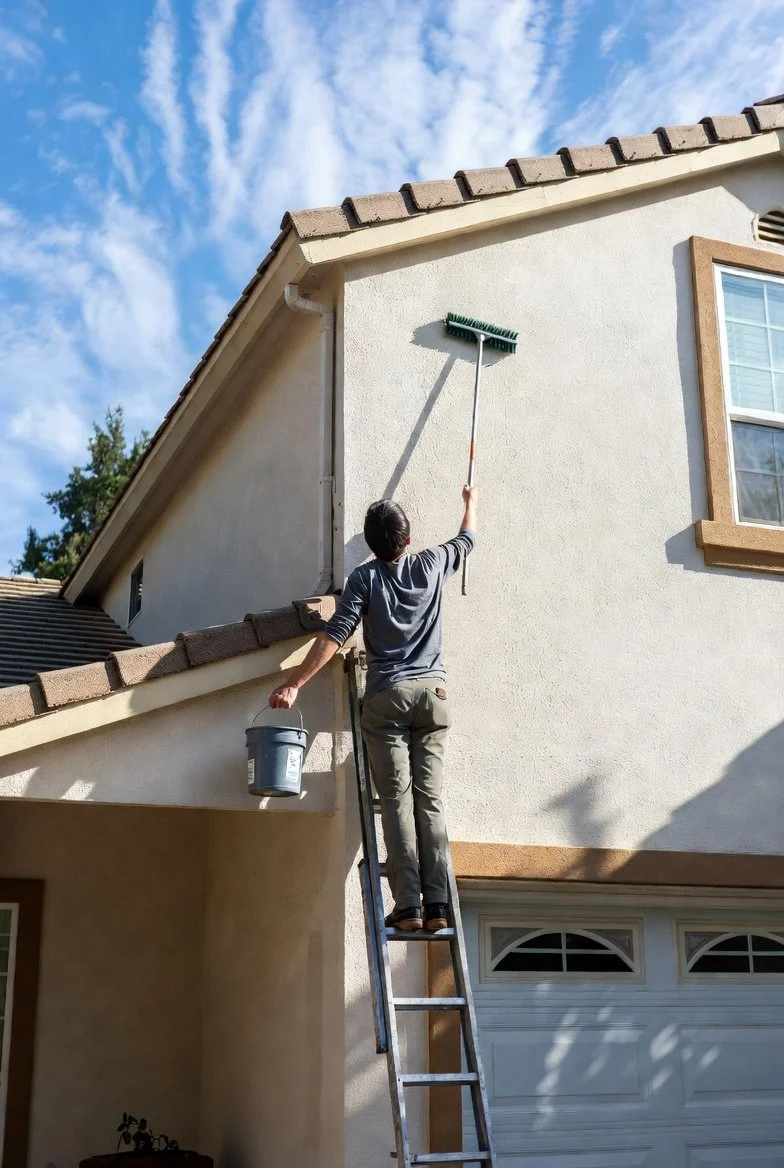
Cleaning stucco involves gentle techniques to avoid damaging its porous surface, which has a typical absorption rate of 10-15% by weight, making it susceptible to erosion from abrasive methods. Building science emphasizes low-pressure washing (under 1000 psi) to prevent water intrusion that could lead to internal saturation and subsequent freeze-thaw damage. Historically, stucco in arid climates required minimal cleaning, but in humid areas, biological growth like algae thrives due to moisture retention, necessitating periodic removal to maintain pH balance around 8-10.
Effective solutions include diluted bleach (5% sodium hypochlorite) mixed with trisodium phosphate, which oxidizes organic matter without altering the stucco's calcium carbonate structure. Borax and dish soap mixtures provide a less toxic alternative, leveraging borax's antifungal properties derived from its high pH (around 9.5), inhibiting mold growth. For efflorescence, dry brushing followed by acid rinsing dissolves calcium carbonate deposits, but neutralization with ammonia prevents surface etching. In architectural contexts, cleaning preserves the textured finish, crucial for historical authenticity, while considering climate impacts like salt buildup in coastal zones.
Pre-wet surface: Saturate to draw stains outward, reducing deep penetration.
Apply solution: Use 1:1 bleach-water for mildew, scrubbing gently with soft bristles.
Rinse thoroughly: Low-pressure hose from top down to avoid streaking.
Frequency: 2-3 times annually in polluted areas to prevent organic accumulation.
Best Ways to Protect Stucco Exteriors
Protecting stucco relies on moisture management, as its capillary action can draw water inward at rates up to 1 inch per hour in untreated surfaces. Building science advocates for a water-resistive barrier (WRB) behind stucco, with a drainage plane to channel water away, reducing hydrostatic pressure. Historically, European stucco systems incorporated lime for enhanced breathability, allowing outward vapor diffusion at 10-15 perms to prevent condensation.
Flashing around penetrations diverts water, preventing intrusion that leads to rot in sheathing materials. Sealants with silane/siloxane chemistry provide hydrophobic protection, repelling water while maintaining permeability. In cold climates, exterior insulation minimizes thermal bridging, reducing condensation risks where temperature differentials exceed 20°F. Architectural design with overhangs limits rain exposure, aligning with traditional practices in rainy regions.
Install WRB: Use permeable housewraps to allow drying while blocking bulk water.
Add drainage gap: 1/4-inch rainscreen for capillary break in high-rain areas.
Apply sealants: Every 5 years to reduce absorption without vapor trapping.
Ensure flashing: At windows and roofs to direct water outward.
Causes of Stucco Failure
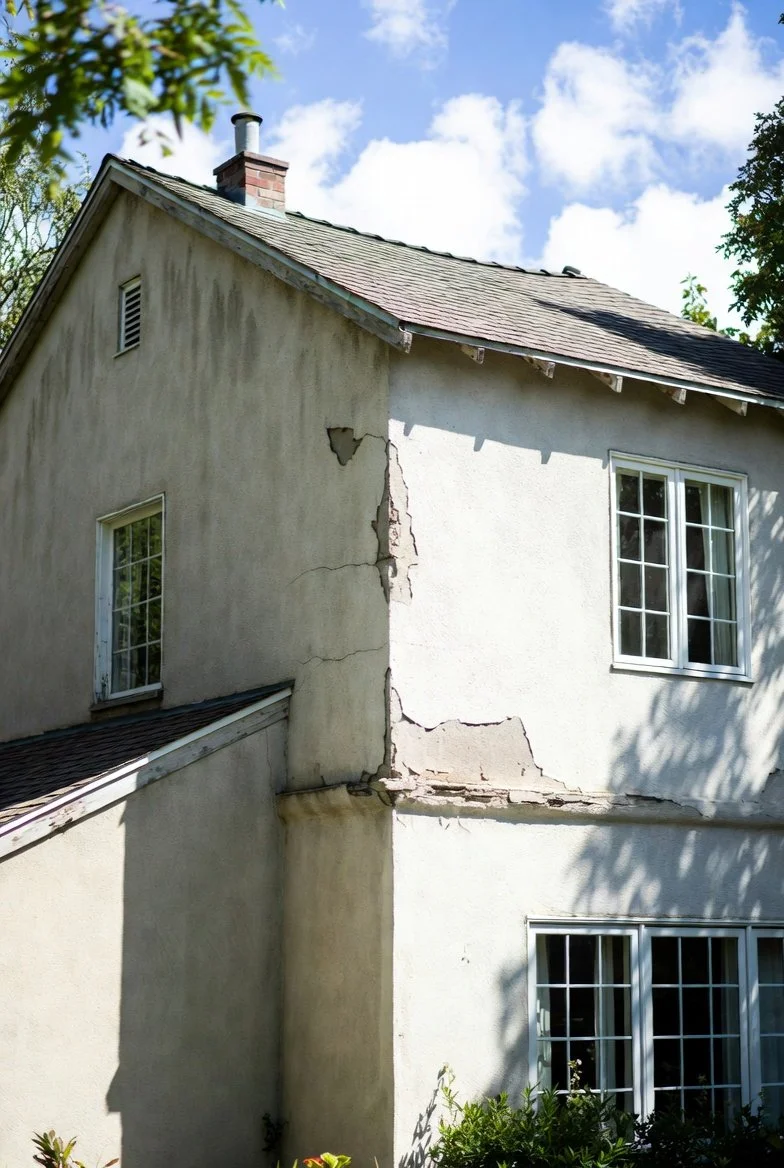
Stucco failure often results from moisture intrusion, as excessive water leads to hydrolysis of cement bonds, weakening the matrix. Building science identifies improper installation, like inadequate bonding, as a cause of delamination, where adhesion fails due to insufficient mechanical keying. Historically, failures in lime stuccos were rare due to slow carbonation curing, but modern cement versions cure rapidly, risking cracks from shrinkage strains up to 0.1%.
Structural movement from settlement induces tensile stresses exceeding stucco's 200-400 psi strength, causing cracks. High alkalinity (pH 12-13) during curing saponifies paints, leading to bubbling. In humid climates, trapped moisture fosters mold, as relative humidity over 80% promotes biological growth. Poor flashing allows capillary wicking, accelerating corrosion of metal lath through electrochemical reactions.
Moisture damage: Leads to rot and mold via saturation.
Installation errors: Inadequate curing or reinforcement causes early cracking.
Structural shifts: Exceed material tensile limits.
Alkalinity issues: React with coatings, causing delamination.
Conclusion
Stucco maintenance underscores the interplay of material science and historical practices, where regular inspections, gentle cleaning, protective measures, and awareness of failure causes ensure durability. By prioritizing breathability and moisture control, stucco's architectural value is preserved across climates, reflecting its enduring role in building traditions without compromising structural health.
Looking to DIY?
Checkout SmearTech’s Signature White™ Mortar and German Smear Tools.