How to Save Your Brick Home
Maintaining a brick home requires understanding its material properties and historical construction methods to ensure longevity. This blog explores essential practices for brick care, including routine maintenance, identifying deterioration, and repair techniques like repointing and brick replacement. By applying verifiable building-science principles, homeowners can protect their structures from environmental damage while preserving architectural integrity.
Introduction
Brick homes represent a durable architectural tradition, often drawing from European building practices where fired clay bricks provided resilient exteriors against harsh climates. Preserving such structures is important from a historical and architectural perspective, as bricks offer natural breathability and thermal mass that contribute to energy efficiency and longevity. This educational overview details key aspects of brick maintenance and repair, grounded in documented material behaviors and conservation methods, to help inform decisions on protecting these timeless buildings.
Regular Brick Maintenance
Routine maintenance of brick exteriors involves preventive measures to extend the material's lifespan, based on building-science principles such as moisture management and surface protection. Bricks are porous and can absorb water, leading to potential freeze-thaw damage in colder climates, so regular care focuses on keeping surfaces clean and sealed without compromising vapor permeability.
Historical European traditions emphasized natural finishes to enhance durability, and modern practices build on this by recommending mild cleaning methods. Maintenance should occur annually or as needed, particularly after severe weather events.
When you need it: Perform maintenance seasonally, especially in spring after winter exposure, or when visible dirt accumulation affects aesthetics and functionality.
How to identify if you need it: Look for surface grime, moss growth, or minor efflorescence (white powdery deposits indicating moisture migration).
What it does for the repair: Cleaning removes contaminants that trap moisture, while sealing prevents water ingress, reducing risks of spalling and cracking; it preserves the brick's natural breathability if permeable sealants are used.
Detailed steps include gently washing with a mixture of water and mild detergent using a soft-bristle brush, avoiding high-pressure washers that can erode mortar. In regions with high humidity, consider climate-specific adjustments, such as more frequent inspections in rainy areas to prevent biological growth.
Signs of Brick Deterioration: Things to Look Out For
Identifying early signs of deterioration is crucial in architectural conservation, as bricks subjected to environmental stresses can fail over time. Common issues stem from moisture intrusion, thermal expansion, and material aging, documented in building practices since the 19th century in Europe.
Regular visual inspections, ideally twice a year, help catch problems before they escalate to structural concerns. Focus on areas exposed to water runoff, such as near gutters or foundations.
Cracks in bricks or mortar joints: Indicating settlement or thermal stress.
Spalling (flaking or crumbling bricks): Caused by freeze-thaw cycles where absorbed water expands upon freezing.
Efflorescence (white deposits): Signaling excessive moisture movement through the masonry.
Bulging or bowing walls: Suggesting structural instability from water damage or poor support.
Mortar deterioration (powdery or recessed joints): Resulting from weathering and loss of binding strength.
When these signs appear, they signal the need for intervention to maintain vapor permeability and prevent further degradation. In historical contexts, such as Victorian-era brickwork, ignoring these can lead to loss of original fabric.
Repointing Brick Mortar
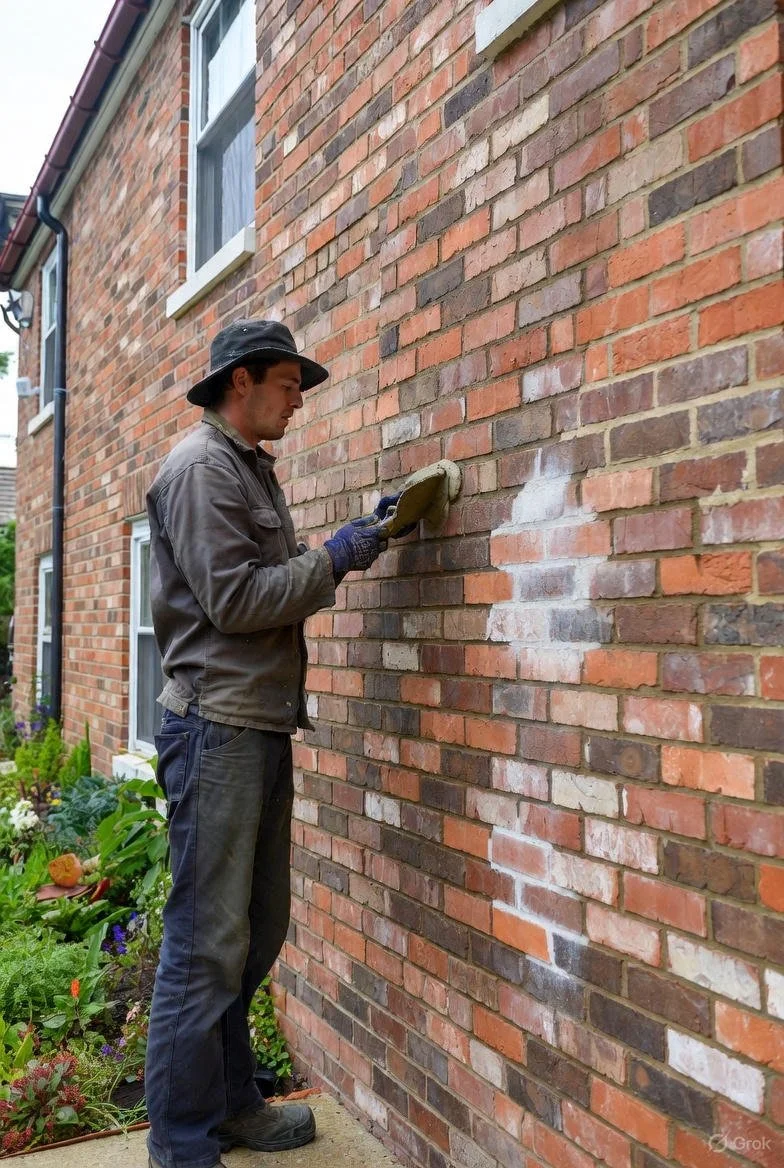
Repointing involves removing deteriorated mortar from joints and replacing it with new material, a technique commonly used throughout European masonry traditions to restore structural integrity. This process addresses mortar failure due to weathering, ensuring the wall remains weather-tight while allowing moisture vapor to escape.
It is distinct from cosmetic finishes like German Smear, which applies mortar over brick surfaces for aesthetic and structural effects, whereas repointing just focuses on joint repair.
When you need it: When mortar joints are recessed more than 1/4 inch, cracked, or crumbling, typically every 20-50 years depending on climate and original mortar composition.
How to identify if you need it: Probe joints with a tool; if mortar crumbles easily or is missing, or if water penetrates during rain, repointing is required.
What it does for the repair: It restores the seal against water intrusion, supports brick alignment, and prevents further erosion; using lime-based mortar enhances breathability and matches historical formulations for better adhesion.
Perform repointing in moderate temperatures (40-90°F) to allow proper curing, avoiding extremes that could cause brittleness or rapid drying. In freeze-thaw prone areas, this prevents internal damage by maintaining a permeable barrier.
Tuckpointing Brick Mortar
Tuckpointing is a specialized form of repointing that enhances visual appeal by creating the illusion of finer joints, originating in 18th-century English masonry practices. It involves applying two mortars: one matching the brick color for the base, and a contrasting thin line (often white) for definition.
Unlike standard repointing, which prioritizes function, tuckpointing combines repair with aesthetic restoration, commonly seen in historical brickwork. It differs from surface treatments like limewash (a thin, breathable lime coating) or whitewash (a simpler lime-slaked mixture), which alter the entire brick face rather than joints.
When you need it: For older structures where joints have deteriorated and the original tuckpointed appearance needs preservation, or when enhancing historic character.
How to identify if you need it: Faded or eroded joint lines, combined with mortar loss, especially in decorative facades.
What it does for the repair: It repairs joints structurally while improving appearance, using compatible mortars to maintain vapor permeability and prevent moisture trapping.
This method suits climates with variable weather, as it reinforces joints without compromising the wall's ability to "breathe."
Brick Replacement in Existing Structures
Brick replacement entails removing damaged individual bricks and installing matching ones, a conservation approach documented as early as the Industrial Revolution for maintaining structural integrity. This is preferred over wholesale rebuilding to preserve original materials, adhering to principles of minimal intervention in architectural heritage.
It addresses severe localized damage where repair isn't feasible, ensuring compatibility in porosity and strength to avoid differential movement.
When you need it: When bricks are extensively cracked, spalled, or compromised beyond patching, often due to prolonged exposure or impact.
How to identify if you need it: Visible fragmentation, water staining around specific bricks, or structural assessments showing weakness.
What it does for the repair: It restores load-bearing capacity and weather resistance, matching expansion rates to prevent future cracking; in historical contexts, sourcing period-appropriate bricks maintains authenticity.
In existing structures, replacement should use mortars with similar composition to originals, such as lime-based for pre-20th-century buildings, to support breathability.
Historical Protective Finishes for Brick
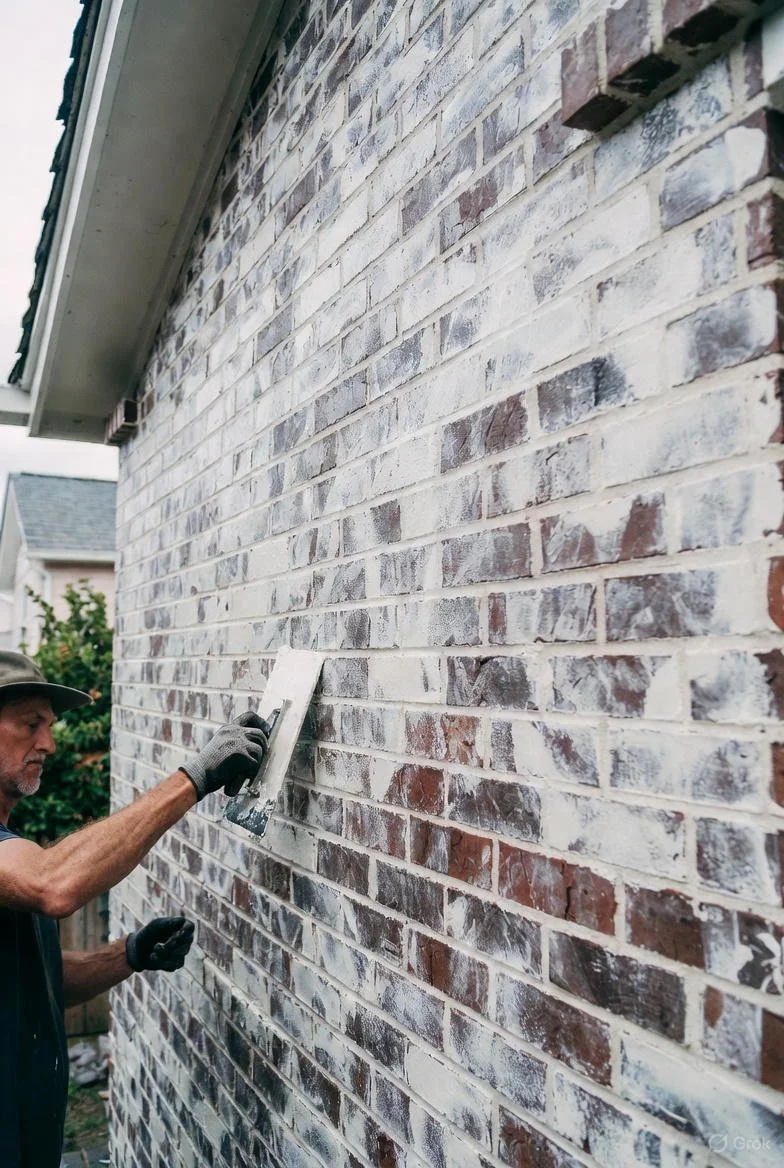
Protective finishes like German Smear (also known as Schmear or Kalkschlämme) have roots in European traditions, commonly used throughout Germany and surrounding regions to weatherproof brick while creating a rustic texture. This mortar-wash method involves smearing a thin mortar layer over bricks, allowing some texture to show through for a aged appearance.
German Smear provides a breathable barrier, differing from limewash (a permeable lime solution for subtle whitening), whitewash (a less durable variant), and painted brick (an impermeable coating that can trap moisture). Mortar composition in German Smear, typically lime and sand, enhances adhesion and vapor permeability, reducing freeze-thaw risks.
When you need it: For enhancing protection in exposed areas or restoring historical aesthetics, documented in rural European architecture.
How to identify if you need it: Fading or unprotected brick surfaces prone to erosion.
What it does for the repair: It adds a sacrificial layer against weathering, improving durability without sealing pores, aligned with building-science for moisture control.
Conclusion
Preserving a brick home involves vigilant maintenance, early detection of issues, and appropriate repairs like repointing, tuckpointing, and replacement, all informed by historical practices and material science. Techniques such as German Smear offer additional protective insights rooted in European traditions, emphasizing breathability and longevity. Through these methods, brick structures can endure while retaining their architectural value.
Looking to DIY?
Checkout SmearTech’s Signature White™ Mortar and German Smear Tools.